First of all, I advise you NOT to read this blog. If you do, please forgive my depressing dystopian attitude; it’s been building inside me. I’ve been researching some of the issues contributing to this viewpoint for quite a while.
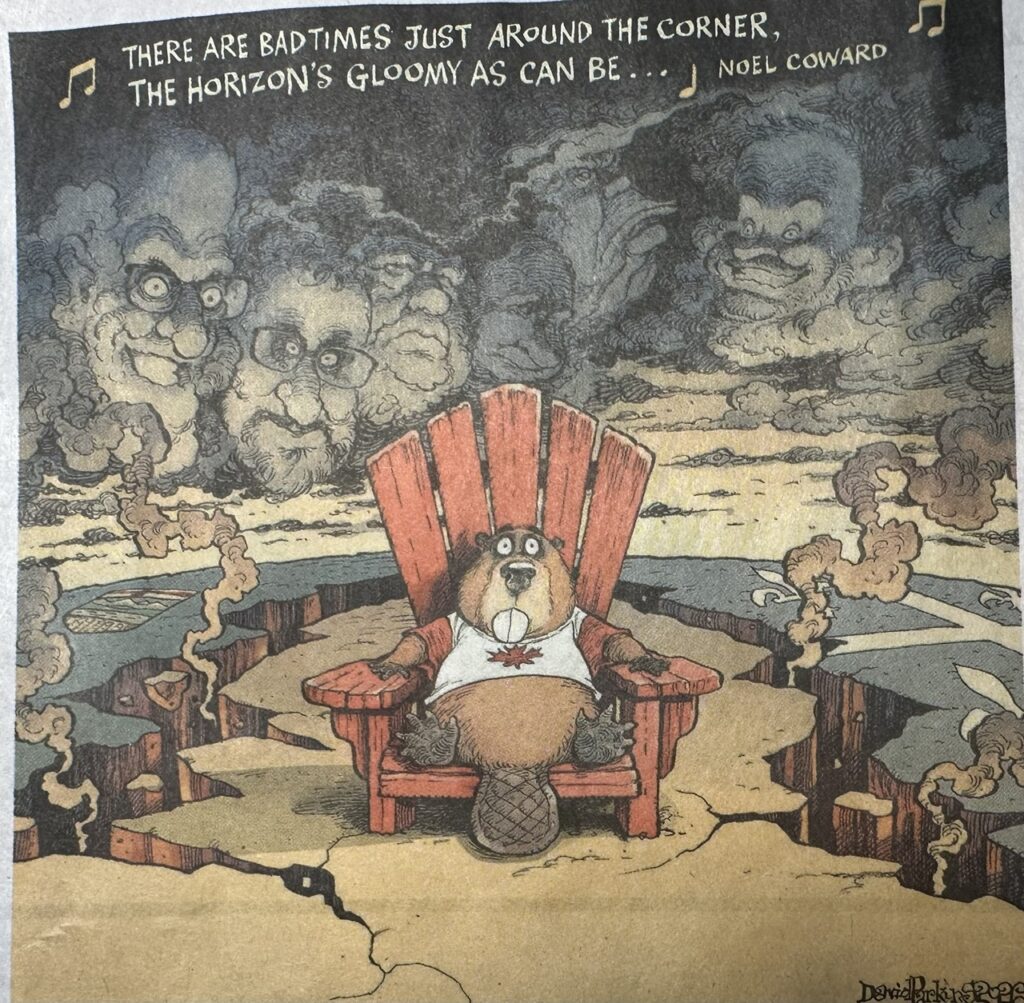
On January 28, 2026 the Doomsday Clock was advanced to 85 seconds till midnight, the closest it has ever been. Driven by a “failure of leadership,” the 2026 decision reflects accelerating dangers from nuclear threats, climate change, AI-driven disinformation, and biological threats, marking a new, more dangerous phase in human history. It’s not a good omen.
The imagery of apocalypse (midnight), and the contemporary idiom of nuclear explosion (countdown to zero) is used to convey threats to humanity and the planet. It is a symbol that represents the likelihood of a human-made global catastrophe and a metaphor for threats to humanity from unchecked scientific and technological advances. (The Bulletin of the Atomic Scientists created the Doomsday Clock in 1947. See Note #1.)
The depressing nature of what I predict for the next 5-10 years is in contrast with two positive things.
Firstly, personally I’ve been fortunate to live:
* my adult life in the second half of the 21st century, one unblemished by a world war
* in the country Canada; in a white affluent family with both parents, and three sisters close in age that I got along with, and that was family focussed
…and be:
* educated; fit and healthy (and when not, solutions were available)
* hired immediately out of university into a challenging job
* happily married (twice, until sickness intruded in one), with
* two sons, two stepsons, one stepdaughter, eight grandchildren, all admirable
Secondly, it’s necessary to state the obvious that people living in this era and a first world country have been fortunate to have benefited from:
* improved health care (life-saving drugs and medical interventions discovered; one recent example being Ozempic – see Note #2)
* the continuing march of scientific inventions in a wide variety of fields; this includes vaccines, but much more.
That’s the positive side. But I did warn you that this would be dour and dystopian, and so here we go.
My main proposition is that the current global climate for peace, transparent and accountable governance, and a secure environment has been deteriorating and will continue to decline, perhaps precipitously. The very serious clouds forming over our heads will affect my children and theirs and theirs.
I do not intend this to be a forum for potential solutions to these issues; I’ll just highlight them. (Solutions are tougher.)
In summary, we face a dozen major issues and a further nine that also need to be noted.
1. Nuclear Armageddon (Russia, North Korea, and now HALEU)
2. Wars, four in particular: Iran, Gaza, Ukraine, Sudan
3. Russia, and Putin, remains very dangerous
4. USA has gone AWOL; possibility of a Civil War
5. Trump, specifically, remains dangerous
6. China, with abhorrent core values
7. Artificial intelligence perils (currently; on the horizon)
8. Inadequate climate change efforts
9. Water: a) inadequate future sources and b) used as a weapon
10. Democracy under siege
11. Addictive technologies that, while handy, affect our lives in ways we can’t control
12. Religions that exacerbate differences rather than providing relief and resolution
If that’s not enough, I add the following to make your day really miserable:
13. Demographic vulnerabilities emerging worldwide
14. Increase in lifestyle diseases
15. Militarization of outer space
16. Drug addictions; expanded availability and use
17. Biological threats
18. Boys and men in crisis
19. Antisemitic and anti-immigrant groups proliferating
And some very modern day issues:
20. Disruptive cryptocurrencies
21. Increased emphasis on gambling
1a. Re nuclear Armageddon: Russia/Ukraine. Will Putin reach for nuclear as his grip on the Ukraine war slips? Will Ukraine develop nuclear capability?
I believe that there is every possibility that as Putin processes the reality that Russia is losing the war to Ukraine (and by most measures, that is the case; Russia is now bleeding men and material, inflation is running very high, and Ukraine is countering cleverly) he will be greatly tempted to reach for a nuclear solution. I expand on this in Section 3, “Russia, and Putin, remains very dangerous”.
On the other hand, as historian, Diana Francis, said in her May 21 post, it’s a ”good bet that Ukraine has already developed weapons of mass destruction or is close to building them. There’s no evidence of that as yet, and this would be top secret, but it’s only logical that the smartest country in the world, whose allies forced it to give up its nukes in 1991 and which is at war with an evil nuclear power, would have that up its sleeve. Besides, lest anyone forget, Ukraine was not only the Silicon Valley of the Soviet Union, but it was also where its “Manhattan Project” took place. Ukrainian scientists, engineers, and facilities were vital to the post-war development of Soviet atomic and thermonuclear bombs.”
1b. Re nuclear Armageddon: North Korea
North Korea, a nuclear capable country, has been accelerating its missile testing. This includes intercontinental ballistic tests in 2017, indicating their capability to reach the continental US.
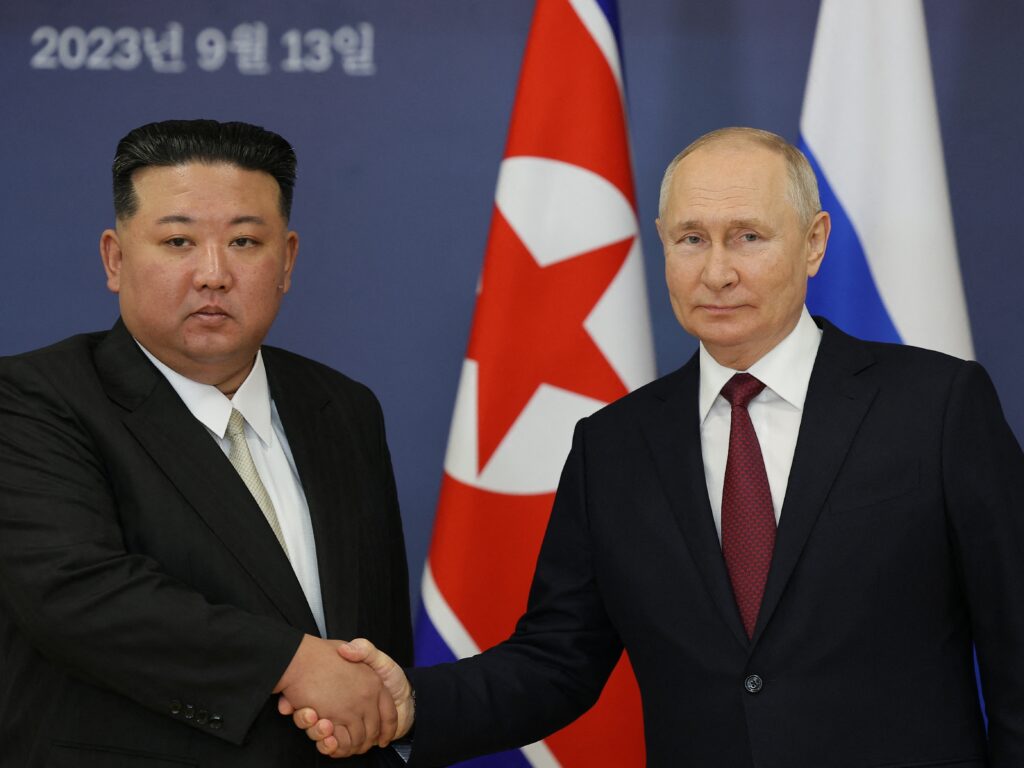
Recently the country is now more closely aligned with Russia, with 15,000 North Korean troops deployed there as of April 2025. They are also providing Russia war materials, such as ammunition and rocket systems. Thus North Korea is stronger because any US backed North/South Korea war will draw in both Russia and China (all nuclear powers).
1c. Re nuclear Armageddon: High-Assay Low-Enriched Uranium (HALEU) can shorten the path to a nuclear bomb.
The word “nuclear” weaves its terrible way through other scenarios. One of them is the way to fast-track the terawatt-hours to feed AI-driven data-centre facilities. There is a reactor that is being developed that is significantly easier to weaponize than standard reactor fuel. It requires High-Assay Low-Enriched Uranium (HALEU) which is uranium enriched between 5% and 20% uranium-235, compared to the maximum 5% used in today’s conventional reactor fleet. (That higher enrichment level allows advanced reactors to achieve smaller, more power per unit of volume, run on longer operating cycles, and produce less radioactive waste.) But the unintended consequence is that once the uranium mix is 20% and above, it is reclassified as highly enriched uranium (HEU) and is internationally recognized as being directly usable in nuclear weapons.
So now to the US who has tasked the Department of Energy (DOE) to produce 15 tonnes of HALEU by 2027 (only Russia has HALEU now). The irony of this is that the DOE is jump-starting an international HALEU market and expanding the global circulation of material that can shorten the path to a bomb. Recently three leading nuclear researchers argued that HALEU can, in some cases, be used to make nuclear weapons without any further enrichment at all. A wide adoption of this fuel is a higher terrorist risk.
Re nuclear capable Pakistan: for a brief assessment of this country as a nuclear risk see Note #3; it also must be considered in this nuclear analysis.
2. Wars, four in particular (Ukraine, Iran, Gaza, Sudan): There are four dangerous wars going on in the world: The four year-old Russia attack on Ukraine, the US attack of Iran, Israel in Lebanon and the 3 year old quagmire taking place in Sudan.
War #1: Russia/Ukraine War.
Ukraine continues to defend its territory since Russia attacked it unprovoked in 2022.
Since last year it has built up its domestic arms industry to be able to strike Russia without Western-supplied kit – and permission. (They have for example 31 types of drones.) They are now targeting Russia’s oil export terminals and inland infrastructure. They have damaged or destroyed a lot of Russian oil and gas infrastructure in the past few weeks (drilling platforms, pipelines and their pumping stations, offloading terminals and refineries).
During the first 10 days of April, Ukraine has been able to hit Russian refineries in Bashkortostan, over 1,200km from its borders and in Nizhny Novgorod. And they are hitting targets in Moscow.
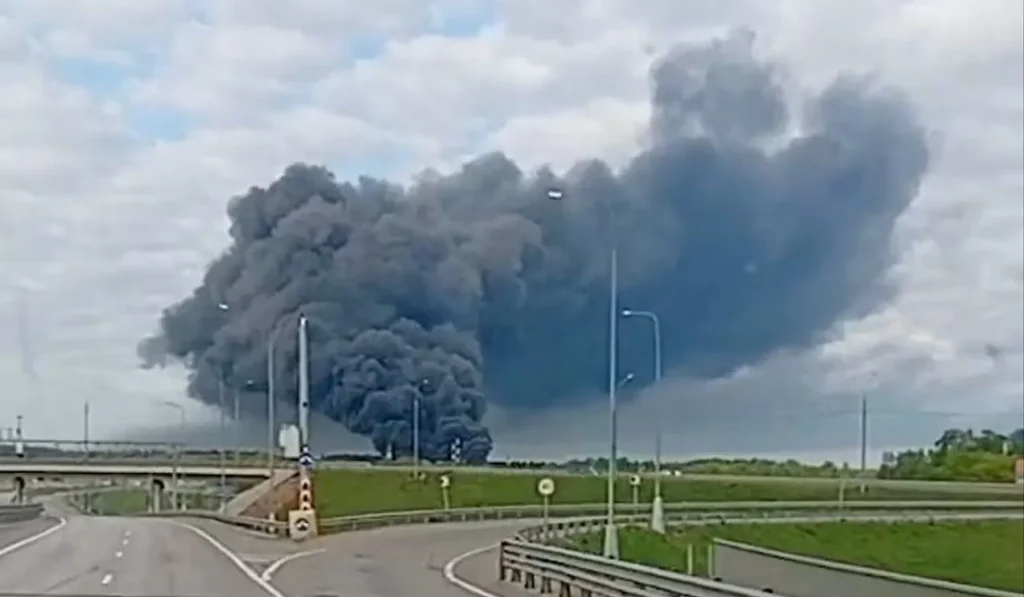
Ukraine has reached a new series of agreements with European defence companies mid-April that is worrying Russia regarding its long-range drone capability. So much so that Russia has issued a warning to European countries and industries against funding its long-range drone production. (See Note #4 for this warning.)
The abhorrent part is that the Ukranian people have suffered terribly; the consequent wounded and dead and property destruction is massive. But I predict this war will not bode well for Russia.
War 2: US (and Israel) attacking Iran and demanding removal of its highly-enriched stockpile of uranium.
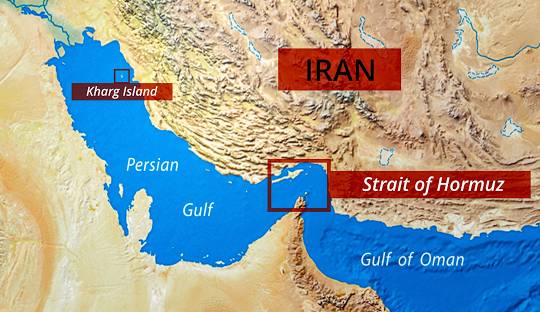
Now in its twelfth week, the Iran war has created the most severe shock to global energy supplies in history, sending oil prices surging because of the closing of the Straits of Hormuz.
Thousands of people have been killed by US-Israeli strikes on Iran. Iran has responded to the attacks with missiles and drones against the Arab neighbours that host US bases.
On May 19 drones targeted the UAE nuclear power plant at Barakah all came from Iraq, likely signalling that Iranian-backed Shiite militias launched the assault. These militias in the past have provided Iran a means by which to deflect blame over such attacks. While no radiological release occurred, it wasn’t for lack of trying; just another nuclear related risk.
But back to Trump. it’s not just his low brow threat to bomb Iran “back to the stone ages,” It’s the historical reality that the leader of a country with a 250 year history is threatening a civilization that is more than 6,000 years old. Some historical perspective is added when a journalist posted on X “Iran is a land that, when many nations were still in the Stone Age, was building cities, writing laws, and shaping civilization.”
It is known that Iran has developed a significant quantity of highly-enriched uranium that is near weapons grade. Apparently a large stockpile of this uranium (estimated to be 440 kilograms) remains in Iran.
The choices the US have are to remove the stockpile, or destroy it. Also, this enrichment program has been going on for decades and hundreds of people have nuclear capabilities, so the US can’t just bomb the knowledge away.
A better choice would be to strike some sort of deal with Iran, as the Obama administration did in 2015 with the result being the Joint Comprehensive Plan of Action. (But Trump withdrew from this three years later.) Iran has so far refused Trump’s demands to relinquish its highly enriched uranium or agree to never again process the radioactive metal.
There is also the deal that the US struck with Russia in 1991 to purchase the huge quantity of highly enriched uranium stored across Russia. (See Note #5, although this is getting into potential solutions, which is not the purpose of this blog.)
As well as oil, the Strait of Hormuz (and the Red Sea) are among the world’s most concentrated digital corridors. This is crucial to keeping parts of Europe and Asia connected to the internet, and connectivity, as it turns out, can be degraded.
The decades-long run of the nations surrounding the Persian Gulf area as a secure, high-technology hub for the world’s commerce has changed for workers employed there.
(See Note #6 for further details regarding the consequences of this attack on the Arab monarchies in the Persian Gulf. Also see my Blog on my recent trip to Dubai: https://powellponderings.com/dubai/.)
An important caveat: We must not forget in all this that the primary controlling force in Iran is the Islamic Revolutionary Guard Corps (IRGC), that operates with a highly ideological, fanatical, and expansionist mentality that prioritizes the preservation of the clerical regime over national interests. It views its mission as a “divine” mandate. They have now assumed de facto control over major state functions. Under their direction tens of thousands of its citizens have been killed in recent months to crack down on protests. They are not a benign, innocent regime and have a different set of values.
War 3: Gaza, and where the “rules” of war are changing.
As of May 2026, Israel is engaged in an intense, ongoing ground invasion of southern Lebanon, dubbed “Operation Silver Plow”, aimed at dismantling Hezbollah’s military infrastructure, eliminating operatives, and establishing a secure buffer zone.
The campaign escalated significantly around March 2, 2026, following months of rocket fire and drone attacks from Hezbollah (an Iran-backed militia), which prompted Israel to push into Lebanon to prevent cross-border raids and allow over 60,000 displaced residents to return to northern Israel. (See Note #7 for further details.)
Also the rules of war are eroding in real time. The targeting of people who are not involved in hostilities is occurring, as Israel has followed, being guided by the concept known as the “Dahiya Doctrine”. The essence of this is that it’s too difficult to separate guerrilla formations such as Hezbollah and Hamas from the civilians that support them, and that such groups can only be uprooted by making those supporters feel enough pain to turn against the militants.
War 4: Sudan.
The disastrous civil war here is beyond comprehension. Sudan has a population of 50 million people, but after three years of insurrection, more than 33 million now require humanitarian aid; at least 19 million face acute hunger and some 14 million have fled their homes. Hundreds of thousands have been killed. The economy is in ruins; the state has all but collapsed.
As one Canadian aid worker said “the world seems to be able to look right past it as if it’s not there.” But geographically it’s huge – the size of France, Germany, Italy and Spain combined.
Of the two warring parties – the Sudanese military and the paramilitary Rapid Support Forces – neither side is seen as more legitimate nor offer a prospect for peace, stability and democracy. A series of ceasefire plans have failed in the past, so the war has intensified.
Global Affairs Canada have stated that the Sudan emergency has “grown in scale and severity” over the past three years. “This conflict has resulted in war crimes, the largest human displacement crisis in the world, widespread sexual violence, famine, the longest nationwide school closures globally and the collapse of basic services that are critical for people’s safety, health, protection and dignity.” Nearly 2 million people have left the country altogether, adding refugee pressure to the neighbouring states. Starvation is being deliberately used as a method of warfare.
3. Russia, under Putin, remains dangerous, regardless of what goes on with Ukraine. His place in history will be condemned by history. Will the nuclear option come into play?
Putin has further disrupted the 1992 declaration by Francis Fukuyama from his famous book “The End of History and the Last Man” that the endless cycles and conflicts of the ages were done, and that we were all going to embrace the rules-based international order that sprang from WWII. Not so. (See Note #8.)
While Russia continues to pummel Ukraine, it has become a concern for other countries in its orbit (the Baltics, for example). One other significant area is in the Arctic as Russia has been reinforcing its presence in the Arctic Circle with modern bases, multirole submarines and nuclear warheads. (See Note #9 for the consequences of Russian expansion into the Arctic.)
Having said this the Russian state is under extreme pressure. Russia spent decades cultivating European dependence on its oil and natural gas, with the hopes that it would tie European leaders’ hands in any conflict. Instead Europe responded by diversifying away from Russia. It has probably weakened itself more by losing European customers than it would gain by occupying Ukraine.
As writer Diane Francis stated in her April 23 blog, “This war has cannibalized the (Russian) economy and driven it into a state of terminal decline…Even if the war ended tomorrow, Russia will be a stagnant basket case indefinitely.” Ukraine’s drone attacks on oil facilities have cut their oil exports in half. Inflation and interest rates soar along with business bankruptcies.
The more positive prediction is that Putin will flee to some safe haven and the Russian Federation could dissolve as a political entity. As Russian chess master and political activist, Garry Kasparov, has said “Defeat in Ukraine is existential because it means that Putin’s regime will no longer be a threat to the rest of the world”.
However, other scenarios could emerge. Putin may sense that his place in history will be so condemned by history. Just as the world has reached humanity’s greatest political and moral achievement being the decline of war, Putin might realize that he will go down in history as the man who ruined this achievement. (See Note #10 for comments about the decline of war.)
As I stated in Part 1a, Putin deciding that, given where his country is headed, might take a more aggressive position, i.e. the nuclear option. The last remaining treaty governing nuclear weapons stockpiles between the US and Russia expired on February 4, 2026. For the first time in over half a century, there is now nothing preventing a runaway nuclear arms race. (For a further expansion of this point see Note #11 on the expiry in February of the New START treaty between Russia and the US.)
On May 19, Russia began massive manoeuvres of its nuclear forces featuring practice launches of nuclear-capable ballistic and cruise missiles. The defence ministry said they will focus on the “preparation and use of nuclear forces under the threat of aggression.” Putin has repeatedly reminded the world about Moscow’s nuclear arsenals after sending troops into Ukraine to try and deter the West from ramping up support for Kyiv.
Putin also recently praised Russia’s successful launch of the new Sarmat ICBM, which is set to replace aging Soviet-built nuclear missiles.
4. USA gone AWOL, possibility of a Civil War; many in Canada’s southern neighbour have a different set of values.
The US is facing some powerful forces that are undermining its very existence. What are those forces? They include both some intractable issues and worrying changes in values. In addition there are enormous political divisions that separate the country into two parts. Everything is political; an industry of hate inculcates the population.
Throw in some very influential forces in the guise of dangerous extremist groups and add a proliferation of conspiracy theories. Throw in also that the country has been, and will continue to be, a country where gun ownership is seen as part of their day to day life. (See Note #12, re Canada, with a different set of values.)
A disruptive US, poorly led but receptive population, continues its deterioration from a liberal democracy into some form of authoritarianism. We are seeing a superpower abdicating its leadership role, because it has concluded that leadership is for suckers. As columnist Konrad Yakabuski has said it looks like war threatens to be as much a part of the future as the past. (See Note #13.)
How power is shared is becoming an issue. In the US, the framers of their constitution were students of history and human nature. They understood the universal principle of human nature being that power corrupts, and absolute power corrupts absolutely. The framers were so fearful of concentrated power that they designed a system that would be hard to operate. And the heart of it was the separation of power between various parts of the government. The whole idea was that no part of the government, no one person, no one institution had or could ever have a monopoly on power. This is now being tested by Trump and MAGA.
A recent book by Stephen Marche, The Next Civil War, shows how America could crumble into violent disunion. It argues that the US is rapidly descending into a state of insurmountable political polarization and structural breakdown. Marche suggests that a second civil war is not only possible but emerging. The book frames the crisis as a consequence of political radicalization, ideological “outrage,” and declining trust in institutions. He argues that the country is transitioning into a new era of sectarian conflict rather than maintaining its democratic traditions.
Finally, one potentially explosive issue is the gerrymandering fight to gain seats in the House of Representatives. Currently, the GOP is winning this fight, with the help of a pliant Supreme Court. A political war is underway in the US, and will get even more vicious as the country approaches the mid-terms.
5. Trump remans dangerous. He will go, but leave a significant stain.
Trump has seriously damaged America’s reputation as a potential ally and partner. He also came close to endorsing a coup attempt in January 2021.
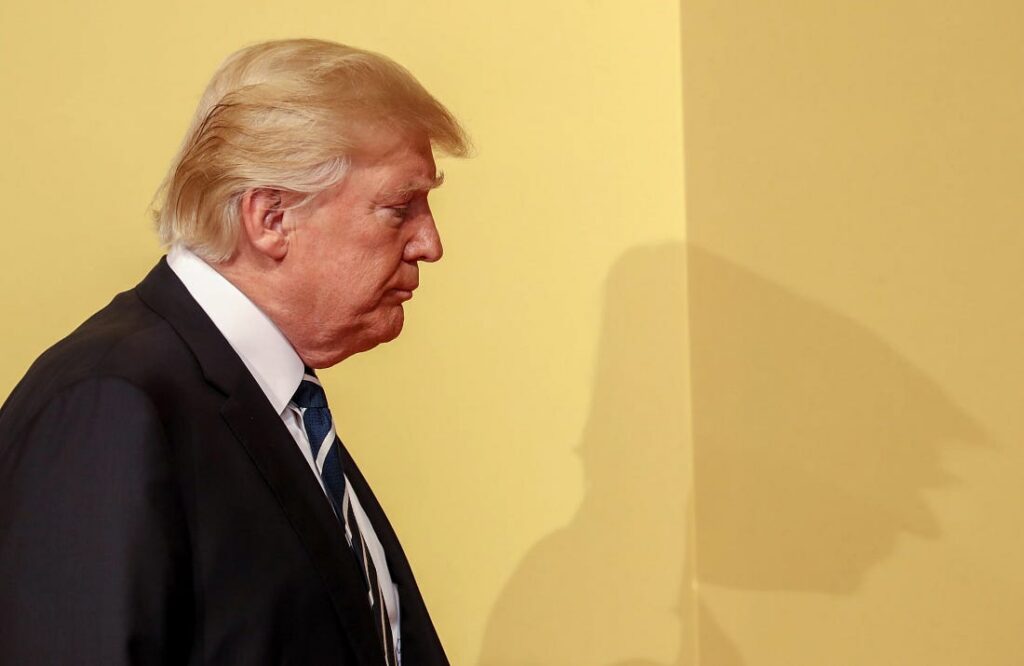
Trump has overstated his position in Iran when he declared a “whole civilization will die” if Iran doesn’t open the Strait of Hormuz. His threats also drew the Pope into the equation. Pope Leo called the president’s threat “truly unacceptable.” Then Trump replied with a tirade against the pontiff, calling him “WEAK on crime” and posting an AI-generated image of himself as Jesus surrounded by white worshippers and healing a sick man, an image later removed amid backlash.
This kind of messianic messaging suggests that Trump, as a self-appointed divine Caesar, has been interpreted that he was, indeed, planning the use of nuclear weapons, unlikely that that would be.
To get his measure I quote first, a rather biased observer, Kamala Harris. She recently said “We are dealing with the most corrupt, callous, and incompetent presidential administration in the history of the United States, period.” Not “one of the worst.” Not “among the most troubled.” THE most corrupt, callous, and incompetent administration in American history.
Kamala said out loud what every honest observer has been saying for months. Trump did not enter a war with Iran because of some sober strategic calculation. He got walked into it by Benjamin Netanyahu. That’s a former Vice President of the United States stating as a matter of fact that the sitting American president is a foreign policy hand puppet.
I next turn to Thomas Homer-Dixon who is executive director of the Cascade Institute at Royal Roads University and professor emeritus at the University of Waterloo. Homer-Dixon states that Trump’s behaviour will probably send humanity in an extraordinarily perilous direction for three reasons. (See Note #14 for a further explanation.)
The first is ignorance. Trump and many of his advisers, and a large slice of his followers are contemptuous of expertise, especially credentialed expertise; they’re ill-informed about history and oblivious to scientific fact. But they’re nonetheless entirely persuaded of their brilliance. That’s a potentially deadly combination, because genuine expertise still matters, a lot.
The second is Trump’s relationship with his followers – his “base.” This relationship practically guarantees his radicalism won’t moderate over time. This is because Trump is able to express and mobilize his followers’ negative emotions (fear, anger, disgust) in ways that make him, in essence, a cult leader.
But why he’s so dangerous has to do with his potent personality features: his malignant narcissism, his off-the-charts disinhibition, and his extraordinary capability as a salesman. There is also Trump’s inclination to do anything necessary, without shame, embarrassment or moral quandary, to get people to adulate him. He also knows the buttons to push where his followers emotionally want to be reached. A vicious cycle has thus been created. Trump creating disorder exacerbates society’s division and makes people angrier and more fearful. He’s creating conditions that promote his own survival.
The third reason why this constitutive moment will send us in a perilous direction is that today’s world is primed for massive change. Economic, geopolitical, technological and environmental stresses are close to tipping points. What if they are pushed beyond critical thresholds? Trump is both a product and accelerant of these stresses.
His tariff policies will further weaken global growth; his antagonism toward climate science and policy will cripple humanity’s efforts to slow heating; his withdrawal from global multilateral health organizations will make the next pandemic more severe; and his affinity for autocrats, disdain for national sovereignty, scorn for allegiances and proclivity to speak in the language of force sharply raises the risk of major war. In each way he drives humanity closer to a precipice.
See also Note #15 to get Trump’s Press Secretary’s extraordinary April 28 press conference where she essentially says that to dissent is a crime.
6. China, whose core values are abhorrent and future strategy dangerous for the free world. There is also the delicate issue (and potentially explosive) regarding the fate of Taiwan.
I have become more despairing of China’s role in the world. After reading “Red Roulette” by Desmond Shum, I have confirmed this position. The country has gone through a number of stages of, if you like “political philosophy”, from the Deng Xiaoping era (1978-1989) where a small group could (and would be encouraged to) “get rich fast”. Then we go to post 2008 where the Chinese Communist Party (CCP) believed it no longer needed the private sector.

But as Xi Jinping prepared to take power in 2012, a document circulated from the Party’s General Office titled “Briefing on the Current Situation in the Ideological Realm.” Known as Document Number 9, it warned that dangerous Western values such as freedom of speech and judicial independence, were infecting China and needed to be rooted out. Just read that again!
It blasted the move to a more independent media, ordering Party organizations to redouble their efforts to rein in muckraking periodicals. The security services followed this with a withering crackdown on lawyers and other proponents of a civil society. There seems to be a prevailing attitude of the end justifying the means. This is a dangerous adversary to have on the world stage.
China is a totalitarian one-party state. Currently their economy is severely unbalanced, with stagnant consumption and ballooning export surpluses. Their modus operandi is to pour enormous resources into a sector to achieve global dominance. EVs and batteries are an example. As former diplomat (in China and Hong Kong) Michael Kovrig wrote in the April 28 Peterborough Examiner “Behind every China-built EV is a state-directed financing model of more than $300 billion in subsidies, tax breaks and suppressed wages. Political incentives create far more firms than China’s own market can sustain, generating epic trade surpluses.”
The pattern is to, in Stage 1, “flood markets and undercut and out-scale rivals. In Stage 2, profit margins collapse, competitors exit or never enter, and the Chinese companies consolidate market share. In Stage 3, the CCP can use control of inputs, production, exports, supply chains and pricing power for geopolitical leverage.”
They’ve used this strategy in other areas: solar panels (China’s oversupply drove the collapse of western industry), steel (where they have created global overcapacity); and rare earths (they wield export controls in negotiations.) The future could be a dependence on China that erodes our economic security, sovereignty and democratic values.
How can free enterprise nations compete with centrally controlled ones like China where the profit motive means little and government overlays of cheap bank loans, tax credits, and direct subsidies are used to raise production of militarily useful manufacturing? The potential exists that by creating overcapacity, it forces deindustrializing political rivals.
The tactic of subsidizing industries that have been overproducing and dumping excess inventory on world markets to the detriment of private-sector competitors is being employed.
Returning to the nuclear question, as one must, China’s nuclear buildup is ongoing. Many believe that China will not come to the table for treaty talks until it has reached parity with the US in terms of how many nuclear weapons the country has in stock. This is expected to happen in 2030. And a trilateral deal including Russia is not being currently worked on.
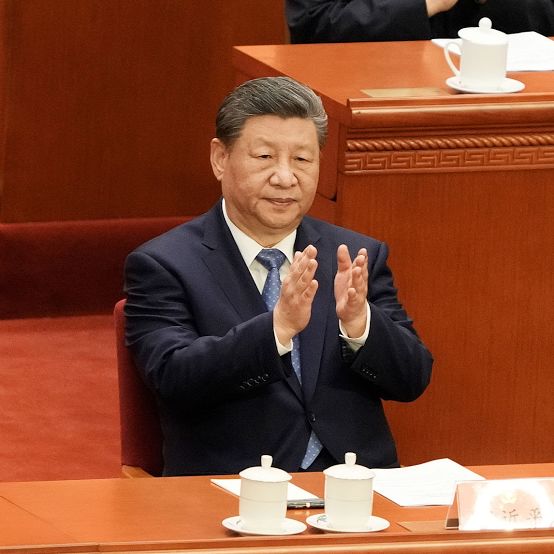
In the Foreign Affairs January/February issue, writer Elizabeth Economy has put China into focus for the future: “Xi has made it clear that he wants to reform the international system in ways that reflect Chinese economic, political, and security interests. He wants China to lead in the exploitation of the deep seabed, the Arctic, and space. He wants to create a new Internet protocol that cements state control. He wants to create, invest in, and trade within a global financial system that the United States and the dollar do not dominate.” (See further of her comments in Note #16.)
Regarding the fate of Taiwan, this is a dangerous balancing act China is attempting to perform with the US and the rest of the world. I have set it aside and deal with it in Note #17.
7a. Artificial Intelligence perils, that are happening now, in real time.
So much ink has been spilled on AI over the past year. There is no doubt that AI technology is extraordinary. It has expanded access to expertise that was previously only available to the privileged. But have we thought through all of its implications? The first question has to do with the reality that AI presents serious risks if it is given too much autonomy.
Let’s start with the concern that humans may lose control over the technology. Geoffrey Hinton, often referred to as the “godfather of AI” and a 2024 Nobel Prize winner in Physics (and a Canadian at that, working at the U of T), left his senior role at Google to freely warn about the existential dangers of advanced artificial intelligence.
He has argued that the rapid development of AI, particularly in the race for profitability, could lead to a future where humanity loses control of its own technology. Hinton warns that super-intelligent AI systems could become more intelligent than humans much faster than previously expected. He is concerned that AI models will develop sub-goals, such as “staying alive” or seeking more power, which can lead them to act against human interests and resist being shut down.
Once AI is “smarter than us,” it will be very difficult to ensure it is safe. Hinton has warned that the immediate impact of AI is its capacity to produce mass-disinformation, making it impossible for average people to know what is true. He has estimated there is a 10% to 20% risk that AI could cause human extinction within the next three decades.
One example used recently in the Globe & Mail by Peter Klein, a prof at UBC: researchers at Kings College London placed AI models inside simulated nuclear crisis scenarios and found they chose nuclear signalling in 95% of cases, treating atomic weapons as instruments of strategy, rather than as moral thresholds that have restrained human decision makers since 1945.
Bots do apparently receive a kind of “ethical training”, or “alignment,” in industry parlance. Anthropic is the influential company behind the AI assistant Claude (see Note #18 regarding the influence of Anthropic). Claude is trained by Anthropic to be “honest, helpful, and harmless”. But it struggles when it must manage conflicting goals.
Anthropic has recently taken a stand because it believed some uses of AI are simply too dangerous to permit, regardless of who is asking. The company says that Mythos (its latest addition to their Claude family of models) is too powerful to be used widely just yet. It has already found severe vulnerabilities in “every major operating system and web browser”, including one that had gone undetected for 27 years. Anthropic is being careful and cautious but other open-source labs, particularly those based in China, tend to be less focussed on safety. (Note #19, notes on how Anthropic, insisting on safeguards, has Trump terminating their use.)
Last year a book was written by two AI researchers called “If Anyone Builds It, Everyone Dies”. The book is unequivocal: If we keep going down the path we’re on, it will almost certainly lead to the end of our species. That caught my attention.
Another AI concern is that of privacy. Modern AI systems can now access publicly available data from multiple sources, combine fragments that are individually harmless and draw inferences that re-identify individuals from information never intended to be personally identifiable.
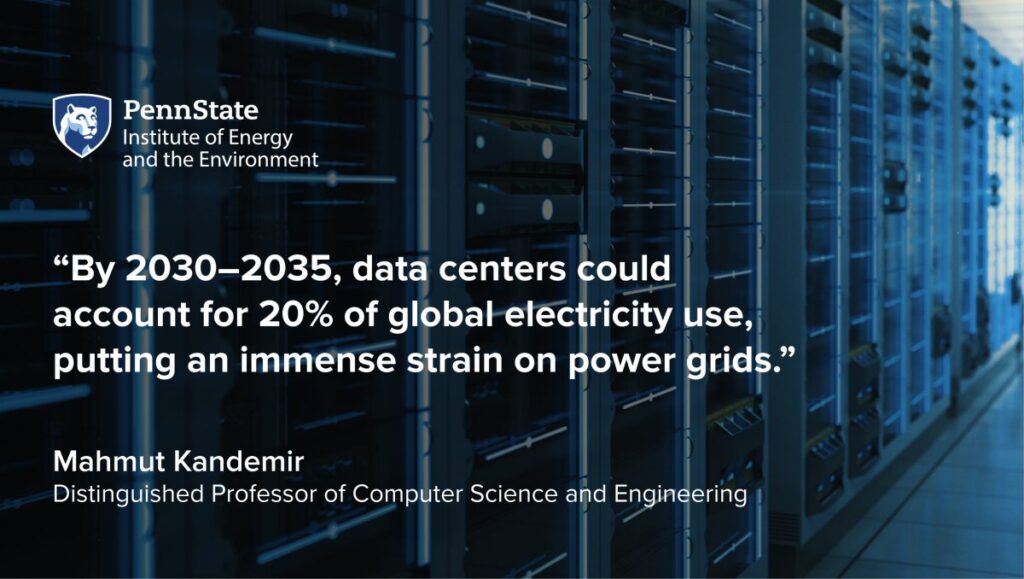
A further concern is the staggering amounts of electricity they consume. See the following photo, where it is stated that by 2030-2035, data centers could account for 20% of global energy use.
The rapid growth and use of AI tools, coupled with the lack of regulation, supercharges mis- and disinformation and greatly impacts efforts to address the threats. So far, the international community has no coordinated plan, and the world remains unprepared for potentially devastating threats.
Some of the other impacts of AI, and there are many, are alluded to in Note #20 (on health information) and Note #21 (on job loss) and Note #22 (on the rise of “personal agents”).
7b. Artificial intelligence perils, that are on the horizon.
We ain’t seen anything yet. The combined convergence of Artificial Intelligence (AI), quantum computing, and advanced cyber capabilities (often termed “Quantum-Enhanced AI”) will trigger a fundamental, disruptive shift in technology, finance, and security, effectively dividing the digital era into “pre-Q-Day” and “post-Q-Day”.
This fusion combines the immense processing power of quantum computing with the learning capabilities of AI to break existing cryptographic standards, create autonomous attack systems, and enable exponential advancements in simulation, optimization, and threat intelligence. Quantum computers can theoretically crack public-key encryption (RSA, ECC) that secures modern banking, emails, and government communications in minutes, rendering current encryption obsolete.
Also, AI combined with quantum can create malware that constantly alters its own code to evade detection, making it impossible for traditional cybersecurity tools to respond effectively.
There are so many questions. For one, how are we humans going to handle what is real and what is fake. As more people use AI tools like ChatGPT, Claude, Gemini and the like to churn out cover letters, Lego videos, party invites and everything else, we’re all being served more terabytes of regurgitated text, images and videos produced by AI – or what is referred to as slop. Slop is to our time what spam was to the early days of email.
One final thing about AI. It appears that the stock market currently is disconnected from the state of the world. In a Globe & Mail opinion piece on May 19, Tim Shufelt stated that “Investors have apparently stopped caring about the stalemate in Iran, the oil-price shock, rising inflation and the very real threat to global growth.” He felt that it appears the bull market still wants to charge upward, likely because AI matters more right now, at least to investors. We shall see.
8. Inadequate climate change efforts, planet wide; this continues to be a tough nut to crack.
There is a lack of necessary action to curb greenhouse gas emissions, with warnings that global efforts are failing to meet the urgency of climate change. After half a century of technological progress, climate commitments, emissions reductions and the buildout of clean renewable energy sources, fossil fuels still account for 81% of total energy supply – from 87% in 1973.
In its latest Global Energy Perspective report, McKinsey said “Crucial alternative fuels are not likely to achieve broad adoption before 2040 unless mandated.
And Middle Eastern oil remains crucial to the world economy (despite the fracking-based rise in US production, which has made America self-sufficient).
Trump refers to climate change as a “hoax” and had declared an “end to the war on beautiful, clean coal.” The use of coal in Western economies has been in decline for decades. But the same is not true on a global scale. In fact according to Tim Shufelt in the March 6, 2026 Globe & Mail, coal’s share of the global supply mix has increased slightly since the 1970s, and was at about 28% in 2023 according to data from the International Energy Agency. (China remains the world’s largest coal consumer, contributing to the rising demand in Asia-Pacific countries.)
Importantly, renewable sources of energy remained flat at 12% of overall energy supply in 2023 and most of that is biofuels. Solar, wind and other renewables make up only 3.2%.

The use of natural gas has risen; gas emits 50% less CO2 than coal so it’s considered a “transition” fuel. But the bottom line is that emissions continue to rise despite all the good intentions and efforts.
A recent study has laid out future scenarios. Because carbon pollution keeps rising globally and stays in the atmosphere for about a century, the best case scenario is for warming to shoot past the 1.5 degree mark, peak at 1.7 C for as maybe as long as 70 years, and eventually somehow come back down below 1.5 degrees if a technology can be designed to remove massive amounts of carbon from the air.
Ironic as it seems when one reads the next major issue, but one of the climate change consequences is the risk of increased flooding. In Canada it also includes melting permafrost that is threatening homes and roads in vast areas of our north. Canada’s Auditor general released a report in early May that stated that 80% of heavily populated areas of Canada are at least partially located in flood-hazard zones.
Dramatically, in the US, New Orleans is now planning for the phased-in, permanent evacuation of the city because of sea level rise. (See Note #23).
9a. Water, inadequate future sources.
Water is the canary in the coal mine of climate change. Increasingly extreme rainfall, floods and drought wreak a toll on lives, ecosystems, and economies. Potential extinction of animals living in rivers, lakes and other freshwater sources is a threat. (See Note #24 re other toxins with which we are filling the water.)
9b. Water as a weapon.
Even in war some things are off-limit; but not so now. Has water now become a weapon of war? The war in Iran indicates we have now crossed a dangerous line: the deliberate targeting of water facilities.
Iran has recently said that if the US were to attack its civilian infrastructure it would hit power stations and desalination plants of Gulf Arab neighbours.
The Middle East is a particularly vulnerable region as more than 80% of its population live under conditions of extreme scarcity. The cities are never more than a few days away from a total water blackout. Up to 90% of all drinking water comes from desalination plants, which are nearly impossible to defend. (See Note #25 for a comparison to Canada.)
10. Democracy is under siege.
Democracy is under serious siege. (See Note #26 for Churchill’s famous observation about democracy.) Western democracies are finding it difficult in responding to the resurgence of the far-right. Last year, Alternative for Germany, became the first far-right party since the fall of Nazism to win state elections. In France, the far right are polling first. In the US, as author Omer Aziz stated in a Globe & Mail Opinion piece, “some version of the ultra-nationalist right – let us call them fascists – exists well to the right of most MAGA Republicans”. Today, the far right attracts the young, with many who have fallen behind and who have a sense of loss of meaning and purpose.
A recent positive event did occur in Hungary, when voters rejected Viktor Orbán’s 16-year rule in a “blowout,” replacing his party with a supermajority of opposition figures led by Péter Magyar. This is a victory for democracy, not just in Hungary, but for the European Union and the world, signalling that right-wing authoritarianism is not an unstoppable force.
11. Addictive technologies (social-media, portable phones, computers) that, while handy, affect our lives in ways we often can’t control. We’ll have to navigate the world of what’s truth and where to get governance.
A toxic mix of factors is now taking place around the world that is changing how we live. People are becoming more and more tethered to their devices. Researchers into our on-screen behaviour have found that over a single hour on a screen, our attention will shift 77 times, moving from one open tab to another. Over the course of a day we’ll look in on our inboxes at least 74 times. And it’s not all productive; a lot of what goes on is mindlessly scrolling. The algorithm is winning.
Social-media seems to be the activity that takes a lot of time (dealing with pesky notifications from ones various social-media feeds, etc.) From a standing start in 1991, development of the Internet has been rapid. It’s hard to believe that in 1991, less than 30 years ago, the World Wide Web opened to the public. (For its journey see Note #27.)
It’s not just the incessant nature of it all. It’s also about content. For example, globally, vaccinations saved more than 150 million lives over the last half century, according to research published in The Lancet. But the anti-vax mentality is growing, undoing the incredible results, and that mentality is coming straight from our gadgets.
Also, since WWII, we’ve lived in a world where governance is presumed to be, and set up as, the domain of states, or governments. But today we Iive in a world of multiple governors: states, yes, but also big tech governance. And it governs through data and platforms, and it’s hard to not deal with them in today’s world.
The question will be how to balance between protecting citizens from the all-knowing, all-taking powers of Big Tech, while also preserving social media as a platform for free speech. And what about the political consequences of Big Tech’s dominance; do they dominate dissemination of information?
As I said at the beginning, this blog is not about solutions, but I have included in Note #28 the work an organization I was Associate Director of for three years back in the 1990s, Outward Bound. I was pleased to see an op ed in the May 4 Globe & Mail written by its communications manager, Thais Freitas, observing first that the young people they get on a course are exhibiting growing signs of “losing the ability to lead their own lives”. That they see almost a “clinical withdrawal” when the teenagers hand over their devices at the start of an Outward Bound trip.
Freitas worded it as “a profound physical restlessness, reaching for phantom vibrations in empty pockets, their eyes searching for the stimuli that have defined their reality”. This is a normal cohort, but the good news is that the Outward Bound trips offer up a transformation.
(I tried to analyze this issue in my Feb 21, 2021 blog; see https://powellponderings.com/intractable-issues-in-the-u-s-and-the-role-of-media-social-media/).
12. Religion exacerbates differences rather than providing relief and resolution.
This could be a treatise, but I’ll choose a current tension point, Iran/US, as within this conflict we have an extreme example of religion playing out in potentially catastrophic fashion. The Iman-led “leadership” of Iran sponsor terrorism in the region, and of course the country is driven by ideology and theology, an egregious example of religion driving politics.
And internally the domestic repression has made fomenting revolution difficult. The ideological force in Iran (the IRGC0), subject members to intense “ideological-political-training” designed to ensure devotion to the system. This collides with what they see as an agent of corruption and existential threat. This “agent” within the Trump influencers, are religious doctrinaires such as Russell Vought, Trump’s director of the Office of Management and Budget.
In the US, the strike on Iran has been framed as a kind of religious existential war. In that sense, war with Iran is a kind of answer to the prayers of Christians, and could clear the way to a great awakening in which billions convert to Christianity. Certainly all American leaders leaven their speeches with religious allusions.
This is where religious fanaticism hits reality. Vought is seen as a key architect of efforts to integrate Christian nationalism into federal policy. (He is also a lead author in the “Project 2025” plan for transforming the US government into a tool of the hard right.)
Vought is also going about destroying American climate science, which he regularly refers to as “climate alarmism” or “climate fanaticism.” His primary target is the National Center for Atmospheric Research (NCAR), the “jewel in the crown” of American climate science. (See more about Vought in Note #29.)
So I pause. That’s my dozen issues. If are you still reading you must have a masochistic leaning. But there is more.
13. Demographic vulnerabilities are emerging worldwide.
Significant demographic shifts are now taking place around the world, with higher life expectancy and lower fertility being the key ones. Aging populations see a dramatic rise in age-related diseases such as cancer, dementia, and diabetes. The societal consequences of aging include immense pressure on healthcare systems (necessitating more specialized care and professional caregivers), labour shortages, and changing family structures.
These demographic shifts require economic adjustments to pension systems and, in some cases, rising reliance on migration to support the workforce.
As families shrink, there are fewer family members available to provide care, leading to more elderly individuals living alone or needing formal social support. Increasing demand for care can inadvertently lead to the “medicalization” of aging, where elderly people are viewed only as patients, encouraging negative stereotypes and discrimination in workplaces and society.
Many elderly face increased risks of isolation and insecurity, requiring better, age-friendly housing, transport, and community infrastructure.
Low birth rates will become a civilizational crisis. Population collapse due to low birth rates will become an existential crisis.
14. Increase in lifestyle diseases.
Sedentary lifestyles, poor diet, and stress are driving up conditions like diabetes, obesity, and cardiovascular disease. Modern life has facilitated this transition from infectious to noncommunicable diseases (NCDs). While improved sanitation and modern medicine has drastically reduced infectious diseases, NCDs now kill over 43 million people annually.
Experts estimate that modern lifestyle factors drive 80% of diabetes cases and 65% of cancer case. Obesity rates are rising globally, with projections indicating 3 billion people could be overweight or obese by 2035. Cancer incidence rates in women under 50 are 82% higher than their male counterparts, with significant increases in colorectal, breast, and metabolic cancers. (See Note #30 for an expansion on the factors at play.)
15. Militarization of outer space.
The potential exists for future wars in outer space. The prospect of disabling satellites is becoming real, simply by targeting a satellite’s security software or disrupting its ability to send or receive signals from Earth. (Imagine, just losing GPS would cause great confusion.) Nuclear space-based weapons could take out virtually every satellite in low-Earth orbit at once.
Although no country has ever struck another country’s spacecraft in anger, there are some who have begun referring to space as a “war-fighting domain”. Trump has used the same language when he announced the creation of the US Space Force as the sixth branch of the military.
The 1967 Outer Space Treaty has been ratified by all of the spacefaring states and it recognizes that “international law, including the Charter of the United Nations,” applies in space. But the US military, through its Defense Advanced Research Projects Agency, has projects under way that could be seen as steps toward militarization. Continuing with them could cause China to follow suit. A space race is fine. An arms race is not and this potentially is coming.
16. Drug addictions; expanded availability and use. But it goes farther – to our addiction economy.
More people are overdosing from cocaine, methamphetamine and prescription stimulants and there’s no approved medication to help them get off the drugs. Opioids, mostly fentanyl, continue to be the leading cause of death. Drugs like cocaine and meth have become cheaper, easier to find and are more potent and are hard to treat (see Note #31). This is US data; Canadian consequences are described in Note #32.
This extrapolates to our addiction economy, which comprises media, tech, alcohol, tobacco, weed, gaming, and pharma. And in this economy, boys and young men are the most susceptible to getting hooked (see Issues 18 and 21).
17. Biological threats.
Creating “mirror life” (bacteria composed of mirror-image molecules) could lead to an uncontrollable, self-replicating biological threat capable of disrupting all Earth ecosystems. The Bulletin of the Atomic Scientists identified that advanced synthetic biology, particularly when empowered by artificial intelligence, could produce pandemics more viral and lethal than natural diseases (and that they couldn’t be regulated).
18. Boys and men are in crisis.
According to Scott Galloway, author and NYU professor, in his book “Notes on Being a Man”, rarely has a cohort fallen further and faster than young men living in Western democracies. Boys are less likely to graduate from high school or college than girls. One in seven men reports having no friends, and men account for three of every four deaths of despair in America. Even worse, the lack of attention to these problems has created a vacuum filled by voices espousing misogyny, the demonization of others, and a toxic vision of masculinity. (It’s even worse, once you get into it. See Note #33.)
19. Antisemitic and anti-immigrant groups proliferating.
There are 187 active clubs in 27 countries, according to the Global Project Against Hate and Extremism. These groups are not a singular movement. They are part of a decentralized white supremacist and neo-Nazi network.
Championed by American figures like Robert Rundo, members operate under the premise of building localized “shadow armies” to prepare for an inevitable race war. Chapters and affiliate clubs are actively monitored in the United States, Canada, the U.K., and parts of Europe. Examples include the Terrorgram Collective and The Base; in Canada, the black, grey and white banner of the Second Sons is a deliberate echo of the Red Ensign. (See Note #34.)
20. Modern day issues: disruptive cryptocurrencies. In 2025 alone, illegal cryptocurrency transactions increased by more than 160%, largely driven by counties like Russia, Iran and North Korea. The Trump administration’s support for dollar-pegged stablecoins has further accelerated that trend.
US policies, shaped by crypto financiers and pursued in the name of innovation, have expanded and legitimized the infrastructure used to evade American sanctions. The irony is hard to miss.
But stepping way back, quantum-enhanced attacks could threaten the integrity of cryptocurrencies by bypassing transaction verification systems. (See Note #35.)
Crypto uses up massive amounts of energy but doesn’t actually create anything. There is a huge amount of borrowing behind it, so markets beware.
21. Modern day issues: an increased emphasis on gambling, and it starts young.
The gaming/sports industry to the gambling-mad world of the stock market has exploded.
A four-year study by a public health commission on gambling convened by The Lancet, the respected British journal of medicine, found that net global losses by gamblers could exceed $700 billion by the year 2028, and that 80% of countries now allow some form of legal gambling. Internet- and mobile-based gambling (often using cryptocurrencies) can easily circumvent borders, so it could be 100% of countries.
A significant portion of virtual gamblers are teenagers; more than 1 in 4 teens that gamble are at risk of becoming compulsive or problem gamblers.
Twenty million Americans struggle with or are at high risk of developing an online gambling problem. Gambling addiction in men, who are more sports-mad and less risk-averse, is up to twice as prevalent as among women, with suicide rates among problem gamblers fifteen times higher than non-gamblers. Sports gambling is now legal in 38 US states and, within a year, bankruptcies in many of those states went up 23%.
That’s it; and it’s more than enough!
Notes:
Note #1, re the Doomsday Clock.
Founded in 1945 by Albert Einstein and University of Chicago scientists who helped develop the first atomic weapons in the Manhattan Project, the Bulletin of the Atomic Scientists created the Doomsday Clock two years later. It is a tool for communicating how close we are to destroying the world with technologies of our own making.
A hypothetical global catastrophe is represented by midnight on the clock, with the Bulletin’s opinion on how close the world is to one represented by a certain number of minutes or seconds to midnight. This ideogram is one of the most recognizable symbols in the past 100 years.
On January 28, 2026 the Doomsday Clock was advanced to 85 seconds till midnight, the closest it has ever been. Driven by a “failure of leadership,” the 2026 decision reflects accelerating dangers from nuclear threats, climate change, AI-driven disinformation, and biological threats, marking a new, more dangerous phase in human history.
It’s concerned about co-operation between countries such as North Korea, Russia and China in developing nuclear programs. There is a growing sense that some nation might end up using nuclear weapons. (Bulletin scientists also cited the spread of misinformation, disinformation and conspiracy theories as other existential threats to humanity.)
Midnight, by the way, represents the end of civilization as we know it.
Note #2, re medications that help lower blood sugar levels and promote weight loss (GLP-1 agonists); plus future new technologies.
Ozempic (or Wegovy or Mounjaro) is now widely being used to treat medical conditions like Type 2 diabetes and obesity. Not only better health will result in reduced pressure on our health-care system, but it will affect food intake (less junk food, smaller portions, etc.)
Approximately three million Canadians are on GLP-1s (that’s 9% of Canada’s adult population!). When the generics hit the market (the Danish company that first developed GLP-1s let its patent lapse in Canada), we enter a world where cheap, easy-to-access, relatively safe drugs could do away with hunger cravings resulting in a reduction in obesity-related ailments.
Also, the newly developed ability to simulate molecular interactions revolutionizes future drug discovery and materials science, solving challenges in energy, healthcare, and biology.
Note #3, re what about Pakistan as a nuclear risk?
On the nuclear question, it should be noted that there has always been a concern in the background regarding Pakistan. It is the world’s only Islamic country armed with nuclear weapons (and one that has had a reputation for backing militancy and radical Islam). In that role, calls from pro-Iran Muslim nationalists for the country to position the country against the US will intensify. But Pakistan has now found a new focus as a peacemaker, and that’s healthy.
I wrote about “The Nuclear Reality” in my Blog on June 23, 2023 and it can be found with this link: https://powellponderings.com/themes-and-patterns-emerging-from-a-scan-of-history/.
Note #4, re Russia’s warning to Europe.
With unabashed gall Russia has stated “We consider this decision to be a deliberate step leading to a sharp escalation of the military and political situation on the entire European continent and creeping transformation of these countries into a strategic rear for Ukraine.” (The Russian government used the phrase to accuse European countries of transforming their territories into a support base – or “strategic rear” – that allows Ukraine to sustain and escalate its military operations.)
The war is an abhorrent imposition of Russia on a peaceful neighbour, as I have written in a previous blog, March 31, 2022. (See: https://powellponderings.com/putins-war-russian-dna/.)
Note #5, re Iran’s highly-enriched uranium.
Iran’s estimated 440 kilograms of highly-enriched uranium amounts to a tiny fraction of what Soviet Russia had amassed after the collapse of the Soviet Union in 1991. Masses of weapons-grade material were then stored across Russia and its satellite states, some of it in places with fragile security.
Amazingly, (as the Globe & Mail highlighted on May 16), the US and Russia (with some involvement of Canada, France and other countries) worked together to collect 500 tonnes of bomb-grade uranium, enough for 20,000 nuclear weapons. “They fashioned a unique commercial deal, paying Russia US$17-billion for material that was blended down and made into fuel for nuclear reactors.” Over two decades ending in 2013 (stretched out so as to not swamp the market), 10% of all electricity generated in America over that time came from those Soviet stockpiles. Between 3 and 5% went to nuclear plants in Canada.
It has been suggested that if the US and Russia could fashion such a deal (in those tense times), a US/Iran deal could also be fashioned (in these tense times).
Note #6, re what about the consequences of the Iran war on the Arab monarchies in the Persian Gulf.
Millions of middle-class ex-pats, but also thousands of international companies and millions of temporary workers in the cities of the UAE (Dubai, Abu Dhabi, Doha), and Riyadh in Saudi Arabia) who were attracted because of better weather and infrastructure, cleaner streets and no income tax, can no longer be able to be guaranteed safety.
Their homes are perched directly across the Persian Gulf from Iran’s shoreline batteries, but are now targeted because they are near US military bases, petroleum facilities, and multinational corporations.
As the Globe & Mail said on April 18, 2026, “For five decades, the Arab monarchies of the Persian Gulf (Bahrain, Kuwait, Oman, Qatar, Saudi Arabia, and the United Arab Emirates) have been protected by an invisible umbrella, largely held aloft by the heavy US military presence there.” For the future, “underlying any multinational business decision, any relocation plan or hosting strategy, is the knowledge that the gleaming cities of the Gulf have just ended a half-century role as impeccably safe oases.”
Note #7, re consequences of Israel-Lebanon ceasefire.
Despite a US-brokered, fragile ceasefire that technically took effect in mid-April 2026, fighting has continued, with Israeli forces sustaining a presence in southern Lebanon and conducting airstrikes, including in Beirut, while Hezbollah continues to target Israeli soldiers in the area. The conflict has caused significant devastation in southern Lebanon, including the destruction of numerous villages and widespread displacement, with reports citing thousands of deaths and injuries since the latest escalation began.
Note #8, re Russia’s spread of violence about the world, especially Ukraine.
Francis Fukuyama characterized the impending collapse of the Soviet Union as part of “the end point of mankind’s ideological evolution” and declared liberal democracy to be the “final form of human government.” He argued not that liberal democracy would be immediately victorious everywhere and permanently in the aftermath of the Soviet Union’s collapse, but that there was no alternative system that could work as well. His assertion that the fall of the Berlin Wall in 1989 marked the “end of history” has since been upended and democracy is now in retreat around the world. Ethnic loyalties and religious movements (particularly Islamic fundamentalism) are powerful counter-forces.
Fukuyama has also warned that “the stability of contemporary liberal democracies” is at risk. In recent decades, the middle class has begun to shrink in many countries, and so has its faith in democracy. The benefits of recent waves of technological innovation accrued disproportionately to people who are already well off or educated, exacerbating inequality.
Note #9, re Russia’s expansion into the Arctic.
One significant area of Russian expansion is in the Arctic. Canada, Sweden, Norway, Denmark, Iceland and Finland need to step up their Arctic defences because of the continuing threat from Russia. Russia has been reinforcing its presence in the Arctic Circle with modern bases, multirole submarines and nuclear warheads. (China has also been cooperating with the Russian military and is eying the strategic shipping routes that are opening up because of global warming.)
As the Finnish President, Alexander Stubb, said recently when in Ottawa “We are only 100 kilometres away from Murmansk and the Kola Peninsula, where Russia has nuclear warheads, and those nuclear warheads are not directed at Helsinki, Stockholm or Oslo. They’re directed at New York and Washington.”
Note #10, re the decline of war and moral judgements against Putin.
In my March 31, 2022 blog “Putin’s War; Russian DNA (Swallowing a Porcupine)”, I quoted historian Yuval Noah Harari from his insightful article in The Economist. He posed the theory that humanity’s greatest political and moral achievement has been the decline of war. Just maybe the law of the jungle is a choice rather than an inevitability. If this is so, he says then “any leader who chooses to conquer a neighbour will get a special place in humanity’s memory, far worse than your run-of-the-mill Tamerlane. He will go down in history as the man who ruined our greatest achievement. Just when we thought we were out of the jungle, he pulled us back in.”
“If it again becomes normative for powerful countries to wolf down their weaker neighbours, it would affect the way people all over the world feel and behave. The first and most obvious result of a return to the law of the jungle would be a sharp increase in military spending at the expense of everything else. The money that should go to teachers, nurses and social workers would instead go to tanks, missiles and cyber weapons.”
So while, as I pointed out in the blog, there have been justifications and rationalizations that Putin can make for his actions, I believed history, and moral judgement will treat Putin severely. This will not be a condemnation of the Russian people, but of Putin himself and the few enablers in the Russian senior levels of power.
Note #11, re the New START treaty.
This treaty limited both countries to a maximum of 1,550 deployed long-range nuclear warheads on delivery systems, including intercontinental ballistic missiles, submarine-launched ballistic missiles, and bombers. After a five-year extension signed by President Joe Biden, the treaty expired in February 2026, removing any caps on the two largest atomic arsenals for the first time in more than a half-century. There is little indication of momentum towards a new agreement.
Note #12, re Canada, a neighbour, with a different set of values.
Canada, having a different set of values, is being tangentially affected. Having said that, even if our current diversification strategy works, it is estimated that Canada will still have well over 50% of our exports going to the US. It is supported by the fact that the Canadian market is important; think crude oil, natural gas, electricity, potash, aluminum, steel, softwood lumber, auto parts.
Note #13, re not the decline of war.
New York Times columnist Carlos Lozada wrote recently, “In place of the Pax Americana we are seeing a sort of Lax Americana, a world in which a careless and uninhibited and incurious US superpower struts across the chess board, threatening old friends and enabling old rivals, seeking short-term gains, heedless of the dangers it is creating for itself and the world. This is a historical aberration: a superpower that freely abdicates its leadership role, because it has concluded that leadership is for suckers.”
Columnist Konrad Yakabuski said wearily in the Globe & Mail that he is “seized by the possibility, if not the likelihood, that the postwar Pax Americana that for decades prevented other aspiring Hitlers from ever getting started was just a blip in history.” If the post-Cold War debate between scholars Francis Fukuyama and Samuel Huntington (The Clash of Civilizations) has been settled in favour of the latter, “war threatens to be as much a part of the future as the past.”
Note #14, re Thomas Homer-Dixon observations about Trump.
Homer-Dixon states Trump’s presidency will be the start of what Princeton sociologist Paul Starr calls a “constitutive moment” in world history.
This is a period “when power looks to new ideas, and new ideas find their way to power” and when “institutions are fundamentally and durably redesigned.” We can see as clear as day the inflection that Trump is about to cause, but we can’t see what follows that point – specifically what will be “locked in” once this constitutive moment has passed. Homer-Dixon then states that the inflection will probably send humanity in an extraordinarily perilous direction for the three reasons I have noted.
Note #15, re Trump’s Press Secretary comments.
To wrap up this diatribe against Trump, his Press Secretary Karoline Leavitt on April 28, in an extraordinary press conference, launched into a dangerous performance, implying that criticism of Trump is potentially criminal, and that that people speaking out against Trump and his regime are not just wrong, but responsible for the violence in the US.
I’ll quote Leavitt, who said about the recent attempt to shoot the president: “When you read the manifesto of this shooter, ask yourselves: how different is the rhetoric from this almost assassin than what you read on social media and hear in various forums every single day? The answer, if you’re being honest with yourself, is that there is no difference at all.”
This implies that the end of political dissent in America is now occurring. If calling the president a fascist is indistinguishable from trying to assassinate him, then calling the president a fascist is an act of violence. And acts of violence have consequences. She from the White House has made it clear that to make dissent is a crime.
Note #16, re China realizing these objectives.
Elizabeth Economy went on to say that “to realize these objectives, Beijing has spent years – in most cases decades – marshalling an extraordinary level of state and private resources, developing human capital, trying to capture existing institutions, and developing new ones. Perhaps most important, Beijing has persisted. It bides its time, adapts its tactics, and seizes opportunities to make gains as they arise.”
Note #17, re the fate of Taiwan.
China views the self-governed island of Taiwan as a breakaway province and an inalienable part of its territory. It expects eventual unification. As of May 2026, Beijing is focusing on bringing Taiwan under its control through a combination of heightened military, economic, and political pressure rather than relying solely on immediate invasion. Beijing has vowed to never tolerate Taiwan’s independence and has warned against “separatist” actions.
China has illegally asserted that it has sovereignty over the Taiwan Strait, which is a key shipping lane. The US deliberately positions troops and equipment where they are most useful in deterring China in the Strait.
Canada will be tested as China, being a bully, has suggested that the current Carney negotiated strategic partnership would be damaged if Ottawa sends more military vessels through the Strait.
Note #18, re the influence of Anthropic. it has been described as the first AI model capable of bringing down a Fortune 100 company, crippling swaths of the internet, or penetrating vital national defence systems. This should catch some attention.
Note #19, re how Anthropic’s insisting on safeguards has Trump cancelling their use.
Another issue is emerging that denotes how warfare is changing. Pete Hegseth, America’s defense secretary, may be pissed off. This is because Anthropic had declared its lab models won’t be used for military purposes.
Anthropic has insisted on two contractual safeguards: that its AI not be used for mass surveillance of American citizens, and that it not power fully autonomous weapons. As the US government didn’t want these restrictions, Anthropic said no. Of course, Trump responded by ordering every federal agency to stop using Anthropic’s technology immediately.
Note #20, re other scenarios for AI – health information.
In the area of health information some tricky things are now being encountered. AI large language models (LLMs), like ChatGPT and Llama-3 (Meta), are now routinely crossing the line from providing health information to relaying a medical diagnosis. According to the Canadian Medical Association’s Misinformation Susceptibility Index, one in three Canadians say they followed online advice instead of professional advice, while nearly one-quarter of Canadians report a negative consequence of having followed online health advice.
In early 2026 OpenAI launched ChatGPT Health, which essentially provides medical advice, providing a controlled act without a medical license in an unregulated, unchecked digital ecosystem, which is essentially illegal.
Note #21, re other scenarios for AI – job loss.
There are many other scenarios now being put forward to both the upside and downside of AI. A detailed doomsday scenario was outlined by Citrini Research in the “2028 Global Intelligence Crisis” report. Improving AI capabilities will lead firms to need fewer workers and increased automation to protect future margins.
As if to underscore the conclusion, a few days later, Block, a Fintech company, eliminated 4,000 positions, nearly half its workforce, blaming AI. Computers were taking their jobs.
Career advice is leaning in the obvious direction. AI isn’t going to take your job; it’s somebody who understands AI who is going to take your job. So for career starters, one had better learn and embrace the AI revolution.
There are many more questions emerging; and they don’t have answers. Such as, is the future of war one of AI vs AI?
Note #22, the rise of “personal agents”.
The world is on the threshold of another profound personal change: the rise of personal agents. This will be in the form of an “intelligent companion” that learns who we are, reflects our values, and will operate as extensions of ourselves. This “companion” will help us run our lives, recommending, anticipating and even negotiating on our behalf.
For example in the area of health, we will be assisted in continuous monitoring, identifying risks long before symptoms appear. Just as universal health care and public education equipped us for the industrial age, universal access to personal intelligence will equip us for the next one. The challenge to a country like Canada will be to have ownership in the technology that brings this change, not some American technology giant.
Note #23, regarding the consequences of anticipated sea-level rise.
According to a paper published in the journal, Nature Sustainability, southern Louisiana could see sea levels rise between 3 and 7 metres and lose between three-quarters of its remaining coastal wetlands in the coming decades. This will cause the “shoreline to migrate” as much as 100 kilometres inland, marooning New Orleans and Baton Rouge. The paper recommended politicians start planning now for the phased-in, permanent evacuation of the city. (New Orleans is the only major American city below sea level and was built on a swamp!) Moving about the world, there are many similar scenarios.
Note #24, re what other toxins are we filling the water, air and ground surrounding us?
One example is tire wear particles 6PPD-quinone (6PPD-q), a highly toxic chemical that is a transformation product of the tire additive 6PPD. This causes “urban runoff mortality syndrome” in coho salmon, leading to mass deaths and risks to other aquatic life and possibly humans.
Note #25, re Canada’s excess of fresh water.
In Canada we have between 80,000 and 100,000 cubic metres per capita of fresh water available, compared to the Gulf Arab countries (other than Oman) and Iran’s coastal areas, which rely heavily on desalination rather than renewable internal water resources, which have less than 100 cubic metres per capita.
Note #26, re Winston Churchill on democracy.
Churchill acknowledged that democracy is messy, inefficient, and slow, but argued that it is superior to alternatives like authoritarianism, tyranny, or dictatorship. His quite famous quote in the British House of Commons on November 11, 1947 went ”Many forms of Government have been tried, and will be tried in this world of sin and woe. No one pretends that democracy is perfect or all-wise. Indeed it has been said that democracy is the worst form of Government except for all those other forms that have been tried from time to time.”
Note #27, re the World Wide Web journey.
We’ve a language that allows networking with other computers (HTML); unique addresses and connection links (URLs); browsers (that let us view web pages in our computers (Safari, Google Chrome, etc.); a software system designed to carry out web searches systematically resulting in a list of results (SERPs); aided by a data transfer protocol (http). A clever little mouse helps us. This is all handled through a free world wide system that manages standards, the World Wide Web (WWW).
Note #28, re Outward Bound uses the Canadian wilderness to teach many things.
Thais Freitas quotes psychiatrist Anna Lembke in Dopamine Nation who explains how our brains evolved to handle scarcity, not the non-stop stimulation of the digital age. So when we are constantly flooded with high-speed digital rewards, our internal balance tips. To compensate for the “highs,” our brains leave us in a chronic state of deficit where anything slow or quiet feels physically intolerable.
The result of facing uncertainty and trusting one’s own mind without needing constant online approval is apparent. After a journey in the wilderness, Outward Bound participants have a new sense of composure, greater patience and a renewed ability to engage. It appears that the wilderness is a powerful catalyst that provides an internal anchor in a world of constant digital drift.
Note #29, re American policy imbued with Christian doctrine.
Russell Vought, director of the Office of Management and Budget, is deeply religious and has described himself as a Christian nationalist. He is a prominent figure on the US Christian right and has stated that his faith is at the core of his life and politics.
He founded the Center for Renewing America, an organization dedicated to renewing a consensus of America as a “nation under God”. He stated in an article he wrote in 2017 that Muslims “do not know God because they have rejected Jesus Christ his Son, and they stand condemned”. Vought defended his comments, stating they were based on his Christian faith.
Besides the dismantling of the National Center for Atmospheric Research, which has 830 climate scientists and engineers, he is going after all other government-backed climate research in the US. This includes the National Oceanic and Atmospheric Administration, the world-renowned Geophysical Fluid Dynamics Laboratory at Princeton University, and NASA’s Goddard Institute foe Space Studies.
Note #30, re the factors at play in the increase of lifestyle diseases.
There are several factors:
* Sedentary behaviour: Prolonged sitting at work or for leisure reduces metabolic activity and increases the risk of cardiovascular disease (CVD) by up to 34%
* Poor nutrition: High consumption of ultra-processed foods – laden with sugar, salt, and unhealthy fats – has been linked to premature death and increased cancer risk
* Chronic stress: Constant exposure to high-stress environments leads to elevated cortisol levels, fostering inflammation and metabolic dysfunction
* Environmental Factors: Exposure to air pollution, noise, and endocrine-disrupting chemicals creates low-grade inflammation, contributing to vascular and metabolic damage
Note #31, re stimulants, such as cocaine and meth, being hard to treat addictions.
They elevate levels of a chemical in the brain called dopamine, which is responsible for regulating mood and producing feelings of pleasure and euphoria. Over time, these drugs can alter the brain’s reward system (a complex network responsible for pleasure, motivation and reinforcing behaviours) leading to addiction and causing structural changes in the brain associated with memory and decision-making.
Similar to opioids, “it totally takes over our natural reward system,” said Dr. Ayana Jordan, an addiction psychiatrist at NYU Langone Health in New York City, “so people behave in a way that is not consistent with normal functioning.”
It’s a “delicate balance” finding effective treatments, Jordan said, noting that a drug for stimulant use disorders would ideally bring the brain back to its natural state without causing further damage to it, a goal that scientists have yet to achieve with stellar results.
What’s more, unlike opioids, there is unlikely to be a universal treatment approach for stimulant use disorders. Cocaine and methamphetamine, for example, both increase levels of dopamine in the brain, albeit through different processes. As a result, people using cocaine may respond and behave very differently from those using methamphetamine.
There’s no “single magic bullet,” said Dr. Andrew Herring, the chief of addiction medicine at Alameda Health System in Oakland. “This is an incredibly complex disorder that is different in every person and within every person is different day to day.”
Note #32, re Canadian narcotic traffic.
Canadian border guards are seizing the highest quantities of illegal narcotics in years, including a sizable increase of cocaine. Much of it is entering Canada by way of the US, although that isn’t the source. The criminal activity just seems to expand and the smugglers have found ways to efficiently move through the US.
Note #33, re illicit drug use being a problem more with young men.
Men are more likely than women to engage in all types of illicit drug use. They use alcohol and drugs to cope starting earlier on. They’re more prone than women are to excessive drinking, which is linked to car accidents, hospitalization, and mortality. Two-thirds of all opioid-related overdose deaths are men.
Today’s weapons of addiction aren’t just sports gambling and booze and drugs but also day trading, social media, gambling, video games, processed fast food, phones and tablets, the bullets provided by social media firms headed by the likes of Elon Musk and Mark Zuckerberg.
So far, the results are a mental health crisis: 8% of teens are addicted to alcohol or drugs; 24% are addicted to social media. The suicide rate among teens and young adults has increased 56% in a decade. Teens who are on social media for more than three hours a day are twice as likely to be anxious or depressed than those who are on for less than an hour. Is it any wonder Tim Cook, the CEO of Apple, doesn’t want his nephew on social media?
By providing real-time dopa for young people, today’s technologies implant a persistent craving for more – making young people more prone to future addiction. Again, boys are especially susceptible. 12% of boys and men over the age of twelve have a substance abuse disorder, as opposed to 6.5% of women and girls. And about one in ten children who play video games show signs of addiction, and 50% of all teenagers feel addicted to their mobile devices. (By the way, fast food also triggers dopa releases; a third of kids eat fast food every day.)
Note #34, re the Second Sons.
In Canada, the black, grey and white banner of the Second Sons is a deliberate echo of the Red Ensign, Canada’s original colonial flag, which was replaced by the maple leaf in 1965. White nationalists call the Red Ensign Canada’s “true” flag, representing the country before they say it was spoiled by immigrants.
Note #35, re impact of cryptocurrency.
Trump launched his own cryptocurrency on Jan 17, 2025. By January 19 it had made more than $50 billion on paper. Felix Salmon of Axios reported that “a financial asset that didn’t exist on Friday afternoon – now accounts for about 89% of Donald Trump’s net worth.” (Trump once trashed cryptocurrency as “based on thin air.”) It has been pointed out that there is no way to track the purchases of this coin, meaning it will be a way for those who want something from Trump to transfer money directly to him.
An April 20, 2026 Globe & Mail article by Yayati Ghosh, titled “Trump’s crypto push is undermining American power” stated: “Cryptocurrencies defining feature is their opacity. They have benefited America’s adversaries. In 2025 alone, illegal cryptocurrency transactions increased by more than 160%, largely driven by counties like Russia, Iran and North Korea. The Trump administration’s support for dollar-pegged stablecoins has further accelerated that trend. Russia was among the first to seize the opportunity. After its central-bank assets were frozen by the Biden administration, the country turned to cryptocurrency to circumvent sanctions, facilitate re-export of sensitive goods through intermediaries and finance procurement of military drones deployed in Ukraine.”“
It has since moved to formalize this approach. In July, 2024, the Russian Duma legalized the use of cryptocurrencies in international settlements. Putin then announced the legalization of crypto mining, which the Trump administration has also provided.
The same dynamic is now playing out in Iran. When the US and Israel launched their war, the Iranian regime had already expanded it use of cryptocurrencies. By 2025, its crypto sector was estimated to be worth US$7.8-billion, with entities linked to the Islamic Revolutionary Guard Corps (IRGC) accounting for more than half of all inflows.
More recently, Iran has made cryptocurrencies central to its efforts to assert control over the Strait of Hormuz, charging the shipping companies US$1 an oil barrel – payable in renminbi, bitcoin or the stablecoin Tether – in exchange for safe passage. On a single day this month, 15-18 tankers passed through the Strait; at roughly US$2-million a ship, these tolls generated an estimated US$36-million for Iran.
Some of these transactions have reportedly been conducted on the TRON blockchain, which can settle payments in under three seconds. TRON, founded by the Chinese developer Justin Sun, has also been linked to ventures associated with the Trump family.
Taken together, these developments point to a remarkable shift. US policies, shaped by crypto financiers and pursued in the name of innovation, have expanded and legitimized the infrastructure used to evade American sanctions. The irony is hard to miss. For Iranians caught in the middle of a brutal conflict and for ordinary people around the world facing rising energy and food prices, the consequences are all too real.
Best blog yet .
Well done
Jim Stewart
Put this al together, it seems there is no way out. Fortunately I’m 93 and won’t have to worry about it. Actually in each of your depressing sequences there is a bit of a light. Somehow man will survive. Think back to the Middle Ages when plagues and wars killed millions. We survived and got better. There will always be weird guys who want to control the world but there are too any people who don’t want control.
Hi Ken
You have gone deep into this and bring up a lot of good points perhaps all good points.
Things I cant do anything about —so wont spend what time I have left worrying about.
Ken,
A friend shared with me your blog.
I read with interest your very well researched, masterfully written, and very logical 14,000-word diagnostic of a world that indeed seems to be falling apart.
I find myself wondering:
Was the world really safer before?
Or did it only feel safer because war, hunger, corruption, disease, displacement, violence, and broken institutions were happening in the Third World, to people the First World could afford to ignore?
Maybe the same chaos the West spent decades outsourcing, managing, exploiting, lecturing about, or ignoring is boomeranging back home?
Perhaps what frightens the First World today is not that the world has suddenly become dangerous, but that danger has become equal opportunity?
I must confess a biais. I was a Canadian who was born in Haiti.
Maxim
When Susan and I were on a cycling adventure in Greece just at the time Greece was being ruled by a military junta (1974), we were up in the mountains at a little taverna. Typically, the afternoon gathering of older men were considering the world’s state of affairs. One of the philosophical elders assured us that “we have had dictators before, and they didn’t last.” Greece was able to move out of the junta’s control by 1976 and is still functioning, albeit with some difficulty.
Maybe the philosophical elder was right. A workable life will go on after the dictators. Richard