“from a Blue Jays hot dog to Michelin rated restaurants”
This is a fun blog. It has family and food in it, and even the Blue Jays and a brilliant play at the Shaw Festival, and no politics.
I will reconstruct the six day period in May that was packed and bracketed by two outstanding dinners.
Blue Jays and a terrible hot dog
To start off, my oldest son Brendan through his company, provided his brother Dylan and Dylan’s son Ayden, myself and of course himself, tickets to the Blue Jays game on Saturday, May 9th.
So my story starts with a foot-long hot dog. I thought I was paying off the original SkyDome debt when I was charged $48.50 for two dogs plus a coke. And the dog was disgusting. I threw half of it under my seat and spent the rest of the game crunching it with my shoe. What a front-end bracket to the story of the two meals I’ll now describe.


The game was quite good, he said biting his words, as I am not really a baseball fan. The Blue Jays routed the LA Angels 14-1 with a number of quite exciting plays.
From there we ubered up to an Italian restaurant called Kappo Sato in North Toronto on Mt. Pleasant Rd. A choice my sons selected with me for my special annual dinner with them. (Every year since they were quite young I have taken them out for dinner at a restaurant of their choice where they could order what they wanted. They quickly realized what that meant.)
Kappo Sato was Japanese, though. (I just wanted to see if you were paying attention.)
What a choice that turned out to be, as you will soon see!
I’ll then move to Thursday, May 14 for Penny’s birthday dinner at the Pearl Morissette restaurant in Jordan.
Kappo Sato (Ken, Brendan, Dylan)
So to the Saturday, May 9 dinner at Kappo Sato. In 2023 Michelin lauded the restaurant, led by Chef Takeshi Sato, for its bustling atmosphere and “clever courses” and awarded Kappo Sato, a One Star Michelin rating. Booking it required some planning plus they requested a significant downpayment ($450) before we even set foot into it.
The entrance is discreet and quite unassuming, almost invisible with no obvious identification until I spotted a tiny sign on the outside door. It was designed to look like a private, exclusive hideaway.
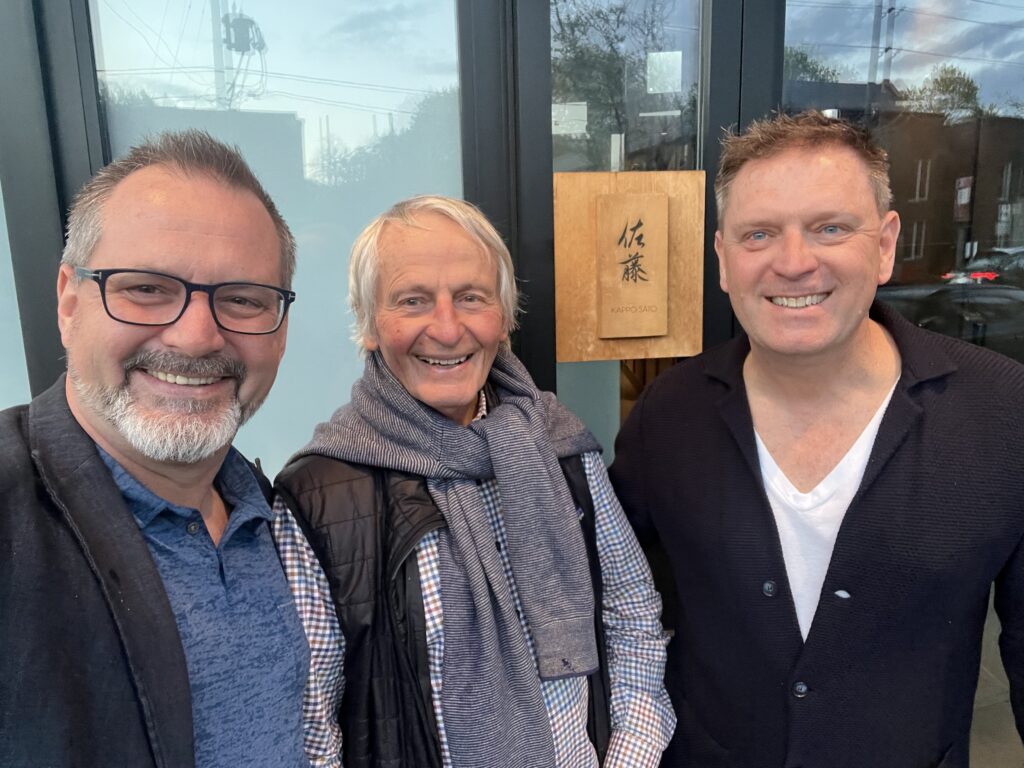
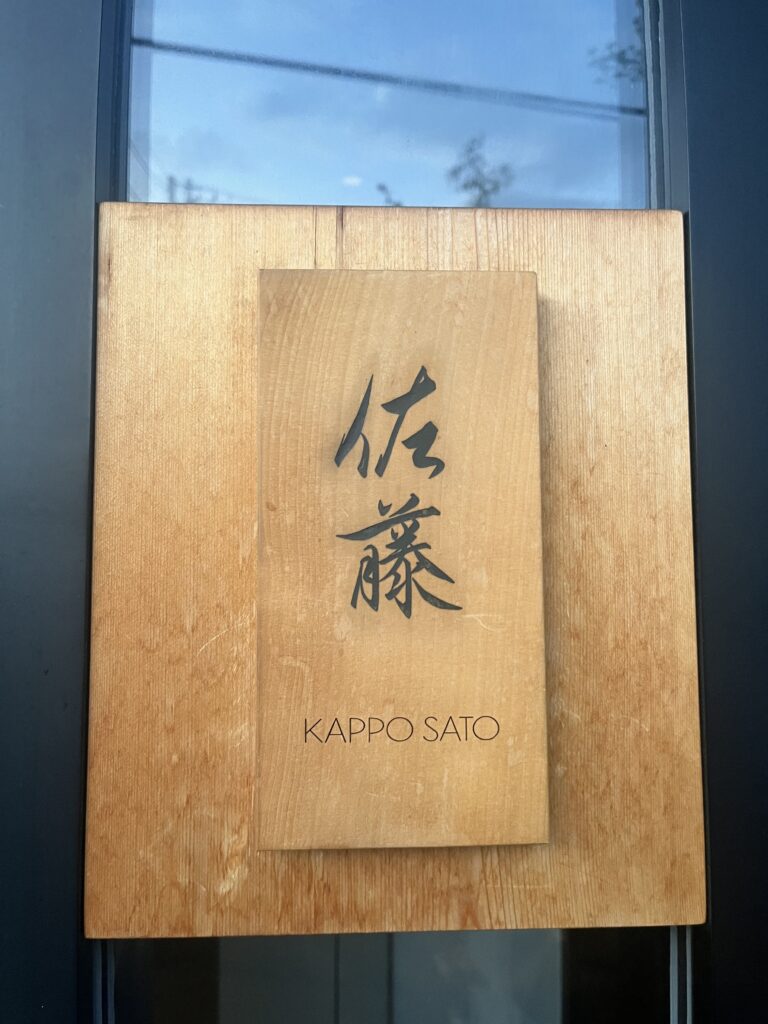
It only serves ten people per seating. Diners are treated to a 13-course Kappo-style Japanese cuisine and we were about to find out what that meant. Most of the ingredients are flown in from Japan.
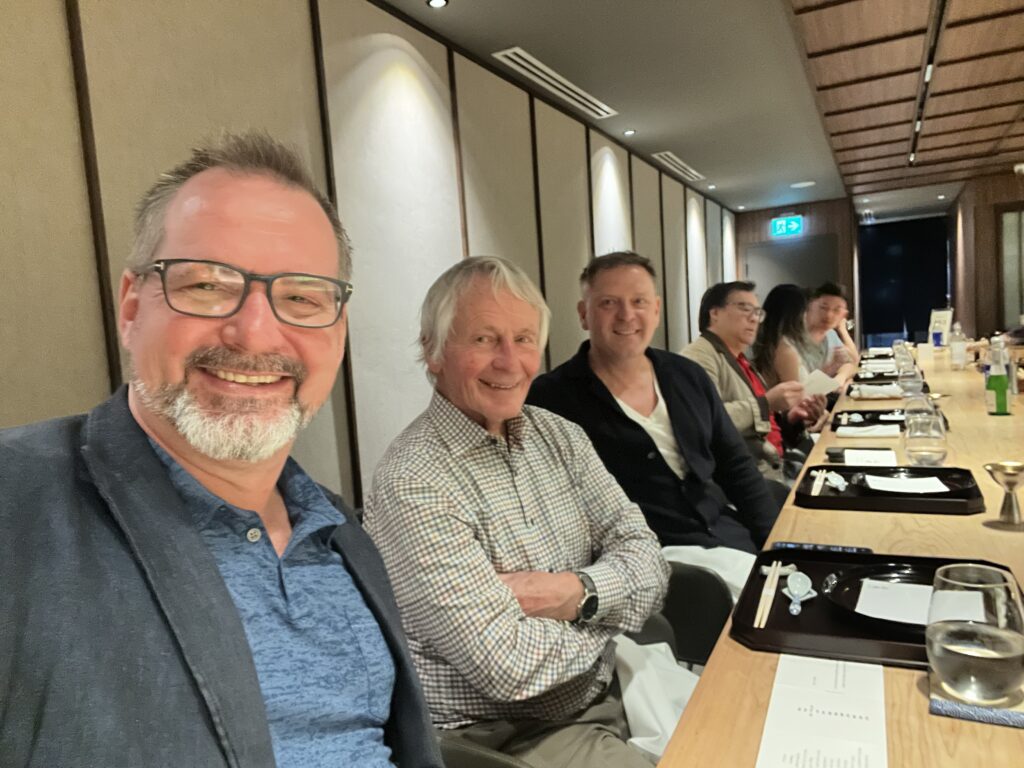
So what is Kappo? Kappo is a traditional Japanese cooking method where the chef prepares dishes directly in front of guests while engaging with them throughout the meal. The word literally means “to cut and to cook”, reflecting a balance of knife skills, grilling, simmering, frying and delicate plating. We saw quickly that Chef Takeshi Sato can work artfully with a knife!
Apparently it takes 10 to 15 years to become a master of Kappo, one reason why Kappo chefs and authentic Kappo restaurants are a rarity in North America.
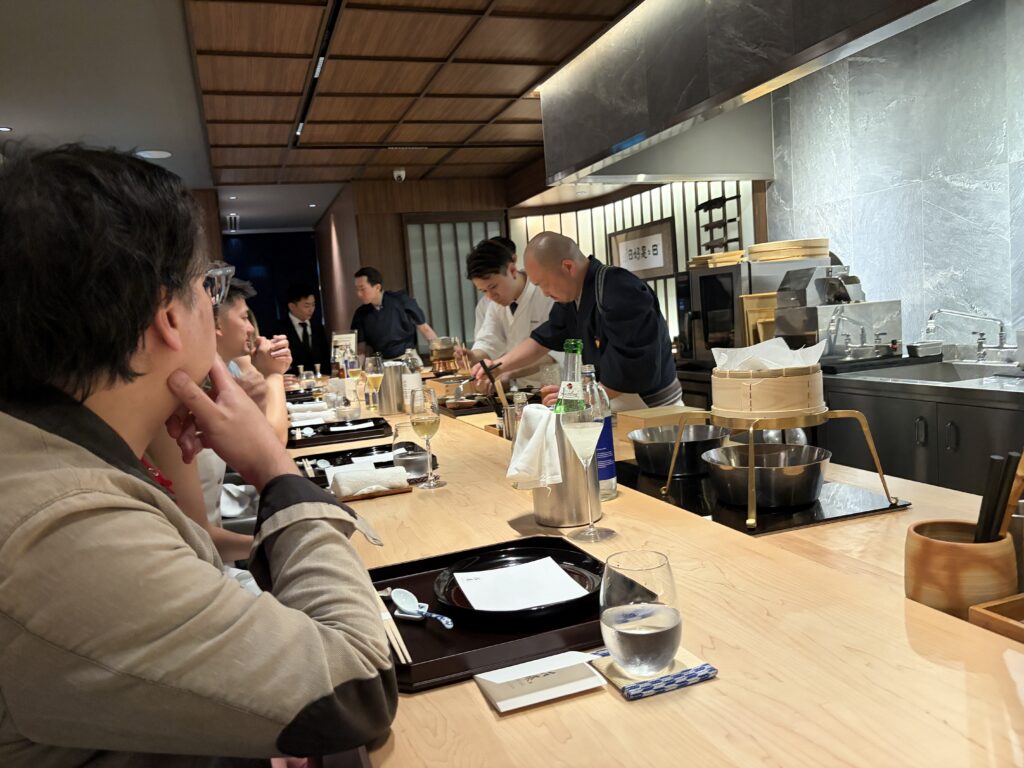
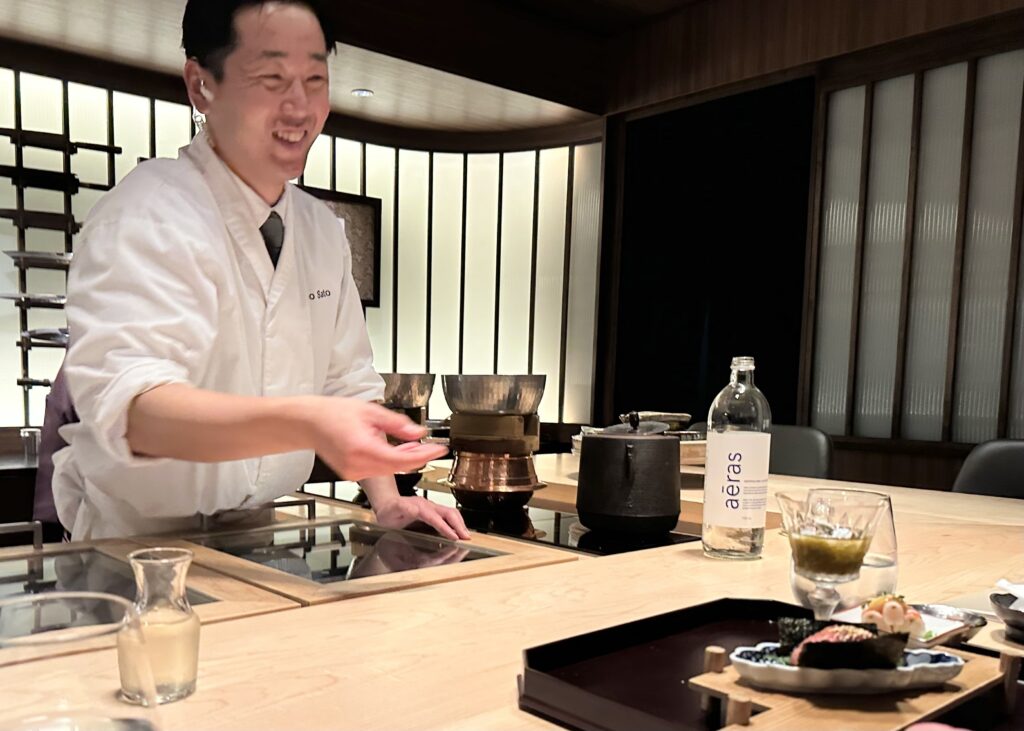
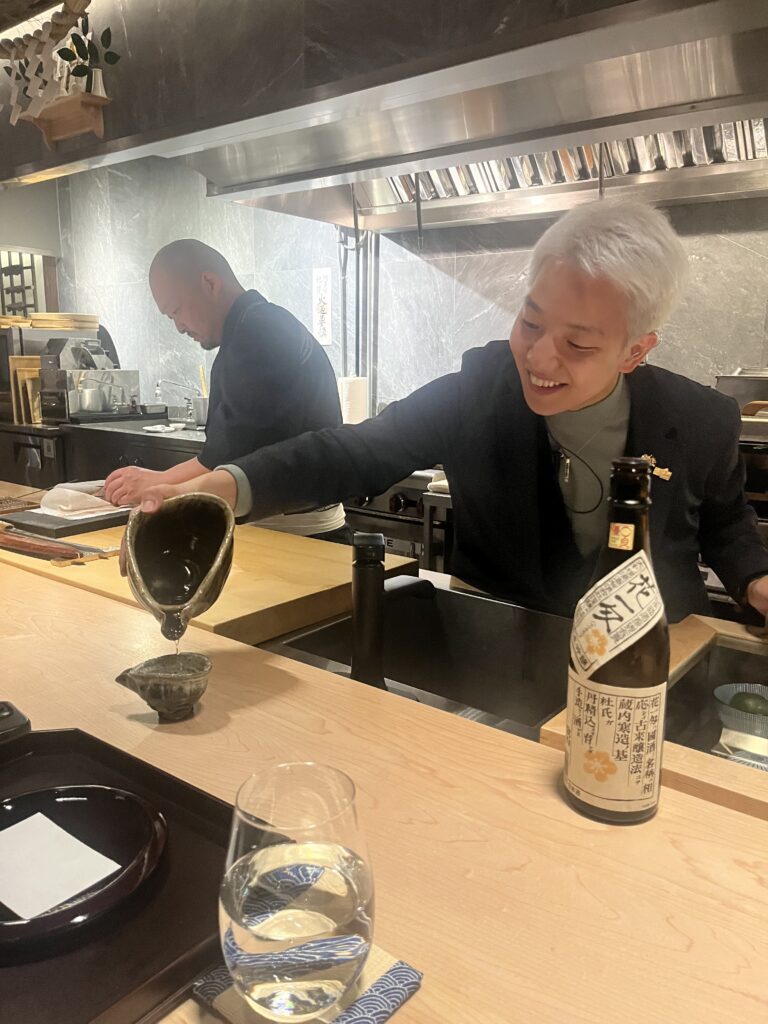
We were seated across a counter which went along the entire open kitchen and could watch our meal being prepared by Chef Sato, with other sous-chefs working alongside. It felt like being invited into a chef’s private kitchen. Chef Sato is unusual as not only is he the chef but he is also the owner. Thus he personally oversees everything, from the menu and ingredient selection to the overall guest experience.
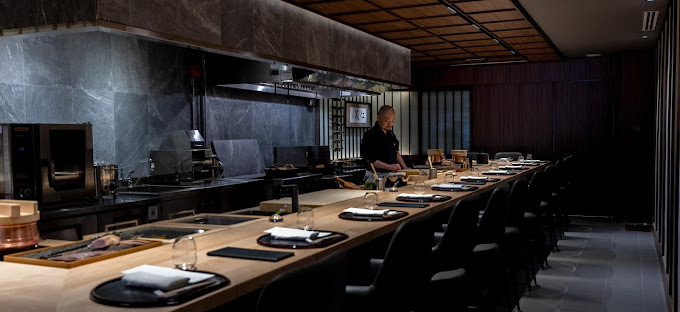
Besides Sato, the staff were great, anticipating one’s needs without interrupting the rhythm of the meal. An androgynous Ken personally served as our principal contact.
Kappo Sato offers a variety of dishes made mainly of ceramics, which are unique in colour, shape, and texture. Chef Sato chooses dishes that match the colour and season of the dish so that the dish is perfectly matched to it.
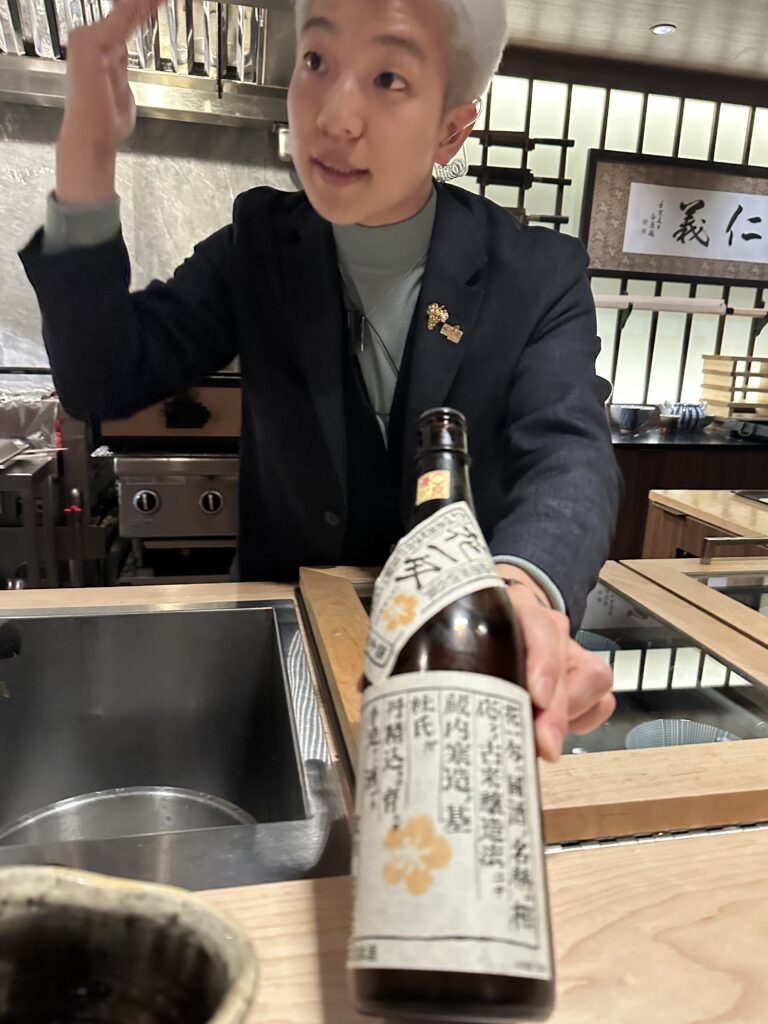
I ordered the wine (read “saki”) pairing, and that was important. While the presentation of a dish reflects the season, the choice of sake complemented the flavours that were quite sophisticated. I can’t tell you the sake names, as most were in Japanese, but I am certainly going to see if I can tap into importing possibilities as they all were different and exquisite.
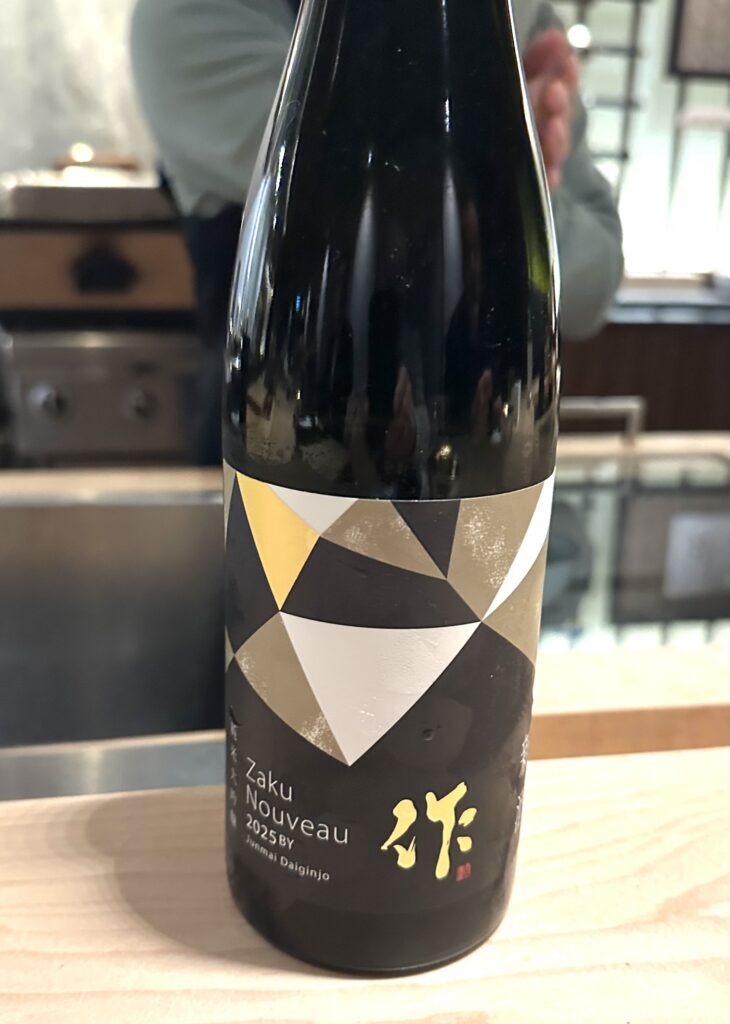
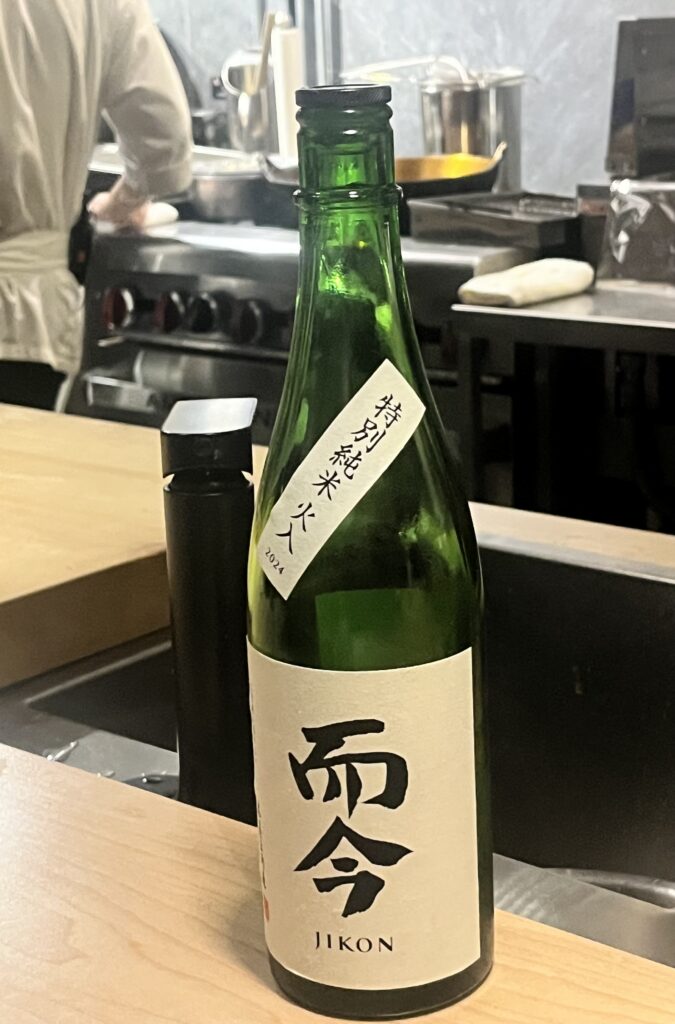
The menu reads as follows:
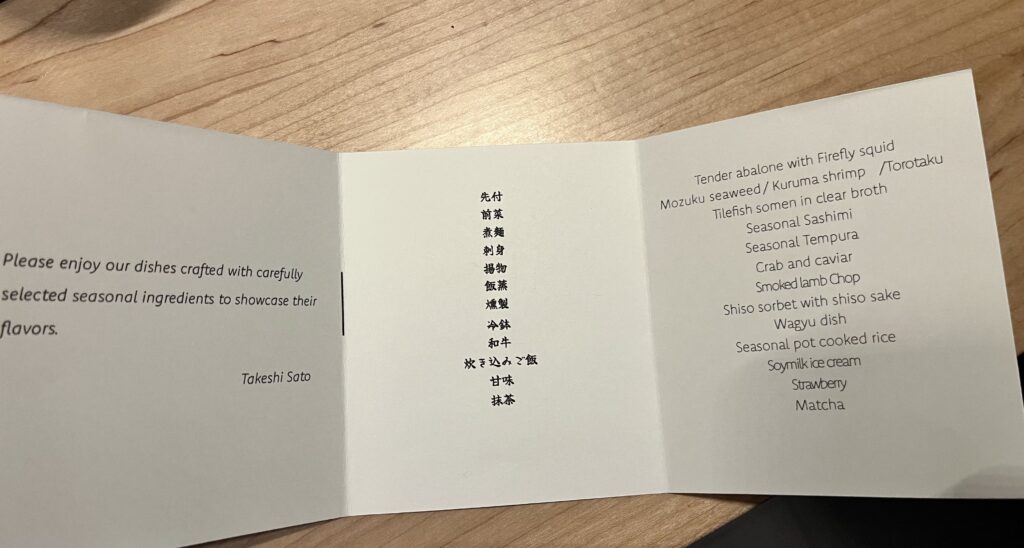
1a. Tender abalone together with 1b. Firefly squid.
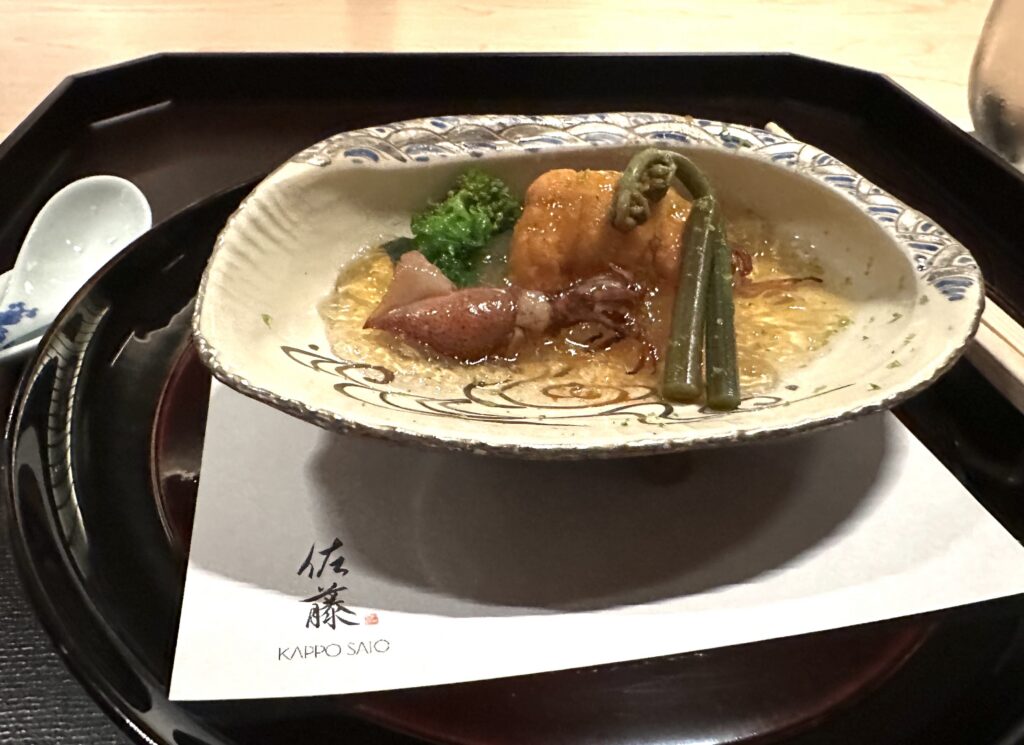
1a. The abalone is a highly prized marine gastropod, or sea snail, celebrated globally for its delicate, buttery, subtly sweet, umami-rich flavour, tender texture, and stunning, iridescent shell. The flavour is often compared to a cross between a scallop and lobster. It is considered one of the most expensive and exclusive seafoods in the world.
1b.The Firefly squid is a rare springtime Japanese delicacy famous for its bioluminescence. Often compared to a “rich, fatty shrimp” or the quail egg of the sea, these tiny, whole squids are prized by sushi chefs for their deep, sweet, and briny umami flavour.
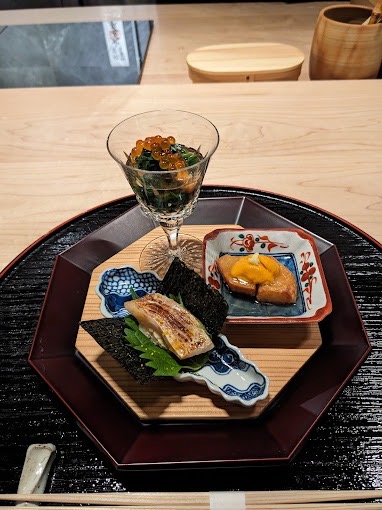
2a. Mozuku seaweed; 2b.Kuruma shrimp; 2c.Torotaku.
2a. Brown seaweed that is harvested in Japanese waters.
2b. A representative of high-grade sushi ingredients; when the kuruma prawn rolls up its body of striped patterns, it looks like “goshoguruma” – an ox-drawn car. That is said to be the reason why it came to be called “kurumaebi” or “car prawn”.
2c. A popular Japanese sushi roll combining rich, buttery fatty tuna (toro) with the bright crunch of golden pickled daikon radish (takuan).
3. Tilefish somen in clear broth. This is an elegant Japanese dish highlighting the prized, sweet flavour of red tilefish. It pairs delicate, springy wheat noodles with a pristine, umami-rich (dashi) broth made from kelp (kombu) and the fish’s bones, finished with a sliver of fragrant zest.
4. Seasonal sashimi. I think this was Spanish mackerel and seabream. They were light and lean.
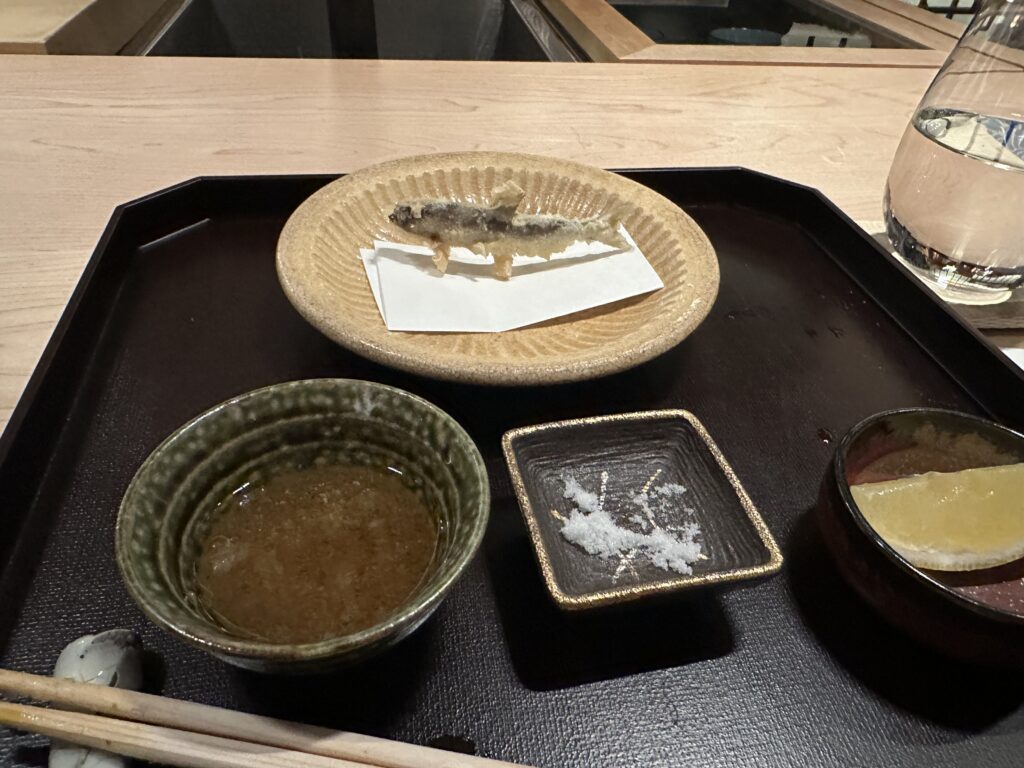
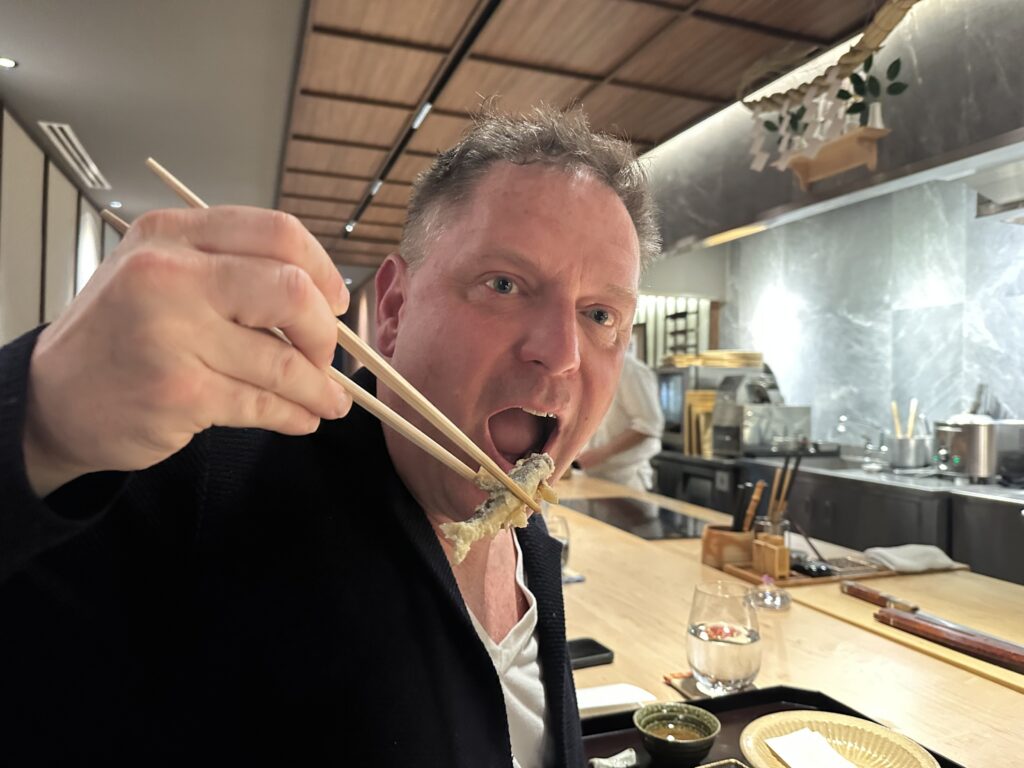
5. Seasonal Tempura: which was an Ayu sweetfish, a small, slim fish that typically only survives in extremely clean water; named for its unique, delicate, and slightly sweet flesh, the Ayu is famous for its distinct aroma.
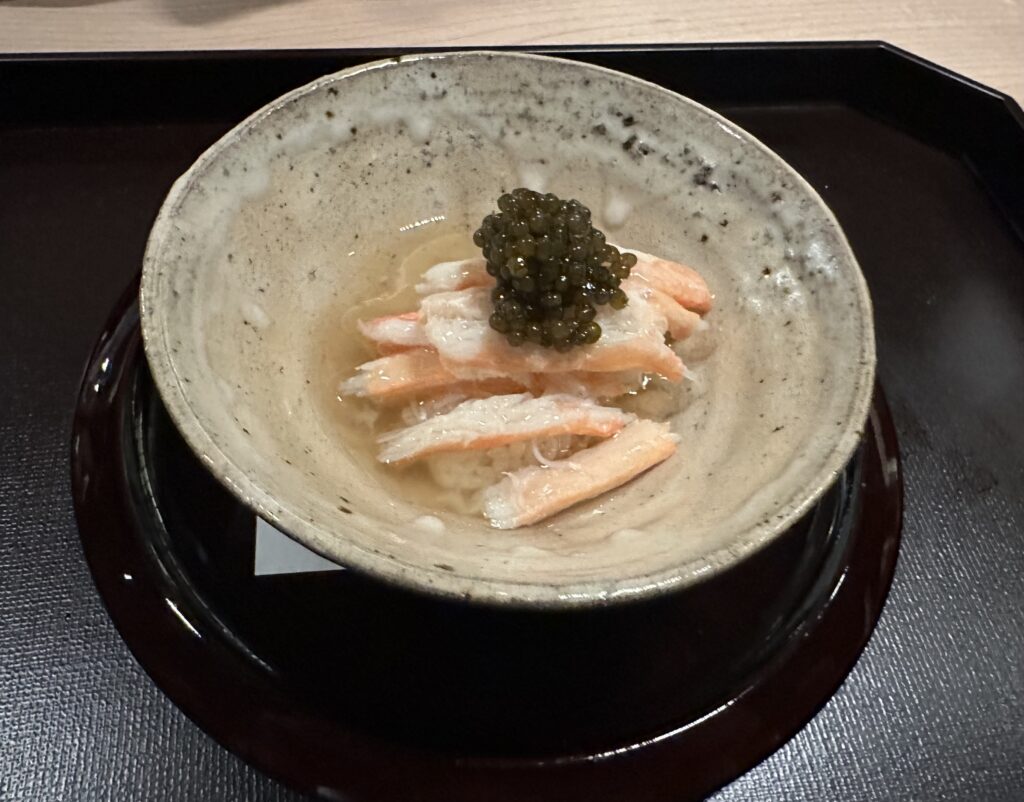
6. Crab and caviar: an ultra-luxurious pairing. The sweet, delicate, and briny flavour of fresh crab meat complemented the rich, salty ‘pop’ of caviar.
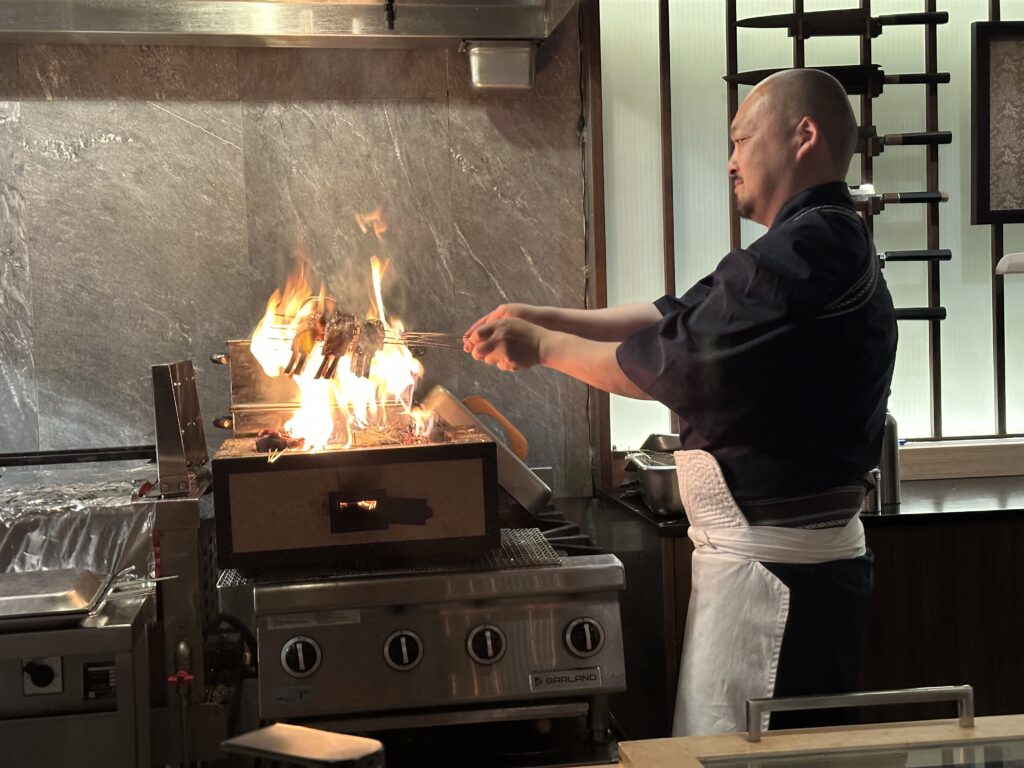
7. Smoked lamb chops: medium-rare; they were finished with a hot sear to create a crispy crust. The chops were placed on a hot grill grate over high heat for about 2 minutes per side. (Chef Sato held the chops high over the flame.)
8. Shiso sorbet with shiso sake. This was a refreshing frozen desert. It had an aromatic herb, which had a complex, vibrant flavour that tastes like a cross between mint, basil, and anise (licorice). The unique, herbal flavour of the shiso (perilla) leaves was refreshing.
9. Wagyu dish: premium perfectly seared ribeye beef which has a melt-in-the-mouth texture. Wagyu beef is among the most expensive meats in the world. It features marbling, meaning that streaks of fat exist within the red meat that make it tender and moist.
10. Seasonal pot cooked rice.
11. Soymilk ice cream (they churned it in front of us).
12. Strawberries.
13. Matcha: a premium, finely milled powder made from shade-grown Japanese green tea leaves. Unlike steeped tea, the entire leaf is ingested, providing a concentrated dose of antioxidants and a calm, jitter-free energy boost.
I’ll have readers know that I didn’t leave the restaurant like the typical Japanese father after such an evening, barely able to navigate. I did sleep well once bunked down that night.
The evening was all one could ask for: good talk with lots of laughter encouraged by joyful smells, sights and tastes. Being rich with ancient wisdom, the Japanese way of life promotes respect and joy in the little things, and the restaurant epitomizes this.
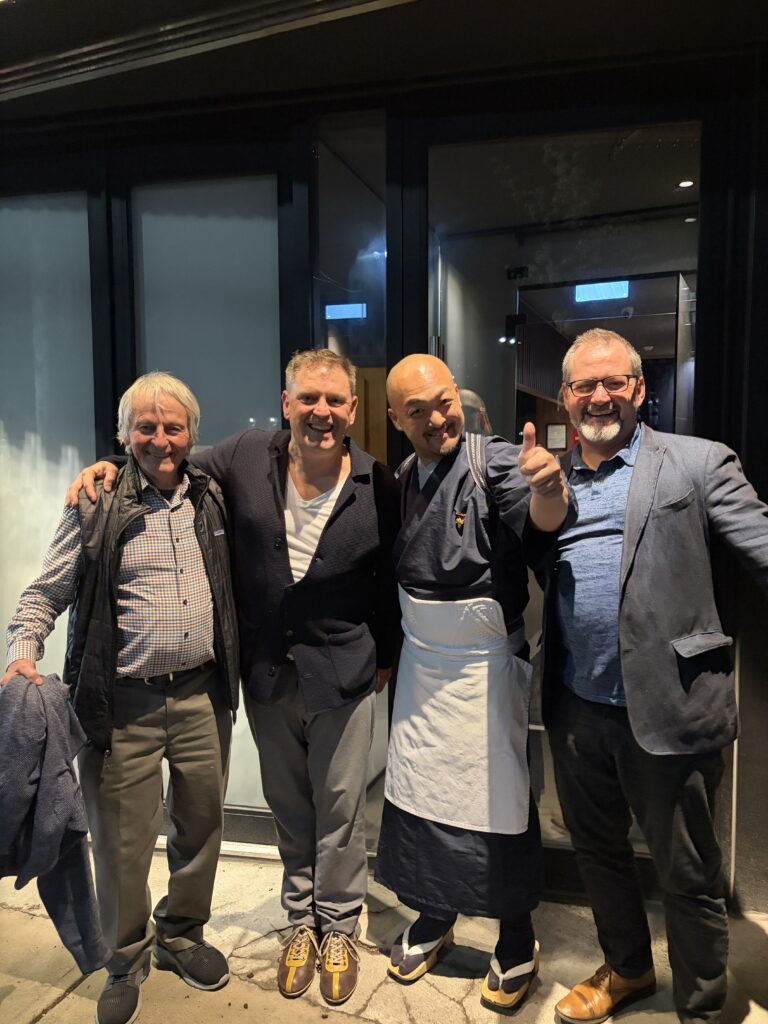
Niagara-on-the-Lake (Penny and Ken)
On Wednesday, May 13, Penny and I drove to Niagara-on-the-Lake, booked into a delightful and convenient B & B with a large garden and headed out for dinner and a stage play connected with the Shaw festival.
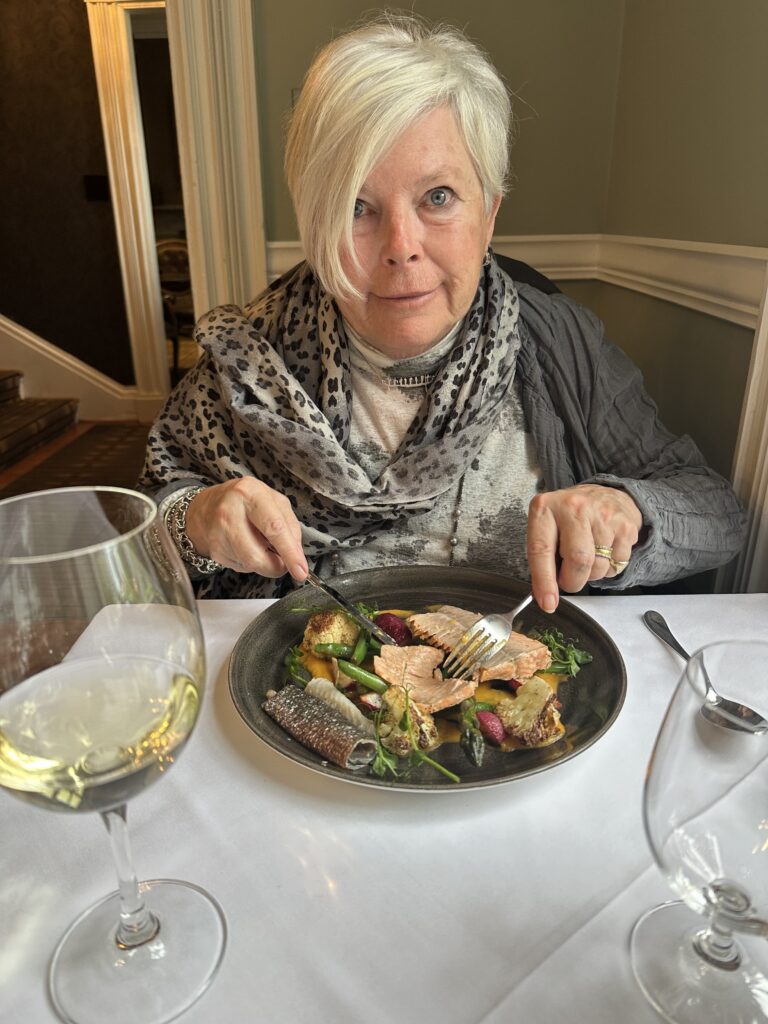
Our dinner at the Hob Nob Restaurant inside a beautifully-restored 1832 manor house, The Charles Hotel, that serves contemporary French cuisine was excellent. In normal times I would talk about it but this blog is about the outer edges of dining so I’ll pass (other than showing you Penny eating her selection at Hob Nob).
We then saw a play that displayed some of the best comedic acting I have ever experienced. The classic British farce Jeeves and Wooster in Perfect Nonsense was a surprise, in that the three male actors assumed about eight roles. Back and forth they went providing fast-paced non-stop humour.


It was both unhinged and farcical; you could tell it was adapted from the works of P.G. Wodehouse. Jeff Irving played the bumbling Bertie Wooster, Damien Atkins the unruffled valet Jeeves, and Travis Seetoo the loyal butler Seppings. As I said, they were also busy playing a variety of roles.
Pearl Morissette
We headed out on Thursday for a drive about the Niagara area and arrived at 5:30 near the town of Jordan at the 42-acre farm and winery, orchard and bakery where the Pearl Morissette restaurant exists. It’s actually a modern facility in an old converted barn.

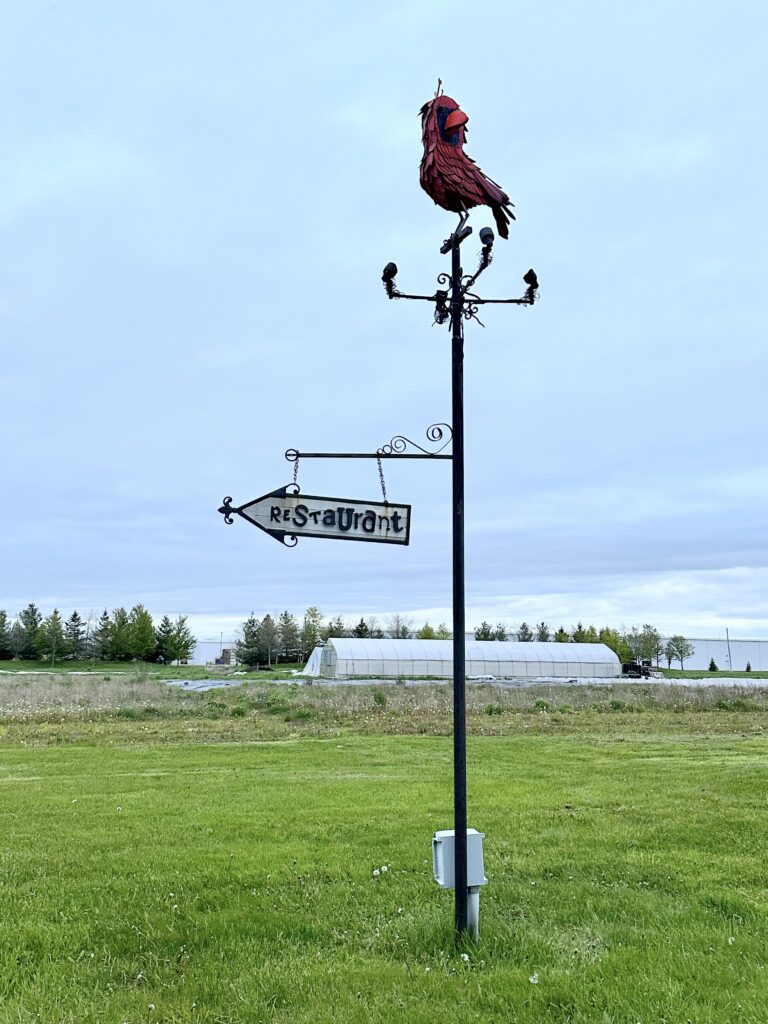
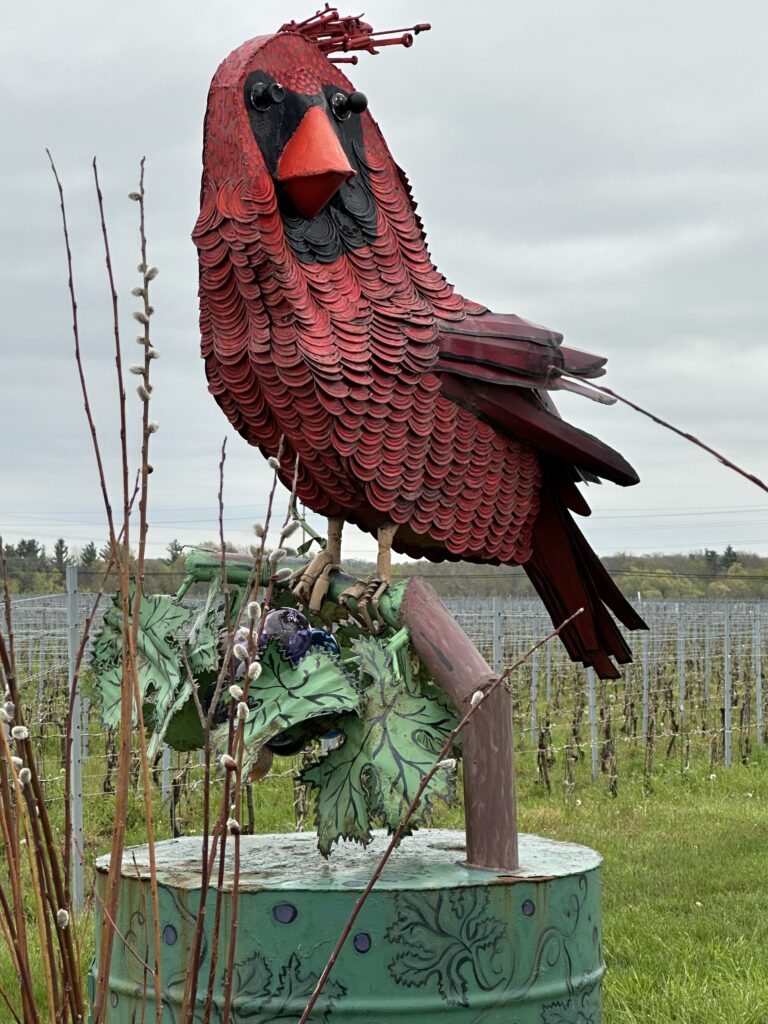
Few signs exist promoting the restaurant; it is tucked behind a steel sculpture of a cardinal and a bumpy path to the barn. I think they are now so well known that they want to downplay what is on the property.
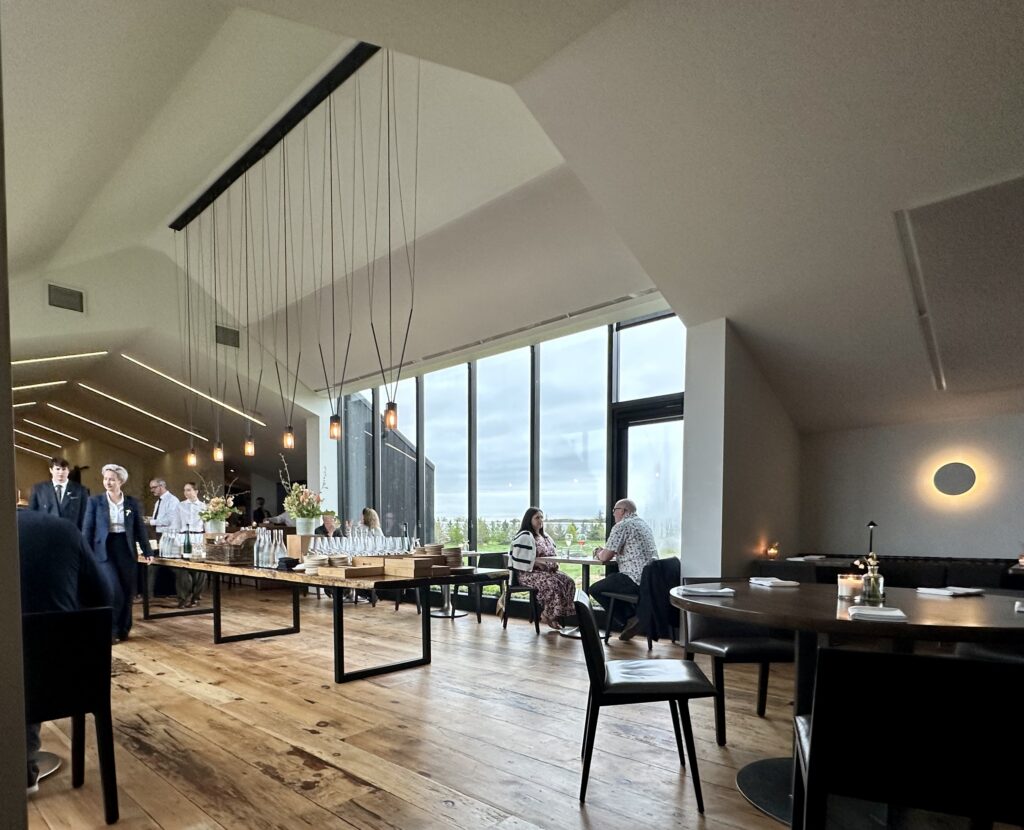
A long table sits at the centre of the dining room for easy access to glasses, water, utensils, along with cheese blocks for the supplementary course. We were about to experience a unique farm-to-table and wine-tasting experience.
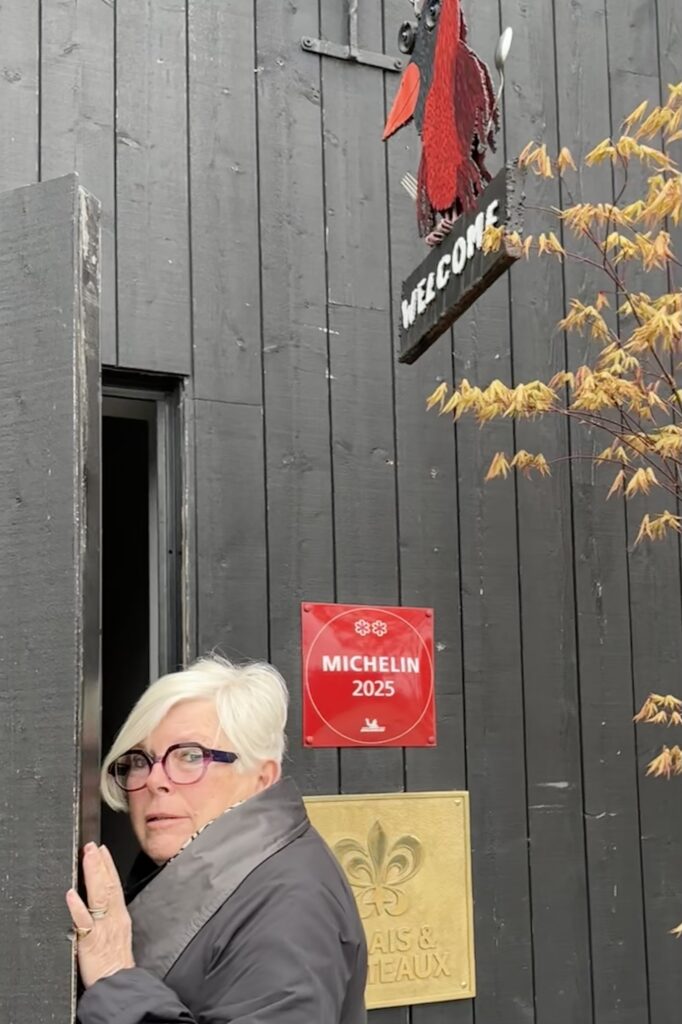
It is one of only Two Michelin Star restaurants in Canada (the other one is in Quebec City). In 2025 and 2026, they were awarded The Best Restaurant in Canada by “Canada’s 100 Best”. And even before that, it won Canada’s Best New Restaurant in 2018 by Air Canada’s enRoute Magazine. The fact that a restaurant in a small rural community, Jordan Station in Lincoln, Ontario, beat restaurants from Toronto, Montreal and Vancouver is amazing.
Flash news: the restaurant has just been named #3 of the 50 Best Restaurants in North America. (Canada took 14 of the 50 slots!)
Our menu for Pearl Morissette read as such:
- West coast Dungeness crab – shallot, whitefish roe, Fraser Valley rice, chili oil*, lemon thyme* (all the way from from Abbotsford, BC)
- Carrot Crisp (from Cookstown Greens, an hour north of Toronto) – scallop roe paté and dried chili
- Crudité of Sora Radish* (French appetizers) – angelica*, crowdie cheese, lemon balm*
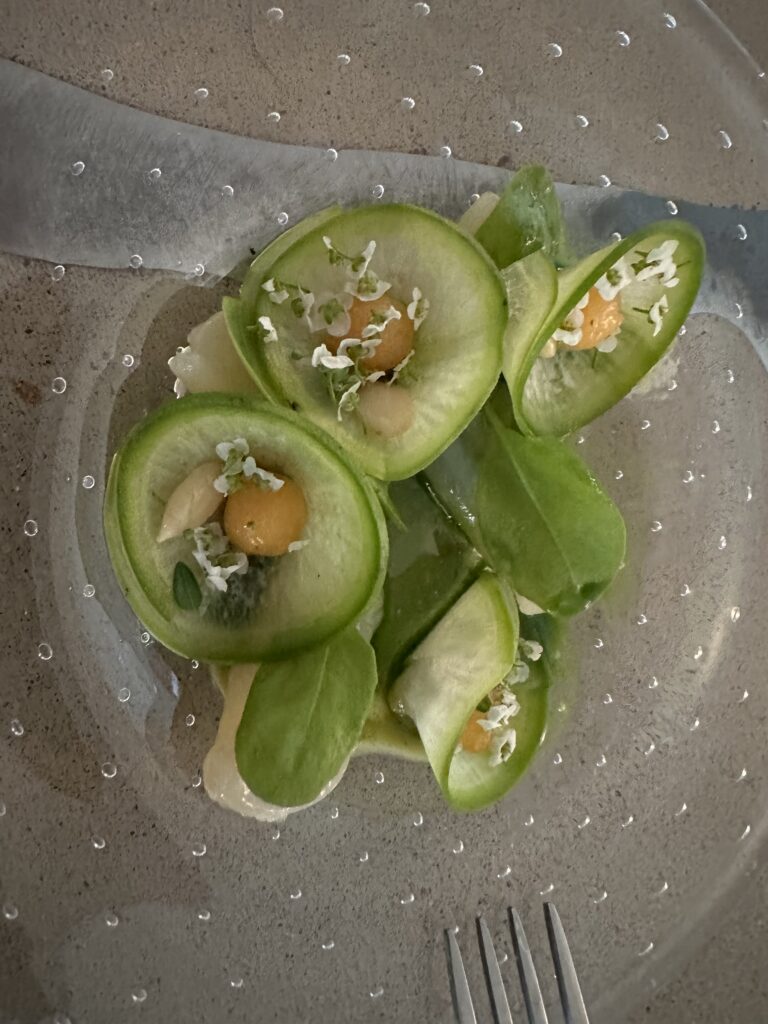
- Scallop from Mahone Bay, Nova Scotia – French sorrel*, lemon gem*, black currant wood oil*, green radish*, pumpkin seed, cantaloupe
- Sourdough made with winter white fife and marquis wheat with whipped St. Brigid’s butter (from Huron County, Ontario); it was dangrously good
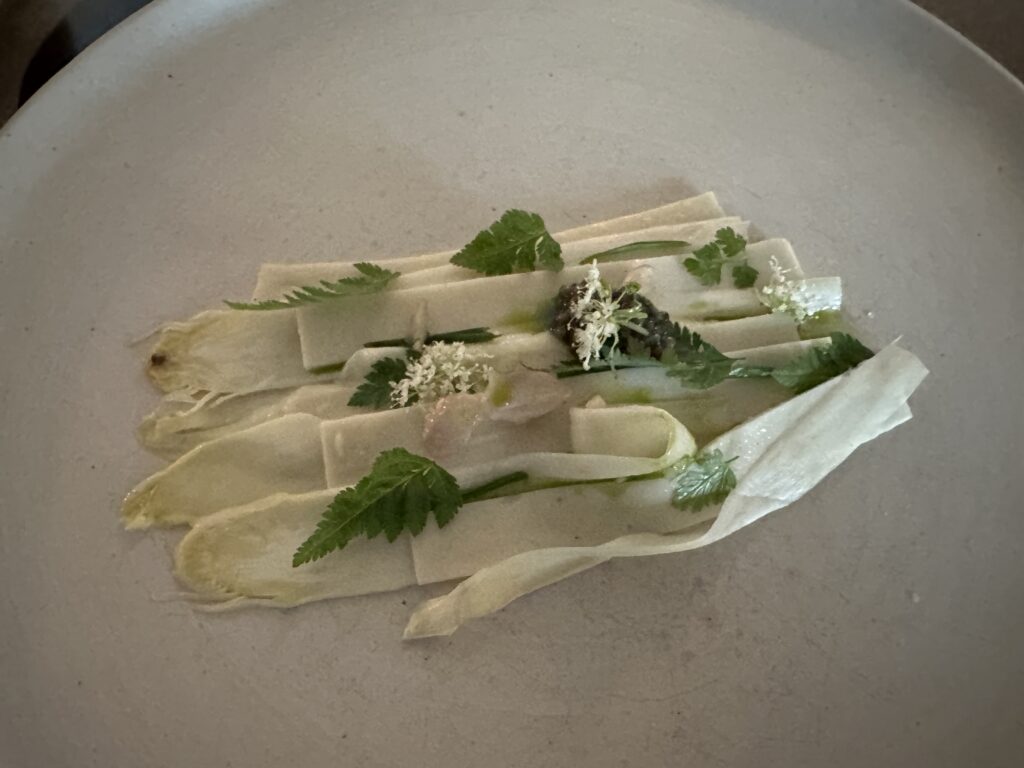
- White Asparagus – parsnip, leeks*, orange thyme*, chervil*, red walnut, lovage oil*, sweet cicely*, Acadian Emerald Caviar (harvested from the Saint John River, NB)
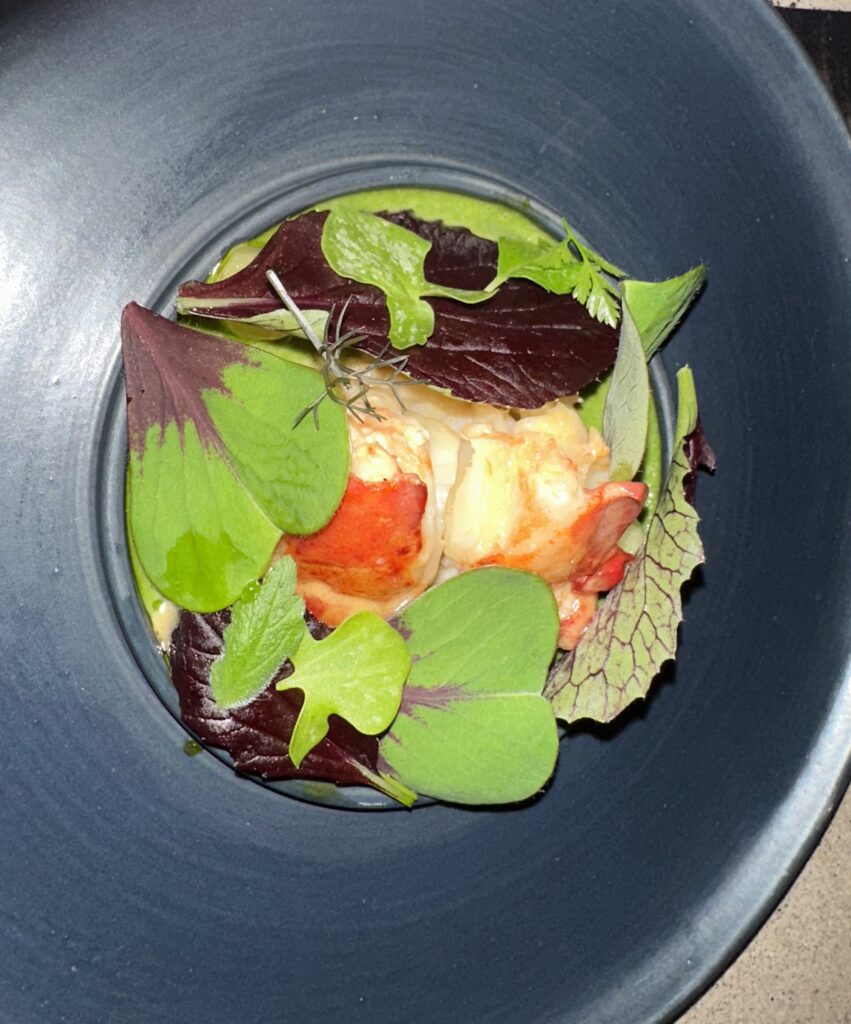
- Lobster (from Nova Scotia) – spinach*, lemon balm*, fennel*, mizuna*, green peaches*, pea shoot*, iron cross sorrel*
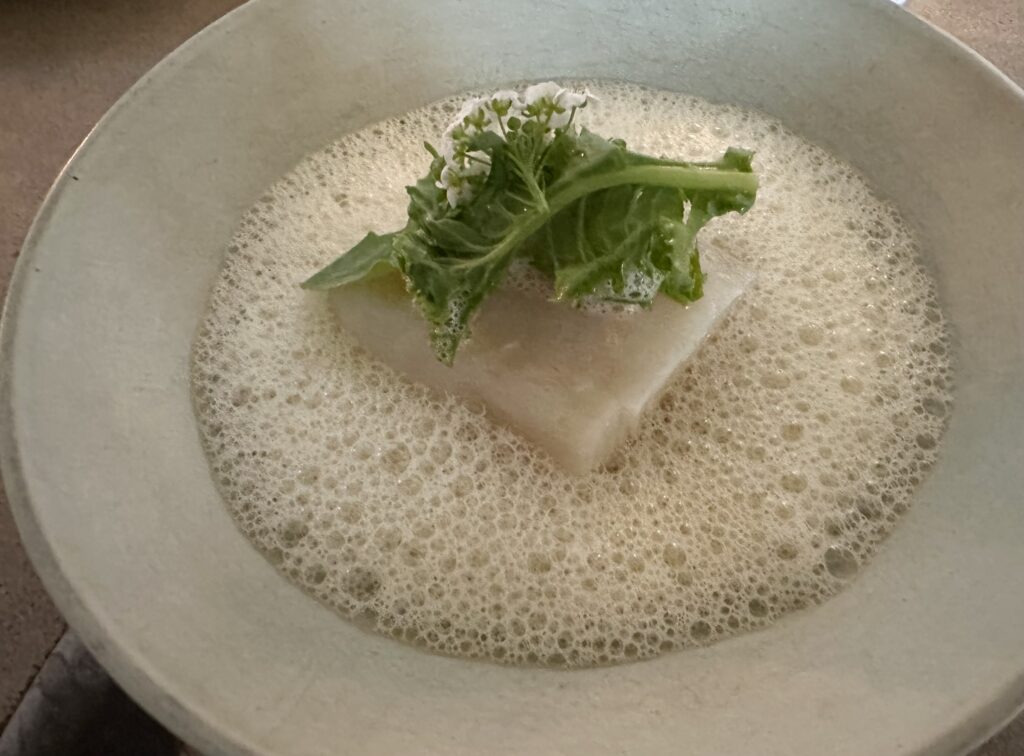
- Halibut (from British Columbia) – vin jaune beurre monte, onion condiment, sea kale*, spade sorrel*
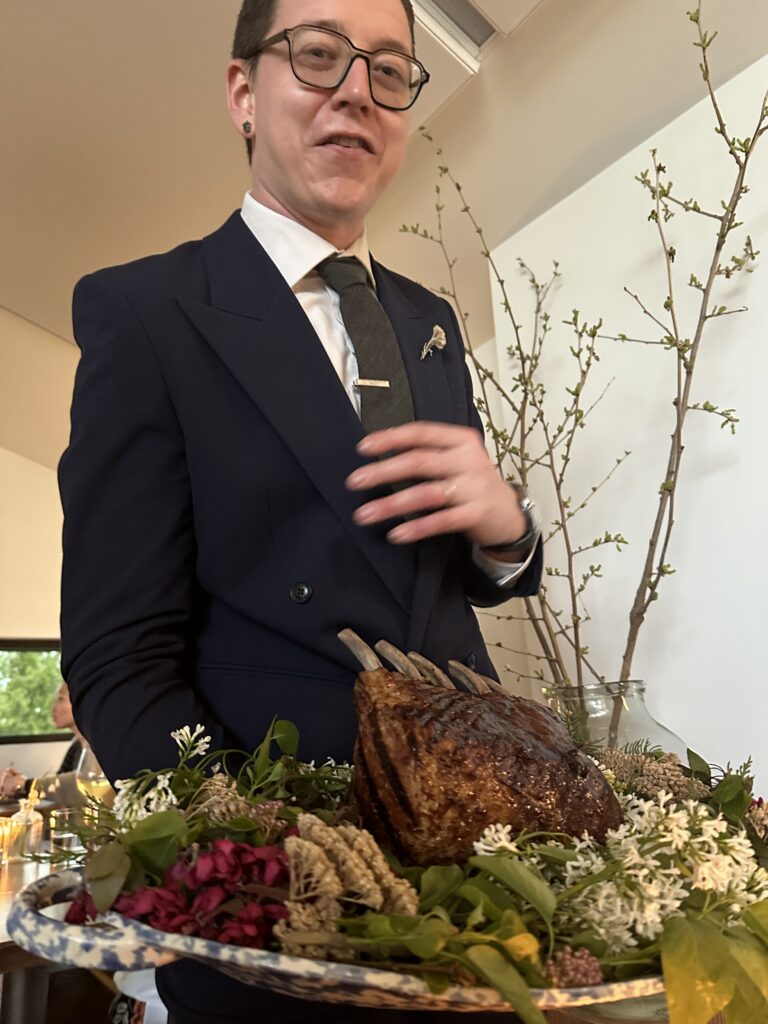
- Lamb (from Tamarack Farms, Northumberland County, Ontario) – chervil*, cucumber dill* oil, leek jus, curly cress*, sorrel*, pickled garlic*, celeriac*, pole bean
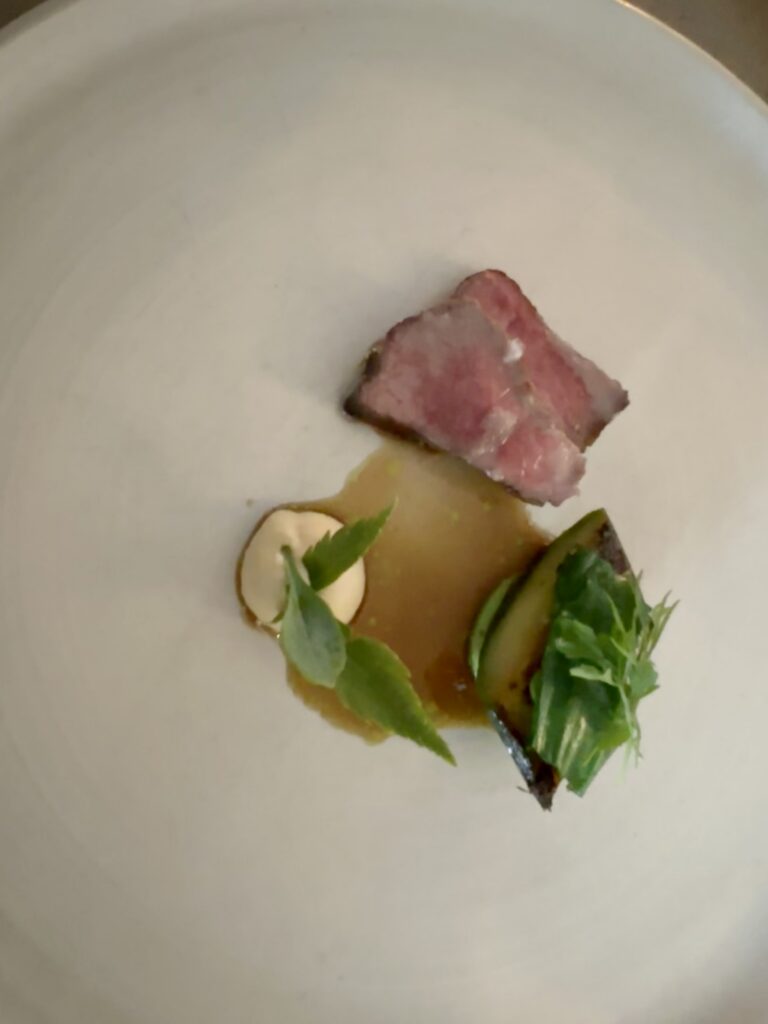
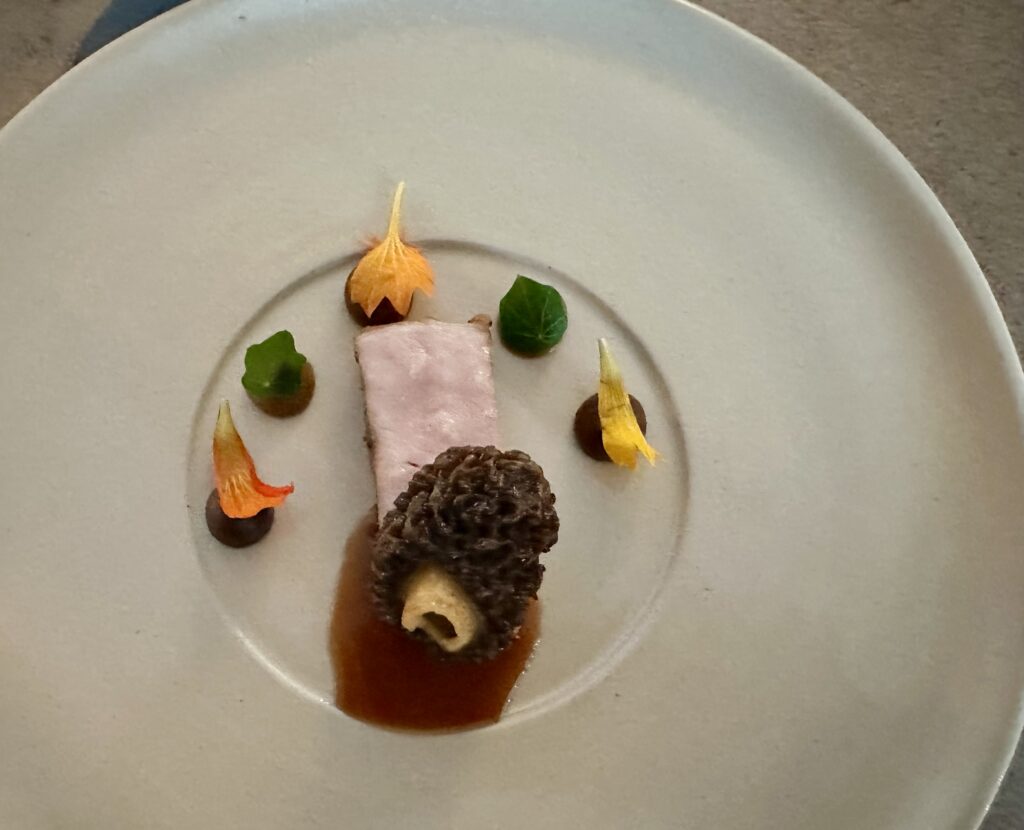
- Pork (from Linton Pastures, a family-run, sustainable pig farm located in Walton, Ontario) – dill flowers*, black koji, nasturtium*, morel mushroom*, Badger Flame Beet* (bred to have dazzling yellow and orange striations – resembling a flame – and a mild, exceptionally sweet flavour).
- Mountainoak Gouda (from New Hamburg, Ontario) – 24 month aged cow’s milk cheese, served with spring honeycomb*
- Meadowsweet* Ice Cream – houjicha sabayon (a velvety, low-caffeine foam or desert sauce), lovage*, tarragon*, sorrel*, strawberry, candied pinecone
- Rhubarb & Apple Tart – rose thyme* chantilly cream, rhubarb reduction, sweet grass oil*, magnolia blossoms*
- Haskap Berry Parfait – haskap berry jam (haskap berries are native to Canada), boro beet*, lemon balm*, viola blossom*, oxalis*
Two key features of Pearl Morissette: one is that many of the ingredients, particularly the herbs, spices and vegetables were grown on their own property. To be clear, this includes all of the items marked with an asterisk (*); all told there were 40 items!
Secondly, 100% of the dishes were grown, raised or caught in Canada, from one coast to the other.
The wines (you can skip this if you are just wine agnostic)
I had ordered a wine pairing and that was superbly delivered, all eight of them! Three were local from the Pearl Morissette vineyard.
I particularly loved the Clemens Busch, a 2023 Marienburg Spatlese Riesling from Mosel, Germany. Tasting notes say of it “Brimming with juicy light fruits, profound mineral depth, and a perfectly balanced sweetness that never feels heavy. It dances across the palate with exquisite lightness, though it possesses enormous complexity and length.” That just took the words right out of my mouth! My bottom line says it all: I’m trying to track it down and buy some more. It was served with the scallop dish (course #4).
The saki called Azumatsuru Shuzo Mebuki from Taku City, Saga, Japan complemented well the white asparagus dish (course #6).
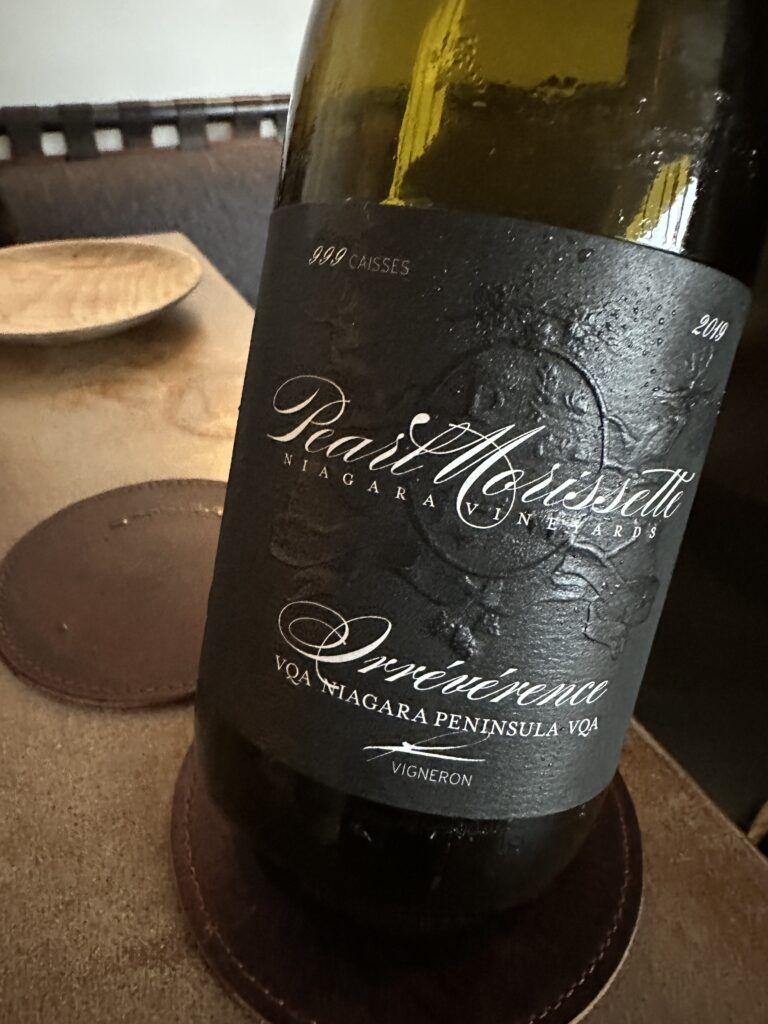
For course #7 they served two wines; one from Pearl Morissette called The Irrévérence, 2019, which is a blend of 64% Pinot Gris, 22% Chardonnay and 14% Gewurztraminer. What’s particularly special about this wine is it is an amber/orange wine due to skin-fermentation. The second one was a rare, small-batch wine called Samodivi Blanca, a boutique label associated with Pearl Morissette.
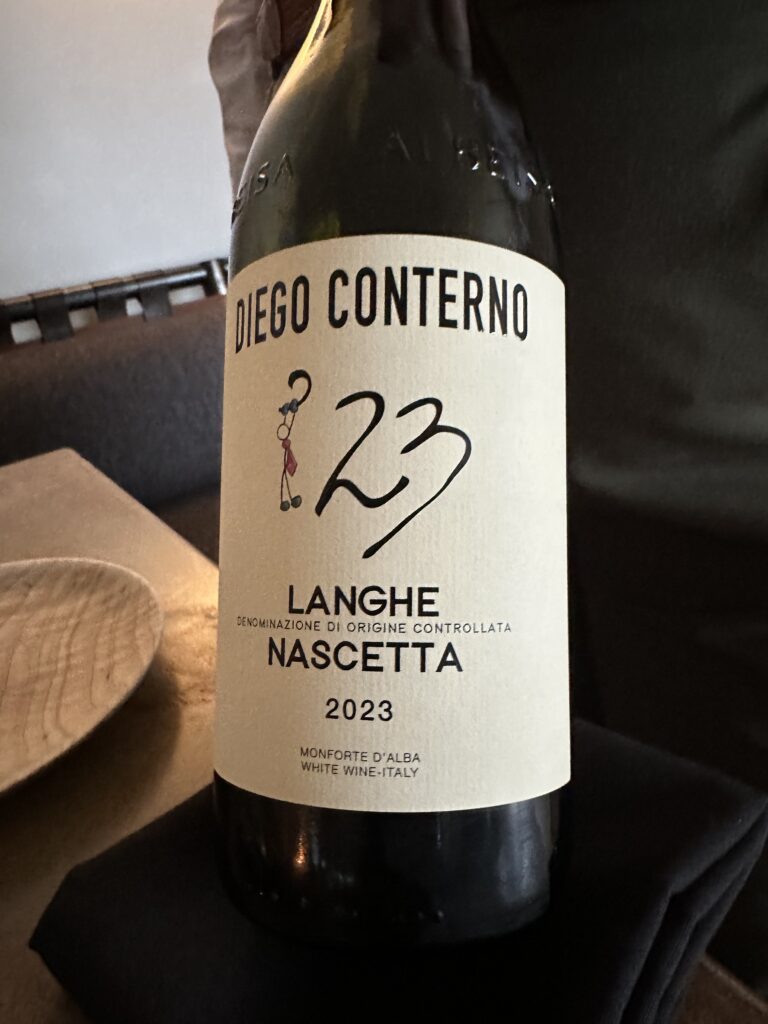
With the halibut (course #8) they served a white Nascetta. I looked this one up and a winemaker had this to say “a rare gem that is slowly making a comeback in the Langhe region after being forgotten for too many years…As a dry wine, its complexity and aromatic intensity are immediately captivating. Citrus and pineapple, savory notes of sage and rosemary.” So there.
With the lamb (course #9) they served me a highly acclaimed dry orange (amber) wine from the Black Sea coast of Ukraine (a Beykush Amphora Rkatsiteli 2024), because of my mouth not handling red wines (due to past radiation treatments). They served Penny a red.
We ordered the cheese separately from the main offering. With the Mountainoak gouda (course #11) came a highly acclaimed, non-oxidative white wine from the Jura region of France. It was crisp and as they say “fruit-forward” (which means that the dominant aromas and flavours are ripe, prominent fruits). I tasted smoky, toasty notes and a core of honeyed apple and almond. (It was a Domaine du Pélican Arbois Savagnin Ouillé).
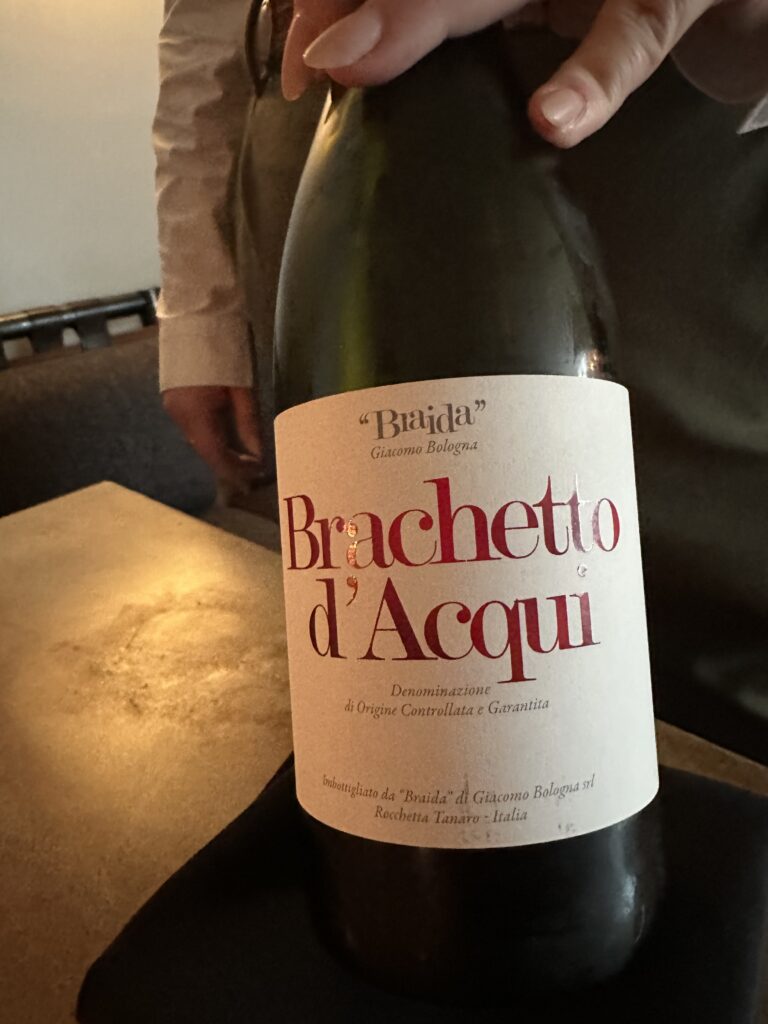
To wrap up the meal they served a 2025 Braida Brachetto d’Acqui, a fragrant, sweet, and lightly sparkling (vivace) red wine from Piedmont, Italy. I got a wild strawberries aroma when sniffing it, and my mouth could delightfully handle it.
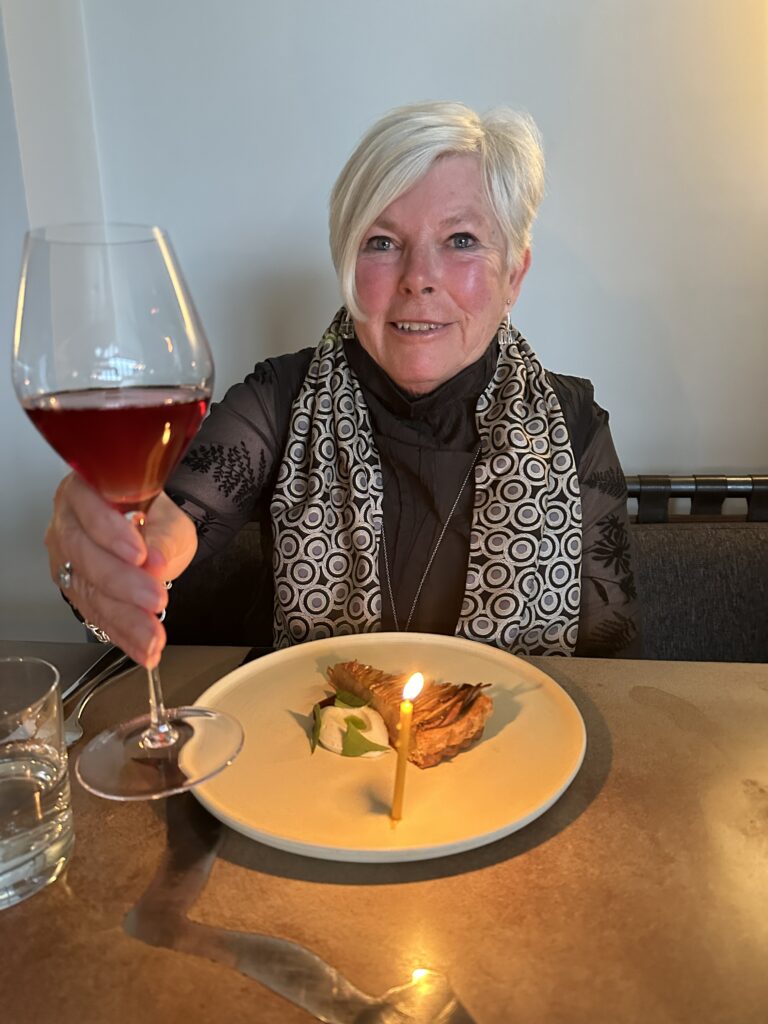
With it they brought Penny a single candle beside her Rhubarb & Apple Tart to celebrate her birthday.
Back to the restaurant
The service was professional, with a touch of the friendly, but not cloying or intrusive. Courses arrived in an orderly fashion, and wines were poured and refreshed efficiently. The process is deliberately paced to be slow, to give diners enough time to savour each course.
Our guide for the evening was from Newfoundland, and was quite knowledgable about what she was presenting, and in particular spoke quite professionally regarding the wines being served. She was quite proud of the fact that she was self taught with regard to the overall techniques and philosophy of what Pearl had to offer, and in particular the wines.
During presentation of the 14 courses, at least 9 or 10 other staff were on side to help present them or clear things off. It seems that all the staff helps with service including the co-chefs. Before dessert, you have the option (which we took, as mentioned) to do the supplemental cheese course for extra, which also comes with honeycomb from the apiary that they have at the Pearl Morissette winery.
They are an interesting operation that seem to follow their own values. They also appear to aim at leaving the environment and community healthier and more resilient than they initially found it.
Wrap up
The wrap up comment from Penny regarding Pearl Morissette has to be recorded. The next morning as we were packing up for the drive back to Peterborough, she looked at me and said “That was the best dinner I have ever eaten in my life”. Well, again Happy Birthday, then.
My take on why both these establishments appealed to me so much is as follows.
First they offer multiple food choices with respect to taste. They use smaller individual portions but more of them. The emphasis is on selection variety. They also combine disparate tastes into pleasing combos. It’s the “many/small” vs “fewer/large” approach.
Secondly, they spend time ensuring everything looked good both in its construction on a quality dish, with quality cutlery and glasses. They consider other intangibles such as colour, shape, variety and arrangement.
Thirdly, they bring the patron more in contact with the meal preparation. This was certainly a stated objective for Kappo Sato, and somewhat for Pearl Morissette, as the kitchen and prep table are open to patrons.
Fourthly, both restaurants have a very seasonal focus. Ingredients are highlighted at their absolute peak of flavour and freshness. The chef chooses what you eat based on the seasonal availability of the fish, vegetables and other ingredients that are at their highest quality of the year.
Finally, they are well organized; this obviously requires training. They are prepared to invest in people in sufficient numbers, and appropriately trained to provide the customer experience. That’s part of their higher cost structure, but if enough people are willing to pay, then it’s a valid business model.
I must add that the customer has a role. He or she should be prepared to accept this variety. It’s thus best not to have too many restrictions, food allergies or biases. Going tabula rasa without prejudices, the patron will be delightfully surprised.
Sounds like wonderful gastronomic experiences. I have been to Pearl before – indoors and in the summer oitdoor tents that they used to do.
Wow – sounds outstanding. How far in advance did you need to make reservations Ken?
Sounds lovely–a gourmet eat a thon
Sure beats my last outing at Bercs
I don’t know hxxow yo u managed to eat all those. Courses at one sitting – forget about the wines,. Congratulations
I cannot contain my thirst and hunger after reading this amazing blog. How did you have time to take all these notes, Ken? Thank you.
Wow. The best 👏👏👏
And the description of it all , FAB !!!
Thankyou Thankyou
I was there in spirit 😎😎
Tasting menus are a real treat.
Your descriptions are precise enough to give a reader a taste. Exquisite.
Thanks for sharing your mouthwatering experiences, Ken. Too bad you couldn’t provide a taste too. Both sounded terrific.