I’m cleaning out old stuff, from clothes, to tools, to files. And in the files are some very old, and quite interesting letters. I’ll share some of them with you. The letters reflect some intriguing times in my life; that’s partly why I’ve chosen them.
Preamble regarding letter writing
At first though, I’ll comment on the fact that people really did write letters. When? Well… back “then”. Once written, they then had to address an envelope, buy a stamp and “mail” these letters. Of course profound changes have taken place in one generation; very few are written now.
They were also mostly written in cursive. How many people now have the skill to read these old letters now? Keyboards, touchscreens, and voice-to-text tools have taken over from a human hand clutching a pen.
Cursive (or longhand, where the letters within a word are connected in a flowing, continuous line for speed of writing) was originally designed for fast communications with ink pens but it lost the race to the modern keyboard. Lightweight, affordable portable typewriters began to be marketed in the 1930s/1940s. While some individuals used portable typewriters for correspondence, handwriting remained the cultural standard for intimate, personal letters right up until digital communication arrived in the mid-20th century.
Personal computers and word processors finally displaced physical keyboards and typewriters in the 1980s-1990s. Then email and instant messaging replaced physical letter writing altogether in the late 1990-2000s, moving personal correspondence permanently to the modern computer and smartphone keyboard.
While a major postal service like the USPS handles roughly 116 billion pieces of physical mail per year, the world now transmits an estimated 376 billion emails every single day.
Many schools have dropped cursive instruction. An entire generation is now growing up unable to read handwritten letters or historical family documents left by older relatives. They can’t even read personal notes in longhand in greeting or birthday cards.
Personal family assessment
Between the two of us Penny and I have 8 grandchildren. After surveying them, some can and some cannot read cursive, although most say they can understand a little.
One funny anecdote is a bet I made with the eldest, Charlie. He said he could type faster than I could write. So I suggested we test this by seeing who could do the alphabet fastest, me by pen on paper, he by using his iPhone keyboard. I’m glad I didn’t put any money down. I got to “P” and he was finished!
So on to a selection of letters I have found in my files.
Old romance letters; some titillation/some philosophy (1950s)
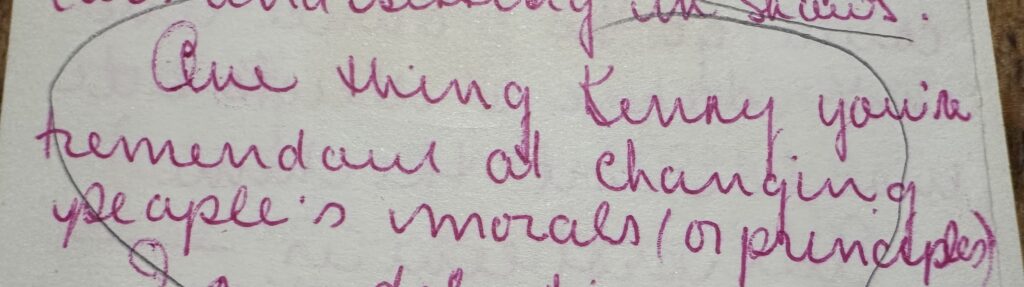
I’ll start with a number of letters I received during my youthful days (mid to late teens) where apparently I appeared quite wonderful to some ladies. One finished a letter off with the words “all my love; I have a few more bruises to-day!! People are really going to think you are quite vicious!!” (I honestly can’t recall why). Another said “One thing Kenny, you’re tremendous at changing people’s morals or principles” (similarly, no recollection).
And another declared “Mr. Powell, how is your back today? I feel as though I’ll be the ruin of it yet…” (I remember that).
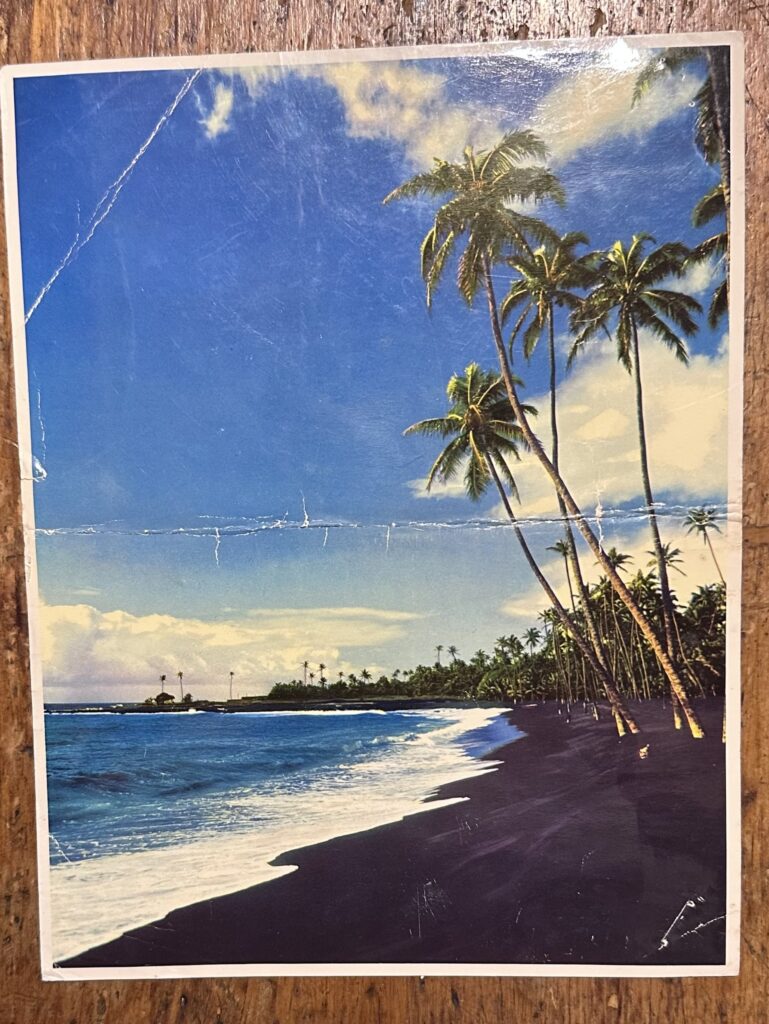
I received the salutation “Aloha and love” from a delightful gal from Hawaii. To add colour, here is a postcard she sent me dated August 27, 1958. It is of the Black Sand Beach, Puna, Hawaii. Mailing cost was 7 US cents. In it she said she missed me “more and more every day”.
She eventually became “born again”. (I hope that had nothing to do with me!)
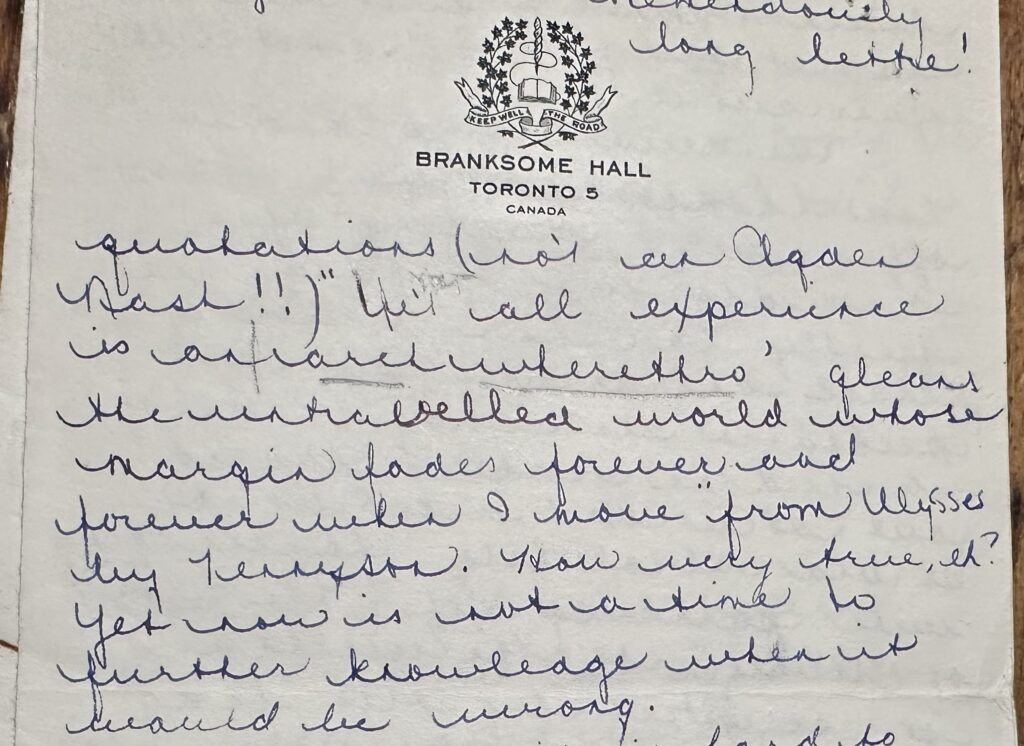
I was moved when a delightful Pam quoted Tennyson’s Ulysses in one of her letters:
“Yet all experience is an arch wherethro’. Gleams that untravell’d world whose margin fades. For ever and forever when I move.”
And I kind of agreed with the thought, even back then. It’s an intriguing metaphor: that instead of a person being trapped behind walls, what you have already lived through frames and illuminates what lies ahead. You can never fully reach or map out the entire future because life keeps expanding as you chase it.
One general theme of my life since then has been that growth and discovery are endless and the more I learn and experience, the more I realize there is much left to explore. This idea unfolded before I hit 20, so I was thinking a little bit.
A very poignant letter from my dad (July 27, 1957)
In March of 1957 probably the most tragic thing up until that time in my life occurred. My father contracted polio, both the bulbar and spinal types, which rendered him completely paralyzed. He was placed in an iron lung at the Toronto General Hospital.
That summer I was working a construction job. I would drop into his room and in order to speak to him, would put my finger over the hole in his neck where the doctors had performed a tracheotomy.
All he could wiggle was a finger in his right hand, onto which a small bell was taped. (I still have that bell.)
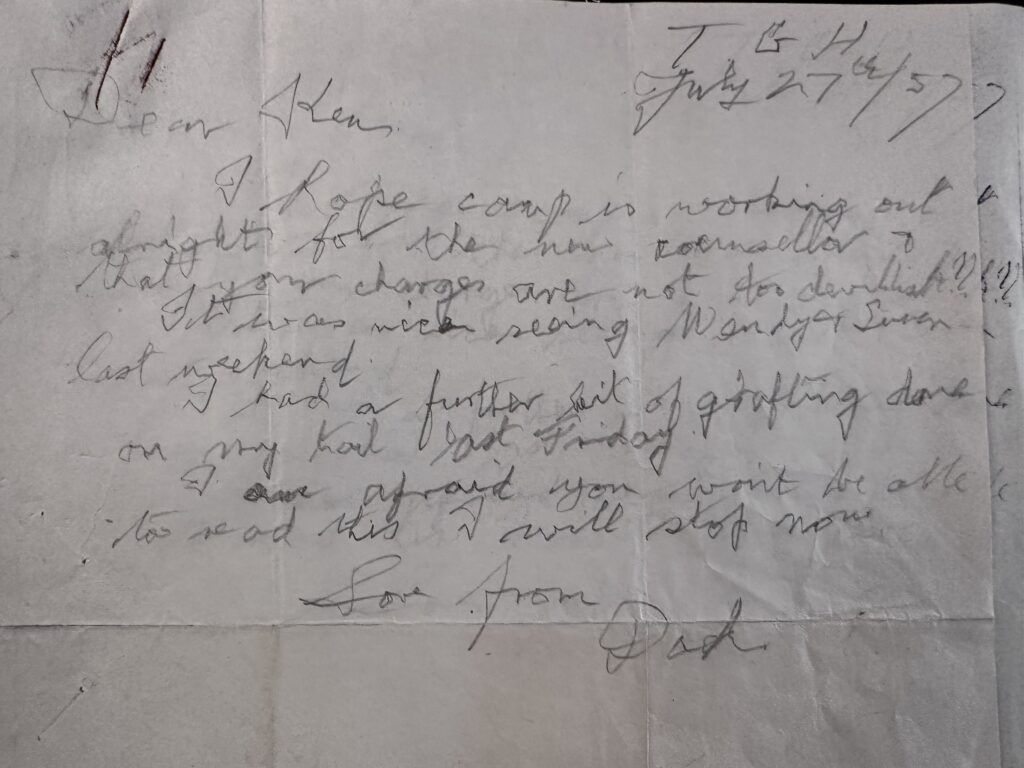
Later that summer I took on a job as a councillor at Camp Ahmek. Just as I commenced the job I received an extraordinary letter from him dated July 27, 1957 from T.G.H. i.e. Toronto General Hospital. As the paralysis receded, it was the first thing he was able to do in an unsteady script with his now partially mobile hand – write a letter to me.
It went: “I hope camp is working out alright for the new counsellor and that your charges are not too devilish! It was nice seeing Wendy & Susan last weekend. I had a further bit of grafting done on my tail last Friday. I’m afraid you won’t be able to read this. I will stop now. Love from Dad.”
My mother pended a PS to the bottom of dad’s letter. “The doctors are taking off the bandages on his tail on Tuesday to see if the graft has taken. He is in very good spirits.”
He had suffered from terrible bedsores that were being mended by a series of skin grafts. The images of that iron lung sucking air in and out of the chamber in which dad was encased, forcing his chest to breathe, will never leave me. Thus the poignancy of this short letter.
Tour Bus Driver Story in Jasper (1959)
I have a letter dated July 31,1959 on Jasper Park Lodge letterhead. It is from Chris Chapman, a Deke fraternity brother of mine at the University of Toronto.
Chris is now Emeritus Professor at the Southampton University Business School. But way back then, he was driving a tour bus on the “ice express” bombing around the Columbia Icefields Parkway. This was, as he said in his letter to me a “140 miles return in an afternoon, which means 4 hours of driving with your foot either on the floor or the brake on these roads”.
But the fun part of the letter is Chris describing the ”patter” he delivered providing all sorts of information to the attentive clients, many making notes in their trip diaries. As his letter says “I really enjoy stringing the people a line and making up Indian legends when I run out of legitimate facts and jokes. They really soak it up. There are more mountains named after waitresses and chars at the Lodge than after generals, Indians, etc.”
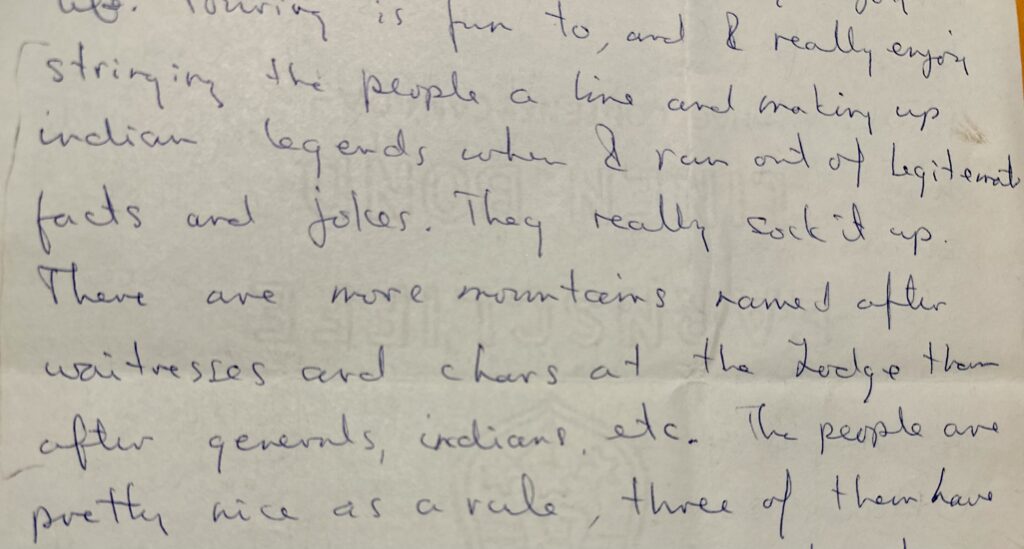
Too bad I didn’t have the opportunity to relate this anecdote to Chris’ students; I think they would find that amusing from their professor.
A letter post-marked “Half-Assini, Ghana” (1964)
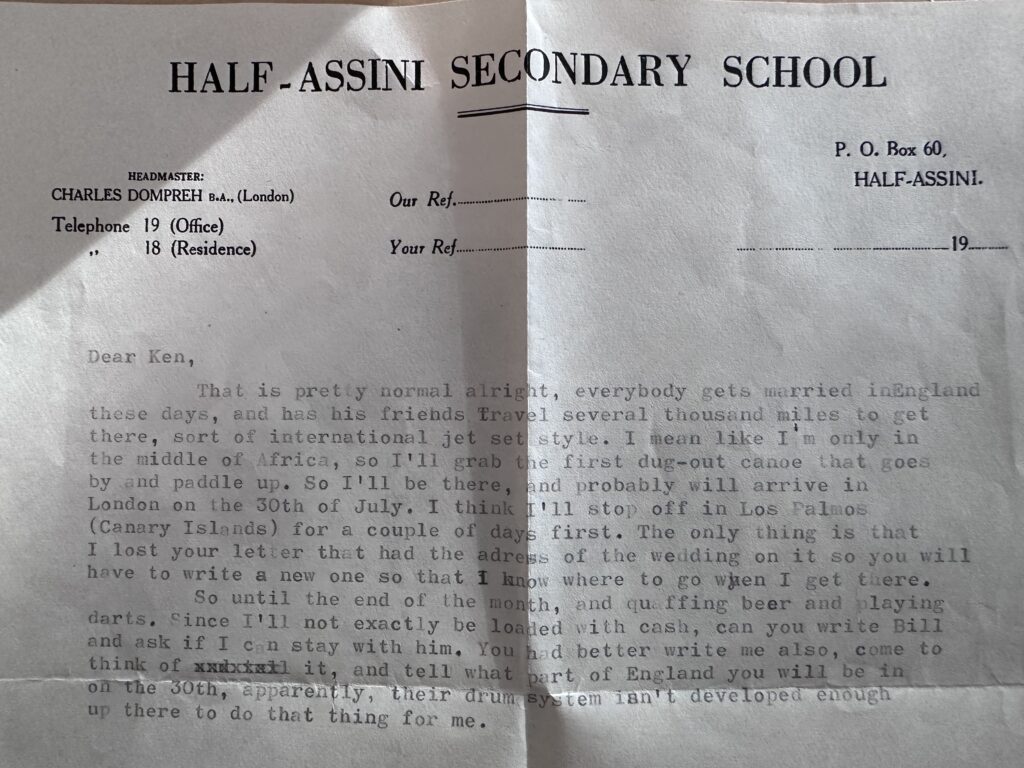
My first wife Ann and I decided that we would get married in England. She was headed over to study in France at the Sorbonne in the summer of 1964. I have, on my father’s side, relatives living in and near London, England. So A + B = C meant get married in England.
This resulted in friends having to make sometimes dramatic travel plans. Thus this letter from one of my close friends, Graham Foss, who happened to be teaching in a place called Half-Assini, Ghana. (Yes, he did receive lots of humorous kidding about that name!)
A slightly bemused note remains in my files from Graham who wrote on May 1964, “That is pretty normal alright, everybody gets married in England these days, and has his friends travel several thousand miles to get there, sort of international jet set style. Like I mean I’m only in the middle of Africa, so I’ll grab the first dug-out canoe that goes by and paddle up.”
The follow up to the letter was that, yes, Graham did arrive in London with only a partial address of my Aunt Peggy. The next sentences are factual. As Peggy was climbing into her car late one afternoon, a tall straggly guy casually asked her some general questions regarding directions. Peggy looked at him in amazement and said, “Are you Graham?” And indeed it was! It was blind luck he found her house given the twisted way the message had been translated and passed on to him.
I have to add the following from one of Graham’s other letters to me. He was attempting to paint a picture of what it was like living and working in such a different place (Ghana). I’ll let his words explain: “I have been able to do a bit of travelling since arriving. A group of us went to Timbuctoo for the Christmas holiday. There is such a place but it is hardly what can be described as exotic. It is really just a pile of mud huts. The trip itself was the best part, as travel in this country is far from convenient. The total distance travelled was about 2500 miles, half of which was by trucks, and the other half by boat.
When you go by truck, you have to cram yourself in with about 50 other people and maybe about a dozen goats as well. The boat was an over-grown canoe, and carried about 50 persons as well as freight. The river passes along the edge of the Sahara – the Niger River – and it is the most desolate country that I’ve ever seen. The amazing part is that no matter how unproductive the land seems, there are still towns around, and people all over the place. I could never figure out what they lived on, because the soil is nothing but sand, and except for the river there is no water available. The average rainfall is about 5 inches, all in about one month.”
Balaclava Bill, the bank robber (1969)
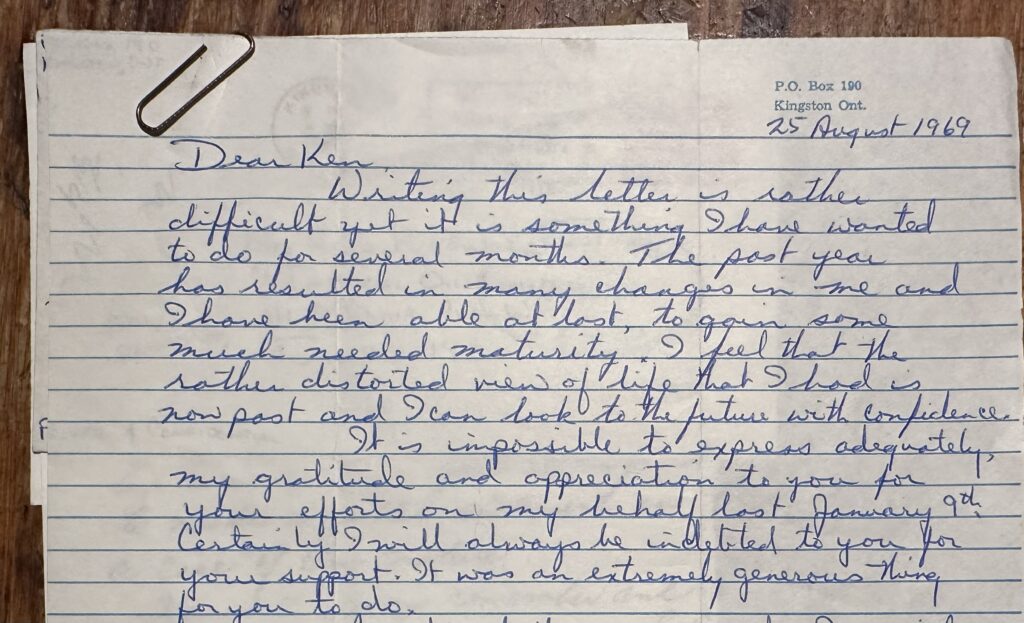
On August 25, 1969, I received a thank you note from the Kingston Penitentiary. Yes, that’s correct, and it was from an old friend and former co-worker of mine. When I was a retail sales representative for Imperial Oil in Kingston (after I first started working for them back in the mid 60s), George was a sales representative on the heating oil side. The “thank you” was not helping his kids out (he had four) or something banal. It was for appearing on his behalf as a character witness at his trial – and I had done just that.
So what did he do? Well back in 1967, the newspapers were full of this quixotic story regarding a man who was robbing banks in the Toronto area. They labelled him “Balaclava Bill” as he would cover his head with a balaclava, brandish a sawed-off shotgun and hold up banks, seven in total if I remember correctly.
He was eventually caught and finally brought to trial on January 9, 1969, and that’s when I appear prominently in the story. As I had worked with George, plus even stayed with him when the apartment I had rented in Kingston was being finished, he felt I would be a good character witness to help his cause.
But I remember the judge quite clearly as he issued his sentence. Yes, “Mr. Waite could be rehabilitated”. He was “a family man and had no previous offences”, etc etc. And “yes, Mr. Powell has provided the image of a good and solid citizen as far as he knew.”
But the judge went on to emphasize the need to pass a sentence that had a deterrence value for other would-be buccaneers. So he gave him 15 years in the pen.
So I go to the letter. He starts off with these words: “Writing this letter is rather difficult yet it is something I have wanted to do for several months. The past year has resulted in many changes in me and I have been able at last, to gain some much needed maturity. I feel that the somewhat distorted view of life that I had is now past and I can look to the future with confidence.”
“It is impossible to express my gratitude and appreciation to you for your efforts on my behalf last January 9th. Certainly I will always be indebted to you for your support. It was an extremely generous thing for you to do.”
“…Collins Bay (Penitentiary) manage to keep me quite busy with an interesting but unchallenging clerks job however extramural courses from Queen’s start next month and that will help fill time.”
I also have a letter to me in my files from George’s sister, Lois, dated Kingston October 1969. In it she passed on his personal note that went “Your very kind words on his behalf were most appreciated by him, as was your willingness to make a public statement in a case of this nature. He will always remember and be grateful to you for your help.”
I did hear George was paroled after 8 or 9 years and was working driving taxi in Toronto; his wife divorced him.
It was a strange story. It seemed George was cloned with two different personas: a husband with four children and a respectable job, but also a bank robber who spent his take on two or three excursions to the Caribbean, some ill-chosen investments and a cupboard full of expensive liqueurs.
Correspondence with a retailer in Hay River, NWT (September, 1970)
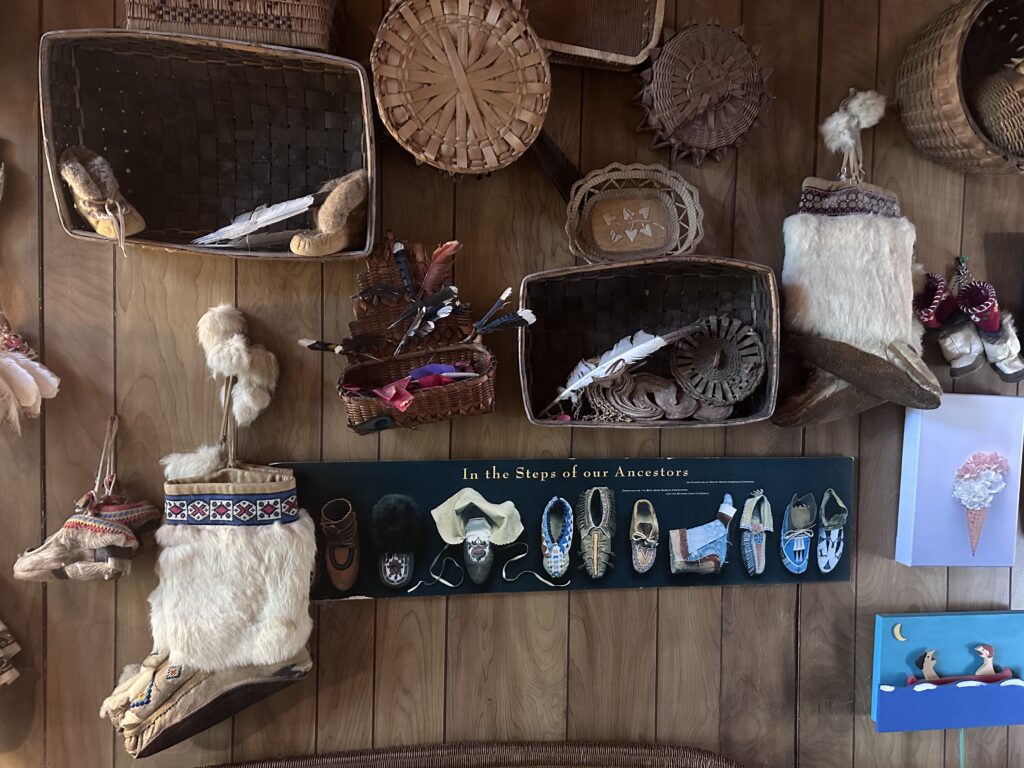
Before I commenced a four week 1100 mile trip in 1970 down the Mackenzie River in a 22 foot freight canoe from the Great Slave Lake to Igloolik, on the Arctic Ocean, I purchased two pair of mukluks. It was in the town of Hay River of the North West Territories, a community barely over 2000 residents. I gave the retailer a cheque and they were to send the mukluks to my home in Edmonton.
Well they never arrived. The back and forth resolution was captured in about four letters. The first one gives the tone. It comes from Lucille Furs and it goes exactly like this (including punctuation and spelling: “im writing you about 2 prs mukluks you bought here & told me to cash the cheque & then send them well took the cheque to the bank & somehow along the way theres a mix up about it. they cant certifie me that the cheque was cashed or not, now 1 still holding the mukluks here and would you go to your bank & get the cheque if it was cashed & send it to me… will return it with the mulkluks be assured of that the whole delay wasn’t my fault, please understand 1m sorry about the delay.”
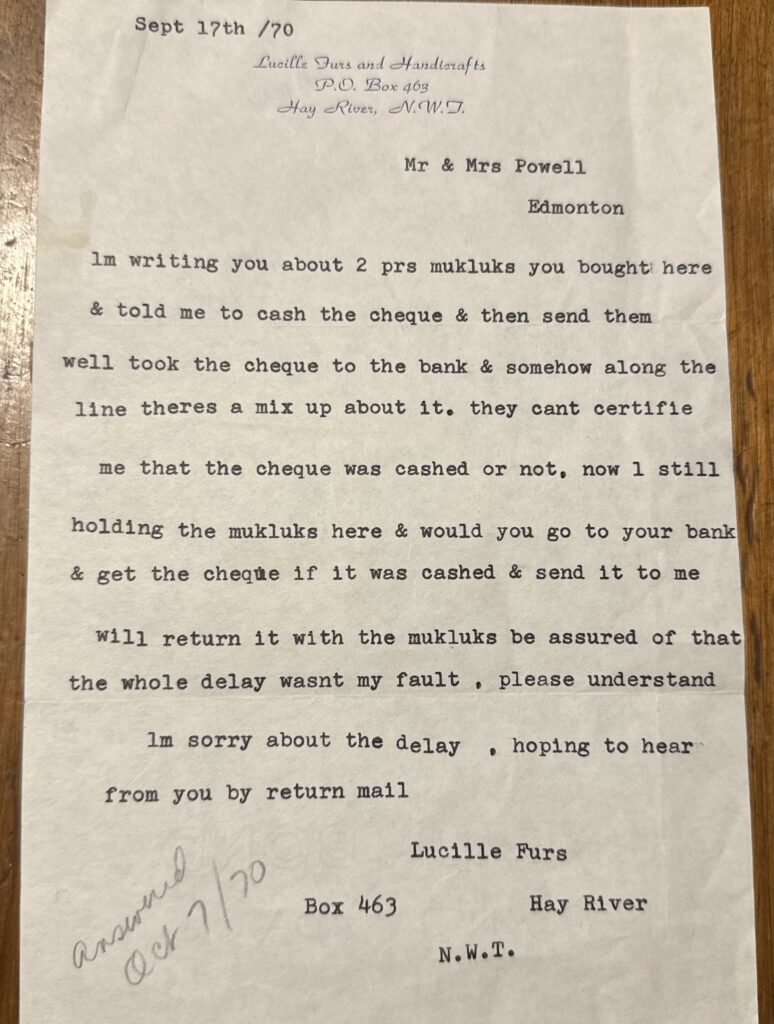
As the cheque I wrote was cashed, and the money withdrawn from my account, I was sure the mixup would be resolved. Near the end of this kind of back and forth I finally received this: “I now have proff that cheque was cashed, you know 1m selling for a northern CO-Op & they are very strict sorry for all this inconvenience, it wont happen again will make sure of that”
Said mukluks were subsequently offered a position on the living room wall at our cottage, where they remain today.
Post cards from my parents (1960s to early 1970s)
I have a number of delightful postcards that my mother and father sent to me during some of their North American car travels. They would drive somewhat leisurely to these places from Toronto. Some of their journeys found them heading out west in Canada (one postcard from the Thunderbird Motor Hotel in Dryden features two people canoeing). They often travelled down to Florida, thus the cards from the Sea Dream Motel in Sarasota-By-The-Sea and the Thunderbird Motel near St.Petersburg
They often spent the winter in Desert Hot Springs just north of Palm Springs, California. On the way they send cards from places such as Findlay, Ohio (the Holiday Inn; “the drive was good except for the blowing snow near London”), Nashville (the Howard Johnson’s Motor Lodge; “Drove all day in and out of snow”), Dallas, (the Sheraton Dallas Hotel; “arrived here from Memphis; cold front moving in”), Pecos, Texas (the Ramada Inn; “ Hope to get to Tucson tomorrow”). I like the one with the picture of Old Faithful Geyser in Yellowstone National Park
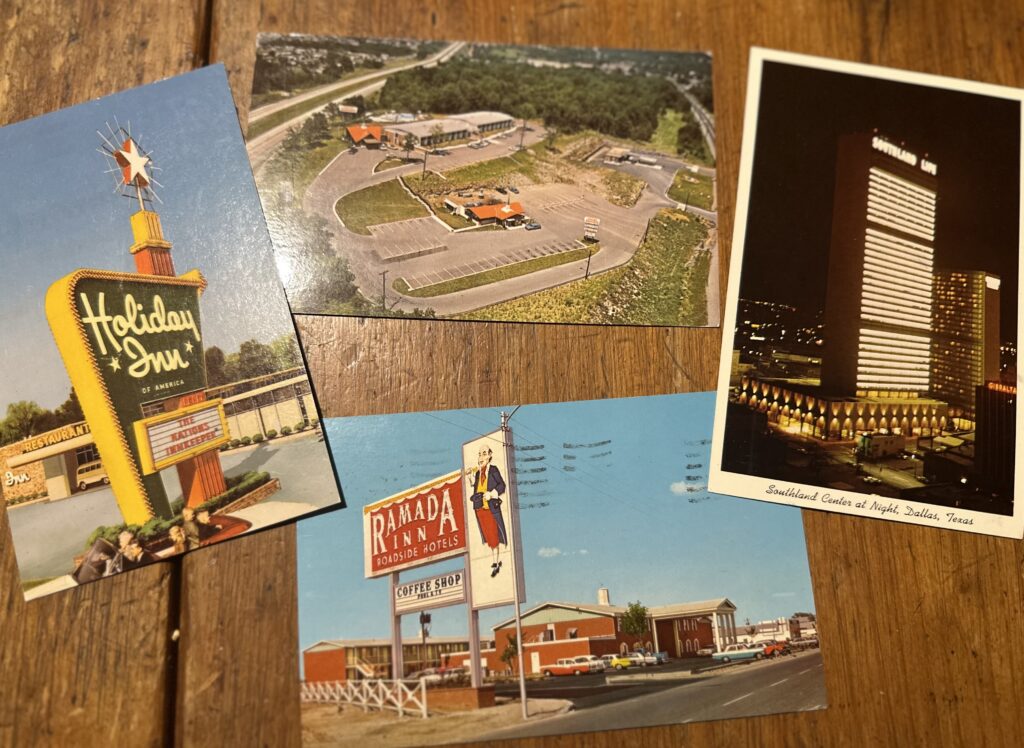
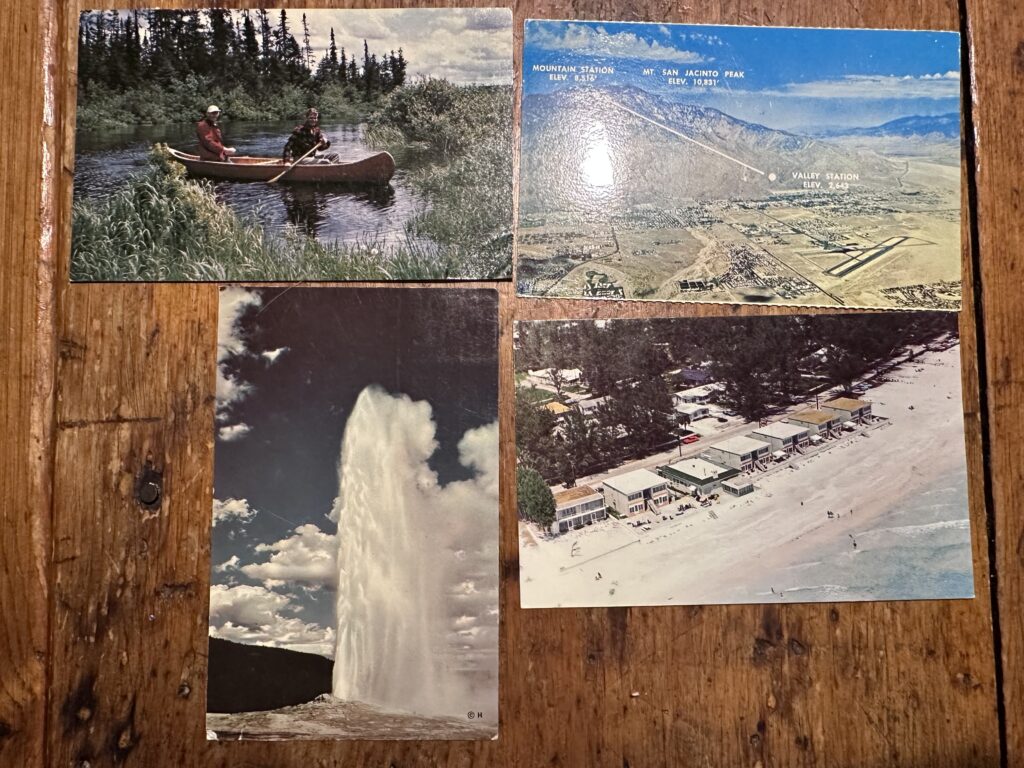
I highlight the post cards, as they were a favourite for quick communications – and almost like a quick text, but with a picture. Because postcards were processed with the same priority as standard First-Class mail, they moved relatively quickly through the postal system and would typically take 1 to 4 days to be delivered. (In 1963, the US Post Office introduced the Zip Code system and processing times dropped significantly. Canada finished their Postal Code system by 1974.)
Then in the 1970s, the postal service largely terminated rail contracts and transitioned long-distance First-Class mail and postcards to commercial airlines, also making coast-to-coast delivery faster. Long-distance phone calls were still incredibly expensive.
Air Mail letters were also available. Prepaid stamps were built into them. They were generally on blue coloured paper that was quite thin. An advice appeared on them warning users that “An Air Letter should not contain any enclosure; if it does it will be surcharged or sent by ordinary mail”. I felt like a teacher was admonishing me.
The “finger” note (1981)
To finish off, I found a short note from me (in my capacity at that time as Imperial’s Manager of External Affairs) to Wynne Thomas, the editor of the Imperial Oil Review (who reported to me). He had cheekily suggested that Imperial Oil should fall on its sword as Roman commanders would do who faced capture i.e. choosing death over dishonour.
The background was complicated but in October 1981 the federal Liberal government released its ill-conceived energy strategy – the National Energy Program (NEP). It blind-sided the industry until Mulroney’s Conservatives reversed everything.
Thus it was a tense time, and thus perhaps time for sick humour, and Thomas had that in spades.
My short note back to Thomas was “In response to your memo dated April 21, 1981 (3:15 pm), the PR division met and discussed your suggestion. We felt that a direct response was needed quickly (3:20 pm). The attached was unanimously agreed upon.”
Then I attached a photocopy of my hand in the photocopy machine giving the middle finger!
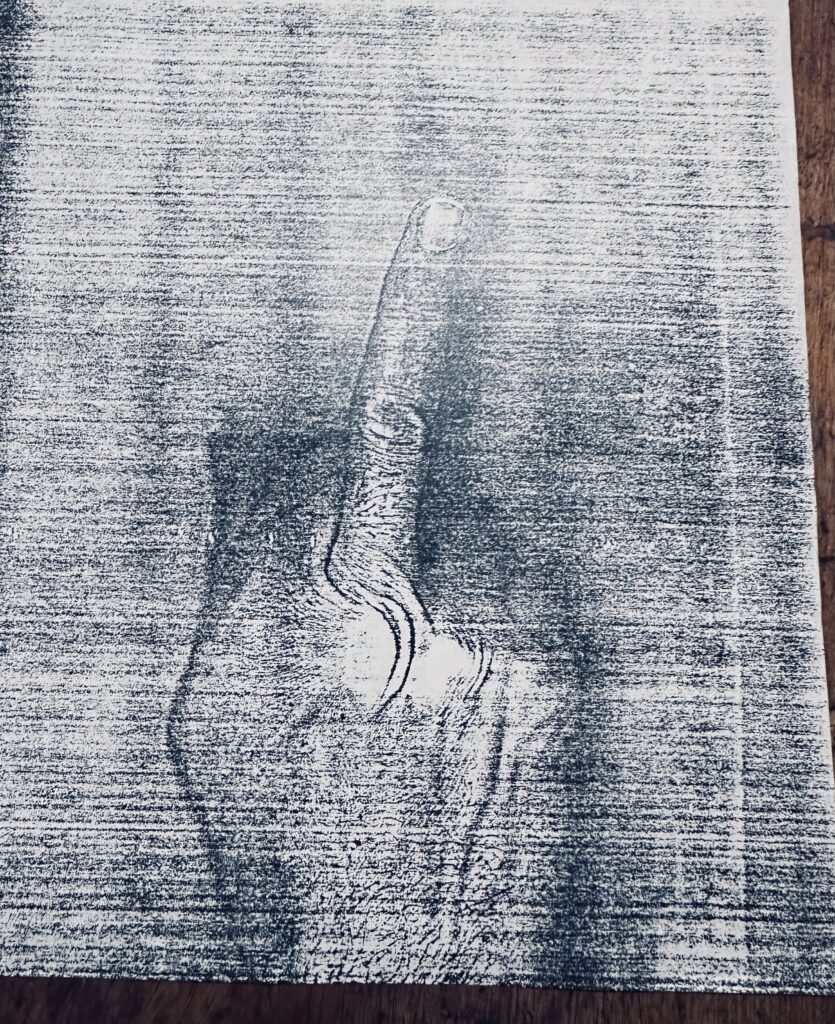
This simple memory reminds me of a very tense and complicated time in my career.
(Incidentally, the Imperial Oil Review was a very respected magazine at the time; it featured journalism, Canadian art, history, and culture rather than just acting as a corporate sales brochure.)
There are many more, so this is just a fun sampling connected to some interesting times of my life.