Our good friend and community activist, Rosemary Ganley, about three weeks ago invited my wife Penny and me to meet mayoralty candidate Michael Eamon. We were impressed. I want to explain why, but more than that describe what I think a city of Peterborough needs in leadership competencies to serve the local citizens fairly and effectively.
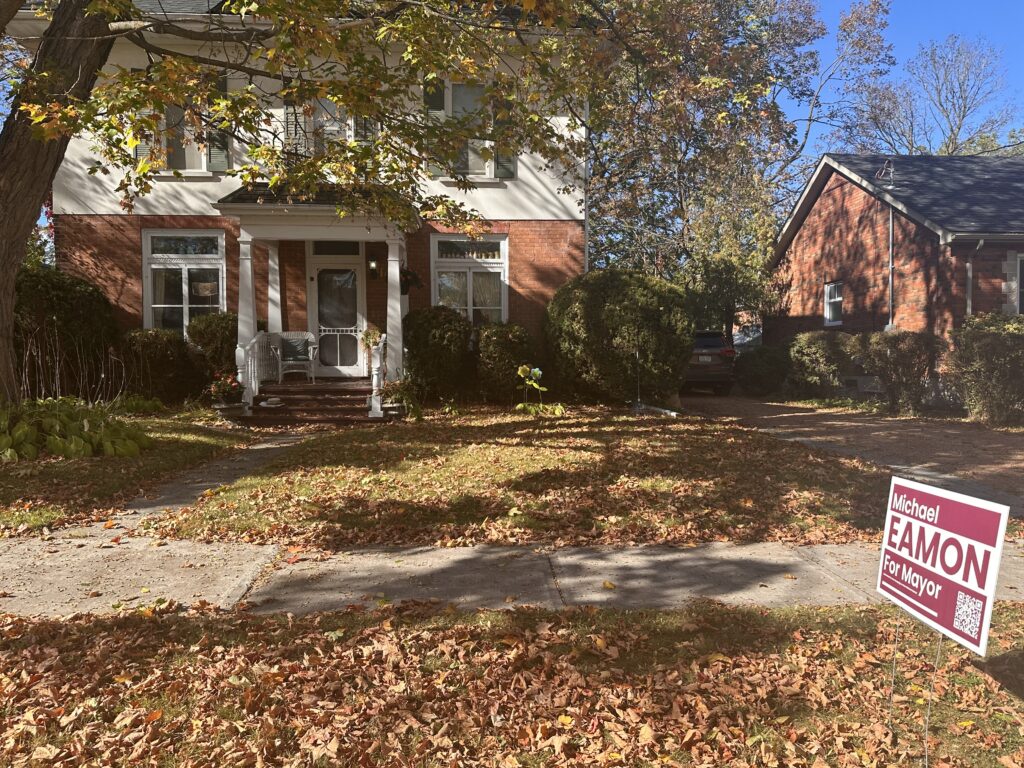
Writing this also drew me into more closely examining the issues and how the various candidates are choosing to address them.
What also emerged was the impressive profile of Peterborough and the surrounding area. So it really turned into a (much deserved) paean to the city.
So to the city:
Peterborough geographically
The city is positioned between the huge metropolitan city of Toronto and Canada’s capital, the city of Ottawa. It’s the gateway city to the Kawarthas, a beautiful area full of lakes and rivers, and history.
The city is uniquely positioned on the Otonabee River which runs directly through the city of Peterborough and flows into Little Lake. The Trent-Severn Waterway (which includes canalized sections and the famous Peterborough Lift Lock) passes through the city and connects to the Otonabee River system. TheWaterwayis a 386-kilometre-long (240 mi) canal route connecting Lake Ontario at Trenton to Georgian Bay, Lake Huron, at Port Severn. (See Attachment A for further details about the waterways, Little Lake and the pathway around it.)
Peterborough’s past, and how that influences its future
The city has a colourful and enterprising past that partly defines it. Because of this past, expectations have always been high for the future. The city began as an Indigenous portage route called Nogojiwanong meaning “the place at the end of the rapids,” before growing from a small frontier mill settlement into the “Electric City”. (For a further review of Peterborough’s early history see Attachment B.)
It also contained businesses that formed its economic strength. Such enterprises as the Outboard Marine Corporation, Canadian General Electric, the Western Clock Company, and Canada Packers.See Attachment C for a description of their influence.
Peterborough city, it’s present size and assets
Peterborough, the city, is not small potatoes. With a population of approximately 100,000 residents, and the metropolitan area exceeding 135,000, with the broader Peterborough County area exceeding 170,000 residents, it has size. (It’s one of Canada’s top 100 cities, i.e. it’s the 72cd largest municipality in the country – modest but not puny.)
It interacts with the province and the feds on many initiatives. It has its own city operation, plus five huge non private sector operations: a hospital, college, university, a provincial government department and a school board.
This city is a big operation. It has a day-to-day operating budget of $454 million and a capital budget (for infrastructure, repairs, and capital projects) of $139 million. The city itself has nearly 1000 employees (see Attachment D for its size and infrastructure).
Public and private sector operations
The city is strongly influenced by five very important public sector operations. They include a quite large and relatively recently built hospital (the Peterborough Regional Health Centre), a university (Trent), a college (Fleming), an important provincial government department (the Ministry of Natural Resources) and a school board (the Kawartha Pine Ridge District School Board). See Attachment E for the size of the five public sector operations.
Regarding Peterborough’s private sector, a groundswell of corporations have been replacing the impact the old standbys had. For a summary of the key players see Attachment F.
Other important assets/attractions
The city has all the assets of a large city: a thriving media (Attachment G), a healthy arts, culture and heritage scene.
On top of the organizations mentioned in Attachment H, there is a rich core of artists painting, sculpturing, felting etc. in every corner. These can be seen when visiting such gatherings as the Buckhorn Festival of the Arts, the Apsley Studio Tour and the Kawartha Autumn Studio Tour.
The city is well served by its road system, including Highways #7 and 35 plus excellent connection south to Hwy 407. There are some challenges in the city proper. Peterborough has an excellent airport and a future workable high speed rail possibility, although some years down the road. (See Attachment I.)
The Basillie Family YMCA on Aylmer Street South offers a wide range of fitness, child care and community support services. Other fitness includes GoodLife Fitness. (See Attachment J.)
An important part of the psyche of the city are its hockey and lacrosse teams. (See Attachment K for a summary of the teams and the facilities.) It’s important to point out that while these two sports have dominated Peterborough’s past, many other options are now taking up people’s interest, both as players or viewers.
Regarding sporting and outdoor endeavours, the area is excellent for hiking in the summer and downhill and cross country skiing or snowshoeing in the winter. Because of the abundance of lakes and rivers, all of the sports related to water are available: boating, kayaking, swimming, canoeing, sailing. Golf, curling, rowing, lawn bowling, rugby, climbing, speed skating, tennis and pickleball are all available through both private clubs or public facilities. (See Attachment L for a selection of possibilities.)
The downtown complex: Then there is the important development of a new downtown complex – the Multi-Use Sport and Event Centre (MUSEC). The Peterborough City Council formally committed $57 million, around one-third the estimated $170 million cost, to move forward with this proposal. The facility will feature a 5,800-seat arena. It is designed to replace the aging, 70-year-old Peterborough Memorial Centre (PMC) to meet modern OHL standards and retain major tenants like the Peterborough Petes.
It is intended that the complex will be built on the 155,000-square-foot brownfield parcel at 182/325 Townsend Street (the current city transit garage and secondary public works yard). It will become fully available once the city’s new transit facility on Romaine Street is completed.
The city is replacing the transit garage with a 10,500 sq metre modern building designed to house up to 110 buses complete with maintenance bays at the site of the old Canadian Canoe Museum location on Monaghan Road (and 575 Romaine Rd). This will be complete by 2030. Adjacent municipal lots on Wolfe Street are slated for parking infrastructure.
Council voted 10-1 to pre-commit $1.7 million in 2027 specifically for hiring a dedicated project manager, executing environmental site studies, and conducting preliminary consultant work. The remaining $114 million must still be secured through partnerships with upper levels of government (provincial and federal) as well as private sector investors.
Apparently there is some direct private interest waiting in the wings. Mayor Jeff Leal was reported as saying on May 7: “Without identifying who it is – because that would be inappropriate at this time – we had a very productive session with a major equity partner this week…There is a lot of interest in this project beyond the borders of Peterborough.”
At the federal level, MP Emma Harrison has said that there is federal funding the city would qualify for under the Build Communities Strong Fund. Local MPP Dave Smith was a little more constrained in his opinion and has noted that the fiscal year is over (this was in May), and that grant programs for this type of project won’t likely arise again soon.
This is a project full of conflict and opinion, as big ticket, far reaching items always are. This is particularly true for Peterborough, where there is a very conservative, risk adverse attitude. It will be a game changer for the city, thus the choice of a mayor is particularly important. I am in the “for” category, but I want to be assured other money is supporting the endeavour. I want a facility that captures bigger attractions and more city revenue for the future. I have laid out the arguments for and against and they can be found in Attachment M.
Major annual events are part of Peterborough’s fabric, such as the Dragon Boat Festival, the Head of the Trent, Peterborough Musicfest, Peterborough Folk Festival, and the ReFrame Film Festival. (Many of them are listed in Attachment N.)
Senior residences and retirement communities are numerous (see Attachment O).
There are many places of worship, including the largest Buddhist Temple outside of China (see Attachment P). Police and fire services need to be available in a well run city. They are mentioned in Attachment Q. For alignment with the LGBTQ+ community, (see Attachment R). Alignment with the aboriginal population has been accomplished in the community. (See Attachment S for a summary.)
So to the mayoral race:
What does the city need in terms of its mayor?
It needs a person who has a broad range of experience in dealing with the various stakeholders that can influence the direction the city takes and achieve the following objectives.
Key objectives for a mayor:
1. Eliminate the reluctance of citizens to travel downtown, thus a safe, clean welcoming environment, absent of individuals begging or loitering.
2. Attract new businesses into the city, including the downtown. Expand serviced industrial lands, whether in Peterborough or Cavan Monaghan; probably both.
3. Bring forward the Townsend Street Arena Project to the satisfaction of the key players. No more studies; get on with it
4. Housing, or adequate shelter for all
5. Adequate mental health and addiction services,
6. Constant search for operational efficiencies with the objective of limiting tax increases close to the rate of inflation
7. Develop a process that gets large city projects moving forward at a faster pace
8. Leverage institutional assets like Trent University and Fleming College to grow the commercial tax base
9. Establish good working relations with all parties: the county, the province, the staff, other councillors, the voluntary sector and citizens – plus peace at city hall
Key issues that need to be solved:
1. Improving downtown public safety and cleanliness, and changing the stigma associated with the downtown core. This is vital for economic health and important to attract and retain local businesses. (There is an excellent case study of what has worked, and worked well, and it happened in New York City. It was launched by the mayor Rudy Guiliani in the late 1990s. He cleaned up the graffiti and garbage and cracked down on street crime and public drug use. Substantial economic growth resulted.)
Key is the homeless population. One obvious and quite visible issue is what to do with those who have drug problems. While I am hard nosed on this subject, I do have some compassion and I recognize that the homeless people need to find a place to live. Balancing compassion with community safety is tricky.
City staff have recommended that at least this winter, temporary shelter space be provided at the old Carnegie fire hall. The province has a Homeless Prevention Program which is a provincially-funded initiative designed to prevent, address, and reduce homelessness, including chronic homelessness.
The city has 50 modular homes (known as The Crossing or the Modular Bridge Housing Community) located on Wolfe Street (the Rehill Parking Lot, which replaced a prominent downtown tent encampment) to provide low-barrier, safer interim housing. The site facilities feature shared washroom and shower facilities, a communal laundry area, and a community space.
These are directly funded by the provincial Homelessness Prevention Program (HPP). Because HPP dollars prioritize long-term stabilization, the funding doesn’t just pay for the physical cabins. It employs the Elizabeth Fry Society of Peterborough to operate the site 24/7, offering on-site mental health supports, case management, daily meals, and a service hub to bridge residents into permanent housing. The small homes are now full, so more are needed.
2. The homeless, long term
If I had a good answer, I’d promote it. But it is so tied up with drugs, and the reality that the recidivism rate for most people addicted is high. Addiction is recognized as a chronic, relapsing medical condition. The Canadian Centre on Substance Use and Addiction (CCSA) Life in Recovery from Addiction in Canada survey found that 51.2% of individuals achieve stable recovery without experiencing a single relapse. For the remaining portion, between 40% and 60% of individuals relapse within their first year of starting treatment.
Then there is the question of criminal recidivism, when looking strictly at individuals with substance abuse issues navigating the Canadian justice system, addiction is the single highest predictor of whether someone will reoffend.
For individuals dealing with both mental health issues and substance use disorders, the three-year recidivism rate creeps up to 72%. For the broader picture, approximately 70% of all Canadian federal offenders struggle with substance abuse. Without targeted treatment, untreated substance use remains a primary driver for bail denials and repeated interactions with the law.
Epidemiological studies challenge the perception that mental illness alone causes criminal behaviour. Regarding the reasons addiction may drive crime, criminologists have supported three main reasons: that users commit offences to get money to pay for their drugs, that the substances alter people’s behaviour and cause them to do things they normally wouldn’t and, finally, that people end up breaking the law because they’re using illicit drugs and associating with others who are doing the same.
Providing immediate, stable housing dramatically drops criminal reoffending (recidivism) but has a much more complex, slower impact on drug relapse rates (according to the Mental Health commission of Canada’s landmark At Home/Chez Soi study).
Under Canadian low-barrier housing models, residents are not evicted if they relapse. Because of this, data shows that while stable housing drastically cuts alcohol abuse (reducing the number of heavy drinking days), it has a much slower, minimal impact on reducing illicit hard drug use, in the short term.
3. Rising housing costs in general for those who want to buy. (A growing unhoused population is part of the issue.)
4. Tax discipline, i.e. balancing operational and capital budgets while managing taxpayer pressure and attempting to limit tax increases close to the rate of inflation.
5. The Townsend Street Arena Project: Navigating the $170 million proposed multi-use sports and entertainment facility project, where the city has committed one-third of the funding while seeking the remaining two-thirds from senior levels of government and private partners. The long-term viability of the Peterborough Petes hangs in the balance. (I believe we can’t follow the strategy of correcting all of the “down and out” problems before we can take on participation in other investments, be they sports, culture or arts related initiatives.)
6. Expanding serviced industrial lands, streamlining development permit processes. This goes hand in hand with leveraging institutional assets like Trent University and Fleming College to grow the commercial tax base.
6. The GE imprint: The old buildings need to come down at GE and all the contamination dealt with.
7. Negotiate with Cavan Monaghan for more land to provide for future development (preferably the private sector, but other transactions could work). The Cavan Monaghan additional lands issue must be solved. The sides just have got to get together and solve this one to access serviced land for future development.
8. Long term plan for building height guidelines for different parts of the city. (Recognizing that a 17 story building was permitted in an area with no other tall buildings and historic homes.)
9. The “infrastructure gap”: The Peterborough Transportation Master Plan earmarks $908 million for long-term road improvements. But there is a gap between available capital funds and the infrastructure needs. Major arteries., including downtown streets like George Street and Water Street require deep underground utility and water main overhauls. Also future projects to widen sections of Landsdowne Street, Chemong Road and Parkhill Road will be needed.
10. Future traffic bottlenecks: For decades, Peterborough planned to extend the Parkway north through the Jackson Park corridor to create a major north-south arterial route connecting to Chemong Road. This has been removed from its long-term Transportation Master Plan. The city is now forced to invest in widening alternative corridors, such as major multi-lane expansion of Chemong Road and the Reid/Parkhill intersection reconstruction.
An important question is how does a mayor go about confirming what are the important issues? What criteria to use? Also, tough problems don’t really have answers; they have a range of actions that take you into better ground. I’m nervous about a candidate that promises too much. Many of the issues the city faces are complicated, and can’t be worked out without a lot of thought and debate. Although the electorate want simple answers, they are usually wrong.
What are the strengths and objectives of the different candidates?
Common to most or all:
* broad political support for replacing the PMC to ensure the survival of local sports teams; the candidates remain highly divided over the ultimate risk to municipal taxpayers and whether the project will stimulate the downtown economic boost proponents claim
* all of the candidates in the race supported funding the arts; they generally felt the return on investment was worth it. Some felt is was higher than that of supporting sports.
Michael Eaman (academic)
While he is labelled as an “academic”, his experience is considerably wider.
* 15 years as a federal civil servant in Ottawa with Archives Canada.
- Was principal of Catharine Parr Traill College at Trent University, at the time a women-only college.
- Teaches history at Trent.
- An administrator, running a college downtown, with undergraduate and graduate students, a budget of half a million dollars.
- Productive links with private sector donors that have led to the creation of the popular outdoor space, the Jalynn Bennett Amphitheatre.
- He’s a local volunteer: on the campaign cabinet of the United Way and sings with the Peterborough Singers.
- His wife, Jennine, is a historian; two teenage sons.
What will be his objectives and priorities as mayor? He has stated that he will be “the arts and culture and heritage mayor, because that had been my life… arts, culture, heritage, and education.” He wants to break down the existing silos and “have true conversations”. “Only the mayor…can break down these silos so we can have true conversation to build the trust among musicians, among artists, among creators, to create a better space.”
He likes the idea of the downtown arena and event centre, but not the current plan. As mayor he’d be looking for more community input on support for an arena versus other needs (what ever that means).
Eaman has suggested a mayor’s council (he calls it a Group of Seven) made up of representatives of the top seven employers in Peterborough; they are from the public sector. the hospital, the university, the college, the MNR, the school boards and the city itself.
One of Eaman’s other strategies is to gather together a selection of stakeholders. This would likely include business, labour, non-profit sector agencies, government employees, city staff, political participants. What ever; it would be broad.
Then he would have them brain storm the issues to reach some understanding of relevance. But to go farther and probe for a range of potential action.
His campaign is built heavily around repairing relationships at City Hall, regional cooperation and long-term economic development.
He emphasizes his management skills, even though it’s not municipal elected experience. He wants to “look, listen and act” with an emphasis on consultation, consensus and rebuilding relationships.
He doesn’t want an isolated Peterborough; he has a regional focus. He also sees economic development is broader than just “business” as the city has strengths in health care, education, tourism, arts and culture and innovation. He also wants to expand the city’s boundaries and that will be interesting to see how he pulls that off.
He will be challenged when consensus can’t be reached on issues.
Neil Morton (an entrepreneur)
His vision includes attracting new industry; fostering a safe city downtown; investing in arts and culture; affordability being his “North Star”; responsible density housing. He is going to “advocate for the feds and province to stand up and be made to spend the money on this community for the problem they’ve downloaded to us. So we are going to house these people, but it will not be on the backs of local taxpayers. It will be on backs of the feds and province.”
He wants a downtown ambassador program, not as police, but as guides to assist the average citizen.
He, like Riel, says he will be ready on day one: “I’m an entrepreneur, a community builder — and people are finding that refreshing.”
What I like about him is that he wants to attract new industry and higher paying jobs to Peterborough, so that the tax base grows. He wants to work more closely with neighbouring municipalities. He certainly has business and entrepreneurial experience. He also seems to be a good communicator and promoter, thus we could expect him to be a good city ambassador. He wants growth and downtown revitalization.
He is the most committed to the downtown arena and event centre. He believes private sector investment will arrive and the promise of a downtown resurgence will come true. “We need to get this facility built to give the Petes a modern home that will attract a new generation of fans.”
He’s never held elected office and has limited municipal government experience. So he’d be doing a lot of learning at first. Also, while his strategy is tantalizing, what would the city have to invest before the additional tax revenues arrive?
He will also face the question of which of his priorities come first and which don’t get funded. The highly regulated and constrained environment of municipal government might balk at his approach.
Keith Riel (existing city councillor)
What will be his objectives and priorities as mayor? He will hold General Electic’s feet to the fire. “I worked there for 38-and-a-half years. I was the president of the union. I dealt with these people. And if you don’t hold their feet to fire, they are not going to fix up this site … What GE wants to do is raze the buildings, fence it off, sod it, put a couple of trees, and they’re out of town. They’ve been made to do it (remediate contaminated sites) in the States — they can do it here. They know how to do it — and they don’t want to spend the money. Look at the billions and billions and billions of dollars it (GE) took out of this city here. Why should they leave 43 acres of a cesspool in the middle of the city?”
He is big on his city governing experience: “I’ve held every portfolio … I know how the city council works,” he said. “That’s why now I think it’s my time to run for mayor … I’m ready to go, day one.”
He is the most sceptical to the downtown arena and event centre. That is, show me the promised private sector money and I might support it sort of line. And after saying such things he goes on and on about how much the costs will drag on into the never ending future.
He would create a “Mayor’s Arts Table” so artists are the ones who will be providing direct input to the mayor’s office and council.
He’s been on City Council since 2011, so knows a lot about the city operation. He’s also willing to challenge the status quo, in fact he tends to be quite confrontational. This will make consensus building difficult. I’m not sure about his skills and inclination to build a cohesive council around common priorities, including councillors who currently disagree with him.
He seems quite set in his ways; maybe that’s an age thing (he is 78). He’s been a union guy at CGE for 38 years and seems to have that rigid union mentality. Does he have the broad experience and sophistication needed to run a complicated operation like the city, even though, as he says, he’s been a city politician for 16 years.
A final note about Riel: The City of Peterborough encourages candidates and supporters to put their election signs on private property. He should be admonished because many of his signs occupy space on public land, which is discouraged.
Rebecca Schillemat (housing advocate)
“We do need to realize that there are people downtown that don’t have other choices. So they are on the streets, they’re asking for help. But there are also people who are making poor choices, and we need to make it harder for people to make these poor choices. So we need some consequences … We need to make sure that whoever is downtown realizes that we’re in a shared space. And part of being in a community is making sure that you are respectful to other people who are sharing that space with you. We need housing — all types of housing — desperately, to help with downtown.”
Jacob Méthot (student)
He would cut the size of council in half. This would create, as he says “a culture of collaboration” between council and the public, while calling for the city to take a more proactive approach.
Regarding strong-mayor powers, they “are disgusting. I will never be using them — they are inherently anti-democratic and fail to listen to anybody’s voice. We don’t have a dictatorship here, we have a democracy — and that needs to stay that way.”
Brian Lumsden (former real estate broker)
He’s really only focussed on the homeless question, and almost can’t talk about other things. He does mention property taxes “There’s lots of room to cut the different services. Now as far as how we’re going to get there … I am going to freeze the property taxes. And aim to keep them low. I’m going to accomplish this by getting the spending under control and demanding an increase in efficiency from all departments.”
Rob Hailman (non-profit administrator)
On cleaning up downtown: “It’s not danger — it’s misery that we’re seeing, in downtown Peterborough… We know that homelessness and poverty and addiction and crimes of opportunity are all tied together as one big societal problem that we have to address as one large societal problem.”
On Tuesday, October 6 he bailed from the race.
(Note: Short form of their experience in brackets was labelled by the Peterborough Examiner reporter, Joelle Kovach.)
I believe the race is between the first three. Personally I would not consider Riel for reasons mentioned in my brief summary of him.
Attachments
Attachment A) Peterborough geographically
The Trent canal was surveyed as a military route, but the first lock was built in 1833 as a commercial venture.
By the time the route was completed, its usefulness as a commercial waterway was over; ships plying the Great Lakes had grown much larger than the canal could handle, and the railways that had connected to the canal now took most of its freight. But the introduction of motor boats found the Trent–Severn perfectly positioned as a pleasure boating route, and today it is one of Ontario’s major tourist attractions. Its passage through cottage country, both Muskoka in the west and the Kawarthas in the east, draws thousands of visitors every year. It also forms a major portion of the 9,700 kilometre Great Loop.
Little Lake is a gem of a lake that’s sits surrounded by the city, with its Centennial Fountain spouting 75 metres above the lake. The 64-hectare lake is a natural reservoir created during the last ice age. It sits along the Otonabee River, where Jackson Creek and the Trent Canal meet the waterway before it continues south toward Rice Lake. Little lake became central to the colonial settlement that grew into Peterborough after Adam Scott built a sawmill and grist mill near its southern edge in 1818.
A waterfront trail pokes around the lake but needs to be finished. On Sept 29, 2026 the federal government announced $3.91 million towards the cost of completing the Little Lake Loop (total cost $7.5 million). It’s a 4.46 kilometre multi-use trail. (The trail will be extended by 1.15 kilometres along Crescent Street and Haggart Street.)
The pathway will eventually connect to the new downtown events centre that is expected to be built on the site of the current public works property on Townsend Street (see MUSEC).
Attachment B) re early history
The site along the Otonabee River was traveled and used by the Mississauga and their ancestors as part of a long portage route. The French explorer, Samuel de Champlain, traveled through the area in 1615, navigating down from Lake Chemong along paths that mirror modern roadways.
An Adam Scott settled on the west shore of the Otonabee River (Scott’s Plains) and built a sawmill and gristmill powered by Jackson Creek in 1821.
In 1825, a British emigration scheme brought nearly 2,000 poor Irish immigrants to the area under the direction of Peter Robinson. In honour of Robinson’s successful settlement efforts, the community was renamed Peterborough.
The growing settlement was incorporated as a town in 1850 and later officially became a city on July 1, 1905, after annexing neighbouring communities like Ashburnham.
Abundant water power from the Otonabee River and Trent system attracted major manufacturers, including Edison Electric (later Canadian General Electric) and the Peterborough Canoe Company (thus the label “The Electric City”.
The community formed is full of wonderful characters and stories. Like sisters Susanna Moodie and Catharine Parr Traill (née Strickland) who were pioneering English-Canadian authors who played a monumental role in immortalizing the early settler history and social structure of the Peterborough region.
Arriving in Upper Canada in 1832, they settled on uncleared land in the backwoods north of Peterborough along the Otonabee River and Lake Katchewanooka (near modern-day Lakefield). Their contributions transformed how the world viewed the Canadian wilderness. The sisters used their professional writing skills to provide realistic, first-hand accounts of the grueling Canadian bush.
The Strickland siblings turned the Peterborough/Lakefield area into what historians call “The Cradle of Canadian Literature.” Their deeply detailed accounts are why the region’s early history remains so famously preserved today.
Attachment C) re past businesses
The Outboard Marine Corporation (OMC) operated for many years, and employed at its peak 2,000 people. They manufactured the legendary Johnson and Evinrude Outboard motors and paired them with locally made cedar-strip boats and runabouts.
The OMC footprint on Monaghan Drive remained active when it was taken over by the Canadian Canoe Museum in 1997. The museum operated there and grew to be its current successful self that now exists in its own location on the east shore of Little Lake (see later).
Canadian General Electric (CGE) also operated for many years and at it peak employed over 6,000 people. The original Edison Power and Light Company had received very attractive financial concessions from the city to come into the community.
It should be noted that CGE were a major benefactor of Trent University, donating the essential land and the Nassau Mills generating station to help establish the campus.
The sprawling “Peterborough Works” plant on Park Street North was one of the largest manufacturing facilities in Canada. It was at one point the economic anchor of the city. But global manufacturing shifts and automation ultimately led to cessation of major manufacturing in 2018.
The historic breakup divided the old General Electric into three independent public companies in 2024: GE Vernova (energy), GE HealthCare, and GE Aerospace (which retained the original GE ticker).
GE Vernova is involved in all fields of power generation, and has more than 70,000 employees world-wide; it posted a $4.9 billion US profit in 2025.
Since the closure of the Peterborough Works plant in the ensuing 8 years CGE has done nothing with the property. In 2025 a heritage plan was unveiled. This 154-page document includes plans to maintain and restore several architecturally significant buildings, pretty up the edge of the property and develop a public space with open-air exhibits detailing the plant’s history and role in the community.
The Western Clock Company moved into a newly constructed plant on Hunter Street East in East City (near the lift locks) in late 1922. (It officially became the Westclox Division of General Time Corporation or just Westclox in 1936.) Manufacturing operations in Peterborough ceased in the mid-1980s as production shifted offshore, though a smaller local distribution and office space remained active for a time. The historic factory building has since been converted into residential apartments.
Unfortunately the Westclox factory used heavy industrial solvents and materials that eventually seeped into the local environment, creating notable pollution issues. Groundwater testing revealed that a toxic industrial solvent and human carcinogen, trichloroethylene (TCE), leached from the former clock factory. The chemical plume migrated downhill and downgradient into neighbouring properties, directly contaminating the soil and groundwater at the anticipated site of the new to be Canadian Canoe Museum on Hunter Street East. Once this was discovered, a search began for a new site for the museum and the lease with Parks Canada was cancelled.
Canada Packers: began as the George Matthews Company. It was founded in 1868 and moved to Peterborough in 1882, becoming one of the largest pork-packing enterprises in Canada. Their plant was on the northern shores of Little Lake, at the junction of George Street and the Canadian Pacific Railway main line. (Today, the Holiday Inn occupies that waterfront site.)
Following a series of corporate transitions, Canada Packers officially took over the plant in 1927. It operated as a major hub for processing “Rose Brand” meats and was a highly stable source of local manufacturing jobs. Beyond just being a workplace, Canada Packers was an anchor of Peterborough’s social and sports culture. Like many factories of that era, the company actively recruited workers who were skilled athletes to play on their highly competitive local soccer and sports teams.
The facility operated until 1964, at which point Canada Packers closed and demolished the plant. Its departure marked the beginning of a major environmental cleanup effort for Little Lake.
Attachment D) re City of Peterborough services and infrastructure
Tax dollars go toward such things as:
- collecting garbage and maintaining the landfill
- maintaining roads, sidewalks and trails
- picking up and processing compostable materials from the Green Bins
- building and operating the sanitary sewer and sewage treatment systems to protect public health and the environment
- providing social services
- supporting affordable housing
- running recreation programs
- implementing sustainability initiatives
- Peterborough Transit
- Peterborough Police Service, Peterborough Fire Services, and Peterborough Paramedics
A breakdown of where the city’s municipal tax dollar goes:
- 25.9% – Outside/external organizations, such as police, paramedics, and public health
- 23.9% – Community Services, such as social services, housing, fire services, parks, cultural services, the library, the museum and the art gallery
- 18.2% – Municipal Operations, such as public works, winter control, transit, and the airport
- 16.5% – Financial services, which includes financing costs for major infrastructure projects
- 6.1% – Finance and Corporate Support Services, which includes the City’s finance administration, emergency management, communications, and facilities management
- 5.4% – Infrastructure, Planning and Growth Management, which includes services such as engineering, managing major infrastructure projects, processing planning and building permit applications, physician recruitment and economic development
- 2.2% – Legislative Services, such as the Clerk’s Office, legal services, real estate transactions, the Provincial Offences Act office, and by-law enforcement
- 1.4% – Chief Administrative Officer’s office, which includes the City’s People and Culture Division
- 0.4% – City Council
Capital projects
These include items such as the police station renovation and expansion, Lansdowne Street West between Spillsbury Drive and Clonsilla Avenue, Wastewater Treatment Plant revitalization, extending a taxiway at the Peterborough Regional Airport, road paving, purchasing transit buses, and water service distribution infrastructure.
Revenue sources
The City of Peterborough is continuously looking for other revenue sources to alleviate the property tax pressures on residents and businesses. Other revenue sources include user fees, grants from the province for specific programs such as social assistance, investment income, gas tax transfers to the City, and fines.
The draft 2026 Budget includes total expenditures of $433.7 million funded by revenues of $232.7 million such as user fees, grants from other governments, recoveries, interest from investments, and service charges, resulting in a tax requirement of $201 million.
Attachment E) re public sector operations
Peterborough Regional Health Centre is the region’s largest employer, with a workforce of more than 3,100 staff members, 450 physicians, and 300 volunteers that service around 500 beds. As a regional acute care referral hub, it considers its total surrounding community reach is very broad, serving a population exceeding 300,000 residents.
Trent University now takes in nearly 13,000 students and employ over 2,200 full or part time.
Fleming College now enroll over 4,200 full-time equivalent students and employ around 1,700 to 1,800, most of whom reside in Peterborough working at its Sutherland Campus.
The Ministry of Natural Resources (MNR): In 1996 the Ontario government moved the operation of this huge department to Peterborough. They now employ over 1,000.
The Kawartha Pine Ridge District School Board (KPRDSB) is also a fairly large employer, with approximately 1,250 employees.
Besides the public school system, the college and university, there is an excellent private school, Lakefield College, right on the doorstep. There is another, Trinity College, but 40 minutes away in Port Hope.
Attachment F) re the private sector operations
AON Inc is ahomegrown property management, real estate development, and senior living corporation. Employing roughly 750 people, it is the single largest private employer headquartered locally.
Quaker Oats has a long-standing manufacturing operation in Peterborough, Ontario, which was established in 1902 and remains active today. It operates as a major production hub for Quaker products in Canada under the ownership of PepsiCo Foods Canada. They employ around 600 workers.
Minute Maid Company/Coca-Cola: Operates a notable food processing presence in the local region. They employ 75 to 80 workers.
Sysco Food Services: A massive regional distribution centre acting as a supply backbone for hospitality across Ontario. They employ between 200 and 500 according to federal contracts.
Westinghouse Electric Canada: A key driver in nuclear engineering and reactor components.
GE Vernova is the spinoff company that owns the 50-acre property. They are leading the rollout of the Western world’s first commercial Small Modular Reactor (SMR) in Darlington, Ontario. While the physical SMR builds are on the lake at Darlington, Peterborough remains heavily embedded in the province’s nuclear identity. Local engineering expertise and specialized nuclear services companies in the Kawarthas frequently feed components, fuel handling knowledge, and technical consulting into the broader GVH (Hitachi Nuclear Energy) and OPG (Ontario Power Generation) procurement pipeline. They employ approximately 60 people in Peterborough.
An important issue is the pace and timing that GE Vernova choose to demolish the buildings. Another issue that will have to be resolved is whether BWXT will be allowed to move its uranium pellet-making operation from their Toronto plant to Peterborough. A local grassroots citizen group, CARN (Citizens Against Radioactive Neighbourhoods.) has been formed. They are concerned the processing will happen across the street from Prince of Wales School.
BWXT Nuclear Energy Canada is a key player in Canada’s nuclear ecosystem. This advanced engineering company designs and supplies fuel-handling systems and reactor components, employing hundreds of specialized technical workers. It operates out of four of the last functioning buildings at the former General Electric factory site. BWXT lease these buildings from GE Vernova. They bought the nuclear component and operates out of these four buildings on the Monaghan Road side of the property. They employ approximately 400 people in Peterborough.
Flying Colours Corp.: A premier global aviation company specialized in green aircraft completions and maintenance, headquartered at the Peterborough Airport. They employ approximately 250 people at the airport. (See Attachment I regarding the impact of the Peterborough Airport has locally.)
GM Financial: A major corporate financial service hub operating regional customer service and credit facilities. They employ a local staff of hundreds of employees (though an exact official public headcount is not separately broken down).
Fairbanks Morse Defense (Rolls-Royce Civil Nuclear/Naval Marinesold its Naval Handling facility in Peterborough to Fairbanks Morse Defense in July 2026): An advanced aerospace and marine engineering presence supporting global defence supply chains. They employ approximately 85 to 90 people.
Ventra Plastics (Flex-N-Gate): A prominent automotive parts manufacturer making precision plastic components. They employ approximately 500 to 525 people at their manufacturing facility in Peterborough.
Siemens Milltronics: A massive technological manufacturing plant specialized in process instrumentation and industrial sensors. 40 employees remain at the Peterborough facility following the relocation of 160 manufacturing jobs to Concord, Ontario.
McCloskey International: Headquartered locally, engineering and manufacturing heavy-duty screening and crushing equipment for global markets. They employ nearly 500 people at their main plant and corporate office area near Peterborough.
Cleantech Commons: A partnership between Trent University and Peterborough that will focus on bringing together academic and industry partners. They have an 85 acre site beside Trent. Vision: to become Canada’s premier clean technology research and innovation site, hosting a cluster of companies and start-up enterprises in the fields of clean technology, agro-biotechnology, water treatment & advanced materials. Peterborough & the Kawarthas Economic Development will be in charge of marketing. They have 16 potential tenants (63% from outside Peterborough and even Ontario) who have engaged in discussions or shown interest in setting up operations at the park.
SGS Canada, originally Lakefield Research (Lakefield): Though situated just outside the city boundary, this facility provides critical environmental and metallurgical research services globally. They employ more than 500 people in Lakefield.
Attachment G) re media
Print & digital newspapers:
The Peterborough Examiner
Established in 1847, this is the city’s historic, flagship daily newspaper. It shares content with the community publication Peterborough This Week. The paper is deeply integrated into municipal and regional civic reporting, and has a team capable of consistent daily coverage compared to smaller blogs.
It’s owned by corporate conglomerate Postmedia (following a legacy under Torstar/Metroland), and has experienced staff cuts. It also relies on wire service content for national news, and aggressive digital paywalls that limit accessibility.
The digital world: is served by Peterborough Currents, a reader-funded, non-profit digital news outlet focusing on local investigative journalism free from corporate editorial pressure. It relies entirely on donations and grants to survive.
PtboCanada is a popular local social news and entertainment platform focusing on positive, highly shareable community content, although it is skewed heavily toward lighthearted “feel-good” PR and entertainment rather than holding local government or institutions accountable through hard journalism.
kawarthaNow is an independent online news and events network serving Peterborough and the broader Kawartha region covering the local arts scene, nightlife, tourism, and regional breaking news.
Television & Broadcast:
Global Peterborough (CHEX-DT) is owned by Corus Entertainment. CHEX is one of Canada’s oldest local television stations and delivers professional, trusted video broadcast journalism and live evening news directly relevant to local seniors and families. Significant budget cuts over the years have reduced local daytime programming, with much of the content syndicated from Global News’ national desk.
YourTV Peterborough (Cogeco) is the local cable community channel which provides a platform for grass-roots community programming, local sports, and raw broadcasts of city council meetings. It is only accessible to cable subscribers and generally lacks a rapid, breaking-news infrastructure.
Radio: commercial Radio (Move 99.7, Pure Country 105, Energy 91.9) is run by major media groups like Bell Media and Corus. It has high reach for commuters, reliable local morning shows, and instant weather/traffic updates. Very little original local journalism happens outside of short morning news briefs.
Plus there is Trent Radio (CFFF 92.7 FM) which is a historic community and student-run broadcaster affiliated with Trent University.
Attachment H) re arts, culture and heritage
Canadian Canoe Museum: On the east side of Little Lake is this now literally world famous museum, creatively displaying or storing over 600 canoes, kayaks and paddled watercraft. It is the physical embodiment of the region’s rich heritage as a historic capital of Canadian canoe-building.
The museum generates major tourism activity for the region, recording over 116,000 visitors—with nearly 63% traveling from outside Peterborough City and County—resulting in $10.55 million in direct visitor spending and a $6.95 million contribution to the regional GDP.
Peterborough was historically known as Canada’s canoe-building capital, driven by legendary innovators like the Peterborough Canoe Company. The museum brings this history full circle by housing locally crafted wood-canvas watercraft alongside the world’s largest collection of paddled watercraft.
Beyond preserving over 600 watercraft, the modern purpose-built facility on Ashburnham Drive offers on-water recreation, school programs, and community event spaces that tie the city’s identity directly to Indigenous traditions and the surrounding waterways.
The Peterborough Lift Lock: is deeply important to Peterborough as a defining economic driver, cultural icon, and globally renowned engineering landmark. Designated a National Historic Site of Canada, it is one of the region’s top tourist attractions, drawing tens of thousands of land-based visitors and boaters.
Built between 1896 and 1904 to connect the Kawartha Lakes with the city’s commercial hub along the Otonabee River, it transformed Peterborough into a vital node on the Trent-Severn Waterway.
As the highest hydraulic lift lock in the world (raising and lowering boats 65 feet using gravity and balance alone without external power), it instills civic pride and cements the city’s place in Canadian industrial history. It is the highest hydraulic lift lock of its specific type and lifts boats by using two counter-balanced water-filled chambers supported by massive hydraulic rams.
Peterborough Tourism Visitor Centre: A new visitor centre was opened in June 2026 at the base of the Lift Lock (at 353 Hunter St E). It’s an information hub where one can access information about attractions, experiences and local businesses in Peterborough. It’s a collaboration between Parks Canada and the city and is run by the city’s tourism department. (See “hellopeterborough.ca.)
The Art Gallery of Peterborough: This is a free-admission cultural hub that supports regional artists, drives local economic activity, and offers inclusive educational programs. Its permanent collection preserves over 1,800 historical and contemporary visual art pieces from local, national, and international creators.
It mounts 12 to 16 contemporary visual art exhibitions every year featuring regional and national artists. This includes partnering actively with regional First Nation communities to celebrate and display Indigenous culture and art. It features works by over 60 local makers in the Gallery Shop.
The Peterborough Public Library: there is an excellent municipal public library system in the city that was established in 1868. It offers physical and digital collections, community spaces, and public programs.
Peterborough Symphony Orchestra: Peterborough has its own professional-level community orchestra. Established in 1967, it is a non-profit registered charity serving the region. It is directed and conducted by Music Director Michael Newnham.
Peterborough Singers: is an auditioned community choir of over 100 voices which sings under the leadership of Artistic Director Sydney Birrell. They are dedicated to choral excellence over a wide range of genres, and attract singers from a wide radius around Peterborough. Guest conductors and world-class soloists perform with the choir, and the group regularly commissions works from leading Canadian composers. Each year, the Peterborough Singers presents a well-attended subscription series of four concerts.
The Riverview Park and Zoo is important to Peterborough as Canada’s only free-admission accredited zoo. Operating since the 1930s, the 55-acre facility offers a vital “third place” for families, youth, and seniors to socialize, exercise, and connect with nature without financial strain.
It houses over 150 animals across 40+ species alongside walking trails, picnic spots, a splash pad, and the region’s largest playground, making it excellent for school trips and family outings. It has a train featuring a replica of an 1860 steam locomotive. It travels over two kilometres of track around the park and zoo grounds, offering a 10-minute family ride. The zoo is open all year long.
Indian River Reptile Zoo
Twenty minutes east along Highway #7 is Canada’s only non-profit zoological reptile facility and sanctuary. The Zoo is unique in Canada and is one of the most modern and exciting specialized animal centres in the world. Here you can see snakes, lizards, monitors, alligators, turtles, crocodiles, and even special guest animals such as monkeys and more.
The animals are housed in state of the art, climate controlled facilities which were specifically designed to house reptiles. They were the first and only reptile zoo to be accredited by the Canadian Association of Zoos & Aquariums (CAZA).
Peterborough Museum & Archives
This was formerly the Peterborough Centennial Museum and Archives (PCMA). PCMA is a historical museum. Found only a short distance from the Peterborough Lift Lock, the museum has a history spanning well over a century and is home to the second oldest historical collection of its kind within Ontario. Thousands of linear feet of archival materials and over 33,000 artifacts are included in the collection, of which only 3% is displayed at any one time due to space restrictions.
Trent Valley Archives
This is a small library of rare and limited edition books containing material related to local history, emigration, and ‘everyday life’. They also offer tours throughout the year, mostly in the summer and fall. From ghost walks, to pub crawls, to tours that focus on specific people or neighbourhoods. The Archives has promoted the preservation, identification and care of archives in the Trent Valley region. They support access to archival collections, as well as the development of public regional and county or municipal archives.
Hutchison House Museum
This is a living museum owned and operated by the Peterborough Historical Society. Built in 1836-1837, one can see the study of Dr. Hutchison with medical instruments, books and furnishings; the Sir Sandford Fleming room with survey equipment; Sir Fleming’s original map of Peterborough and other memorabilia; Victorian parlour; the keeping room with cooking in the open hearth; period gardens planted in the style of the 1860s; and demonstration herb and flower cutting gardens. Costumed guides are on duty afternoons throughout the summer months.
Lang Pioneer Village Museum and the Hope Mill
This is a living history destination on the banks of the Indian River, just 15 minutes east of Peterborough. It has more than 30 historic buildings. Costumed interpreters talk about traditional trades, crafts, and daily life in 19th-century Peterborough County. Highlights include the fully operational Lang Grist Mill and the Samuel L. Lowry Weaver Shop, home to one of only a handful of authentic Jacquard looms on public display in North America, as well as a functional Blacksmith Shop, and the original Fife Cabin, the home of David Fife of Red Fife Wheat fame.
Just up the road from Lang Pioneer Village Museum, is the Hope Mill, a restored, water powered sawmill dating back to 1835.
Petroglyphs Provincial Park
Known as “The Teaching Rocks”. It has the largest collection of ancient First Nations petroglyphs in Ontario, and the largest concentration of aboriginal rock art in Canada: 900 symbolic carvings of humans, objects and animals carved between 600 and 1100 years ago into a single slab of marble. It describes the story of the Ojibway (Nishnaabe) people and was carved by the Algonkian or Iroquian people.
Nearby is the blue/green McGinnis Lake – one of only a handful of meromictic lakes in Canada (layers of water that don’t mix).
Warsaw Caves Conservation Area
This is located about 25 minutes northeast of the city in Douro-Dummer township. The park features a series of seven limestone caves formed by glacial meltwaters at the end of the last Ice Age. Visitors can crawl and explore through narrow, interconnected rock passages. There are over 13 km of hiking trails, a sandy beach and wading area along the Indian River, canoe rentals, and unserviced campsites.
Kawartha Downs harness racing (and gambling)
Offers live harness racing, year-round gaming, on-site dining, and diverse community events. The seasonal meet runs Saturday nights from June through early October. It operates in Fraserville, 17 kilometres south of Peterborough, in the Township of Cavan Monaghan.The slots are also open after the Ontario Lottery and Gaming Corporation (OLG) made a deal with Great Canadian Entertainment, which operates the Shorelines Slots at Kawartha Downs. (Also with the casino in Peterborough.)
Shorelines Casino (Peterborough)
They offer 500 slot machines, live dealer table games (such as blackjack, roulette, and baccarat), and electronic table games. They also offer the Windward Restaurant & Lounge.
Riverboat cruises: Kawartha Voyageur (operated by Ontario Waterway Cruises) offers multi-day overnight cruises along the Trent-Severn Waterway and throughout Kawartha Lakes region. The trips feature travel through the historic locks. The boat takes 45 passengers.
Day cruises; a local tour boat (the Island Princess) operates out of Peterborough from mid-May to mid-October offering 2-hour public sightseeing cruises that navigate the local waters and travel up the Peterborough Lift Lock.
Live Theatre (in the city and surrounding area)
A broad selection is available: Showplace Performance Centre; Market Hall Performing Arts Centre; Peterborough Theatre Guild; The Theatre On King (TTOK); Gordon Best Theatre; New Stages Theatre; the St. James Players; Wenjack Theatre (on the West Bank of Trent University’s campus which handles university events, lectures, presentations, and select film screenings).
Then going farther afield are the 4th Line Theatre In Millbrook, the Globus Theatre in Bobcaygeon, the FLATO Academy Theatre in Lindsay and the Grove Theatre in Fenlon Falls.
Attachment I) re important assets/attractions: transportation
The Peterborough Airport is home to an aviation-related employment park which includes services for recreational pilots, charter flight businesses and aviation education.
The Peterborough Municipal Airport officially opened in 1969 with a 5,000-foot hard surface runway featuring lighting and a small terminal building.
Businesses at the airport directly employ over 500 jobs within the aerospace industry. According to the Airport Master Plan completed in 2022, the airport accounted for over $90 million in gross domestic product to the region. Capable of supporting Boeing 737-800 and Airbus A320 series aircraft, the airport is positioned to meet the needs of the aviation and aerospace sectors to serve as an economic and social driver for Peterborough and the surrounding region.
The Peterborough Airport supports:
* National and international aerospace manufacturing
* Aircraft and engine overhaul and maintenance
* Destination charter flights originating from Peterborough
* Charter flight operations
* Corporate and general aviation aerospace trades
* Aviation and aerospace education
Connected to major highway infrastructure and centrally positioned between major aviation hubs, the Peterborough Airport and surrounding region offers a strategic advantage for business to connect people, goods and manufacturing in the region. Maintaining a Port-of-Entry status for international travel, the airport is serviced by the Canada Border Service Agency.
Alto High-Speed Rail network (formerly VIA HFR).
A high-speed rail has been proposed to connect major cities in Ontario and Quebec that includes Toronto and Quebec City, with five stops in between: Peterborough, Ottawa, Montreal, and Trois-Rivières. On June 22, 2026, the federal government announced they would consider adding an additional stop in Kingston.
The planning and development of the line is being overseen by a federal Crown corporation, which is a wholly owned subsidiary of Via Rail Canada Inc. The railway network will feature trains that will reach top speeds of 300 km/h (190 mph) or more (likely 320 km/h).
Bus
GO Transit operates interregional bus service connecting Peterborough to Oshawa GO (with train connections to Toronto Union Station). A regional rural service connects Peterborough with neighbouring communities like Lakefield, Bridgenorth, Ennismore, and Curve Lake First Nation.
Attachment J) re fitness
The Basillie Family YMCA: it has a fitness centre fully equipped with modern strength and cardio equipment, plus an indoor turf/RIG area; indoor lap and recreational pools hosting swimming lessons, aquatic fitness classes, and open swims, alongside a hot tub; group fitness classes and personal training; a gymnasium for indoor sports, basketball, and recreational activities; and full-day and before/after-school care option.
Knights of Columbus Park: serves as neighbourhood community recreation hub in Peterborough, offering outdoor sports, play areas, and seasonal water features. It is undergoing a major $3.6 million municipal redevelopment to transform it into an enhanced community space. Ongoing and completing upgrades in 2026 include four new lighted tennis courts, permanent washrooms, changerooms, and shade structures and enhanced path networks.
Fitness clubs: Peterborough offers several fitness clubs and gyms, ranging from full-service commercial facilities and budget-friendly options to specialized training and community centres (GoodLife, etc.)
Attachment K) re sports: facilities and teams
Memorial Centre: The Peterborough Memorial Centre was constructed in 1956, and named in honour of the many war veterans who came from the region. It was built at the east of the fairground and horse track at the corner of Landsdowne and George street. The arena has a capacity of 4,329 for hockey, and an additional 1,000 for concerts. In 2003, the Memorial Centre was renovated adding 24 luxury box suites, improved concessions, a licensed restaurant, new seats, boards, scoreboard and the addition of air conditioning. The renovated arena hosted the 2004 OHL All-Star Classic.
The Miskin Law Community Complex on Lansdowne Ave is a public multi-use facility featuring a twin-pad arena. Both ice pads host ice hockey, figure skating, sledge hockey, learn-to-skate programs, and public skating. The complex also includes a branch of the Peterborough Public Library, a free second-floor indoor walking/running track overlooking the ice, and 12 team change rooms.
The Healthy Planet Arena (formerly known as the Evinrude Centre) is a twin-pad community sports and recreation facility. It is used for ice-sports, dry-land summer sports, and large public events. It houses two ice pads—the Gardener Pad and the Sign-a-fied Pad. It’s a primary hub for local hockey leagues, practices, and public skating. The arena features a 5,000-square-foot multi-use banquet room.
The Monaghan Road facility is available for community use for large or small meetings, weddings, anniversaries or receptions, seminars, conferences, trade shows, car shows, product shows, concerts and cultural activities.
(The name “Healthy Planet” comes from a 10-year, $240,000 corporate naming rights sponsorship agreement between the City of Peterborough and Healthy Planet Canada, a prominent Canadian-owned health and wellness retail chain.)
The Peterborough Petes hockey team: The presence of the Petes shapes the city’s identity as a historic hockey club, drives local economic activity, and anchors community pride. Founded in 1956, the Petes are the oldest continuously operating franchise in the Ontario Hockey League (OHL). The team has a rich tradition of developing talent, having produced over 150 NHL players—more than any other junior hockey franchise in the world.
Game nights at the Peterborough Memorial Centre bring crowds that support downtown restaurants, bars, and local shops. The team’s future and facility needs have sparked major municipal discussions around a proposed multi-use sports and entertainment centre, balancing economic revitalization against public spending concerns.
Peterborough Lakers lacrosse team presence turns Peterborough into the self-proclaimed “lacrosse capital of Canada”. From this deep community pride, summer tourism and local economic activity is driven.Every summer, passionate crowds fill the Memorial Centre to create a loud, intimidating, and famous home-game atmosphere known as “The Lake Show”. The Lakers are consistently the most attended team in Major Series Lacrosse (MSL). While other teams in the league often draw a few hundred people per game, the Lakers routinely pull in over 3,100 fans to the Memorial Centre. Because MSL runs through the summer, the audience expands to include cottagers and campers from the surrounding Kawarthas region.
Attachment L) re sporting and outdoor opportunities
Hiking: a selection of possibilities would include: the Trent Wildlife Sanctuary, Jackson Creek Kiwanis Trail, the Trans Canada Trail (Omemee to Peterborough), Mark Burnham Trail, Millbrook Valley Trails, Harold Town Conservation Area, Emily Tract, Doube’s Trestle Bridge, Miller Creek Wildlife Area, Burleigh Falls.
Cross-country skiing. There is Nordic skiing right in Peterborough. The Peterborough Nordic Club is located at the Liftlock Golf Club, they have seven kilometres of trails. The Jackson Creek Trail offers 4 kilometres of machine-groomed trail, and the Trans Canada Trail, from Peterborough to Lindsay (this trail is estimated to be 34 kilometres).
Then there is the Kawartha Nordic Ski Club which has twenty-nine ski trails catering to a variety of ski levels, and a total of roughly fifty kilometres of trail. Classic skiing, skate skiing, and snowshoeing trails are available, with an on-site rental trailer offering equipment for all three sports. Around 25-30 kilometres of the trails accommodate both classic and skate skiing. The Tanney, Laderach, and Sugar Shack cabins are readily accessible and their wood stoves regularly stoked, along with the Bennett Cabin at the furthest northern edge of the property.
Golf: the city has five clubs: the Peterborough Golf & Country Club, a private 18-hole course established in 1897; the Kawartha Golf Club, a historic Stanley Thompson-designed semi-private parkland course; the Liftlock Golf Club, a public facility; Heron Landing, a semi-private club; Keystone Links, a semi-private club; and Pine Crest, semi-private. Ten other clubs offer a variety of possibilities from Keene, to Ennismore, Lakefield, Pontypool, Norwood, and Lindsay.
Curling; the city has two clubs:
* The Peterborough Curling Club has 6 ice sheets, a youth program (ages 8–18), Adult Learn-to-Curl leagues and competitive divisions. The club is notably celebrating its 150th Anniversary during the 2026/2027 season.
* The Peterborough Golf & Country Club operates a 4-sheet curling rink in the winter after their golf closes down). They offer a wide range of social, novice, and competitive leagues running throughout the fall and winter seasons.
* There are also the Lakefield Curling Club, the Ennismore Curling Club, and the Bobcaygeon Curling Club.
The Peterborough Rowing Club was established in 1973 and operates out of a five-bay boathouse on Nassau Mills Road. Situated at the scenic junction of the Otonabee River and the Trent Canal, the club offers adult learn-to-row blocks, recreational programming, and high-performance competitive training. They also partner with Trent University to host the Head of the Trent Regatta.
Peterborough Lawn Bowling: This club has a fully equipped high-tech clubhouse built in 2010 with federal, provincial, and city funding of $2.3 million. They have two greens with eight rinks each and outdoor lighting for evening bowling. They have meeting rooms to seat groups from 18 to 120 and the capability to import on-line educational courses and to broadcast live events. Senior-friendly lawn bowling activities have been introduced with the other two senior centres in town. During the non-bowling season from November to April their bowling members can play darts, shuffleboard and cards.
Rugby: Peterborough has a local rugby club called the Peterborough Pagans (operating as the Peterborough Rugby Club). Established in 1957, the club features over 600 members and offers programs for various age groups and divisions. It has a historic, fully licensed clubhouse located at 725 Armour Road in Nicholls Oval Park. The building can host up to 180 total guests (80 inside, 40 on the covered deck, and 60 on the lower patio). The clubhouse is available for private event bookings like weddings, birthdays, and parties when it is not being used for team practices or home games.
Rock and Rope Climbing Centre: A dedicated indoor rock climbing gym featuring over 40 top-rope routes (grades 5.3 to 5.13) and a bouldering cave. (The Trent Athletics Centre also has a climbing wall.)
Ontario Speed Skating Oval: Southern Ontario’s only natural ice 400-metre speed skating facility exists in Lakefield, 15 minutes north of Peterborough. It is open during the winter months (typically weather-dependent from late December/January through March). It closes for the warmer spring and summer seasons and reopens when natural ice conditions permit.
Tennis and pickleball courts: available at Bonnerworth Park; City of Peterborough parks. Pickle & Pin. Peterborough Sports and Wellness Centre. The Trent University Sports Centre.
Attachment M) re pros and cons of the Multi-Use Sport and Event Centre (MUSEC)
This project has been in discussion for a long time (which brings up the key issue, which is how to get city projects moving forward at a faster pace.) Serious discussion started back in 2017, when former mayor Daryl Bennett (one of Peterborough’s finer mayors, never mind your politics) proposed buying the Market Plaza, combining it with the city transit yard property and building a modern arena and entertainment complex.
As the Peterborough Examiner said in an October 3, 2026 editorial “A consulting firm hired to put flesh on the bones of Bennett’s sketch delivered its first report in 2018, with a timeline for completion by 2023, maybe a little later. A year ago, two years past that deadline, council approved the latest ‘next step’. A call went out for private developers to submit proposals on how they would partner with the city, take advantage of new policies to make redevelopment of properties near the arena simpler and faster, and make those revival investments happen.”
“The goal was to pick a partner by this past spring. Call it no later than May. Three or four developers are said to have bid. None have been identified. The selection process is now five months behind schedule. And because it didn’t get done in the current council term, nothing can happen until at least January, when newly elected councillors can be expected to ask for more time to get up to speed.”
On the “against” side seem to be the following:
* Risk to the city’s AA credit rating. Committing $57 million risks reducing the city’s capacity for other capital projects, impacting future financial flexibility, and putting pressure on Peterborough’s credit rating.
* Many residents and critics argue that the large public investment would be better spent addressing immediate local crises, such as homelessness, affordable housing, and direct support for downtown small businesses.
* There apparently is the potential for environmental contamination at the chosen site
* The decline in interest in hockey is mentioned (increase in costs is pushing families to soccer, swimming and basketball). So the argument is that the city is building a facility around a declining sport.
* The OHL believes that a new arena is essential to the league’s future, and they don’t build arenas; the local cities do. So, is this a form of blackmail?
Downtown businesses are closing because of what is happening in the streets outside their doors, not because there is no hockey arena.
Arenas rarely pay for themselves, and feasibility reports project that the new centre could operate at a net-operating loss in its early years, adding ongoing pressure to city budgets.
* Residents have raised concerns that the proposed Townsend Street location is too small, lacks adequate parking, and suffers from insufficient public transit options to handle large crowds
The arguments for include:
* Building the 5,800-seat facility on Townsend Street is projected by consultants to stimulate downtown redevelopment, increase neighbouring property values, and generate millions in new annual municipal tax revenue.
* The upfront municipal guarantee of $57 million is necessary to successfully unlock and attract the remaining two-thirds of funding from upper levels of government and private partners.
* Without a modern facility, anchor tenants like the Peterborough Petes (OHL) could eventually leave the city, which would trigger a downward spiral for local sports and event revenues.
* The 70-year-old Memorial Centre faces over $22 million in necessary capital repairs over the next 15 years just to maintain its current, dysfunctional state.
Attachment N) re major annual events
Dragon Boat Festival: Launched in 2001, the festival has become one of the city’s signature summer events, raising millions of dollars for cancer screening, diagnosis and treatment. The event also features vendors, family activities, and entertainment.
Head of the Trent is a massive annual rowing regatta and homecoming weekend hosted by Trent University and the Peterborough Rowing Club along the Otonabee River and Trent-Severn Waterway. The regatta was founded in 1971. It is one of Canada’s largest and most famous head-style (time-trial) rowing races. It draws over 1,400 athletes in hundreds of boats from universities, clubs, and schools across North America. Competitors race a scenic 4.7-kilometre course that runs through the Trent-Severn Canal and the Otonabee River, finishing at Trent University’s Symons Campus. 830 crews participated in 2026.
Peterborough Musicfest: Running every Wednesday and Saturday evening throughout the summer, this iconic event transforms Del Crary Park into Canada’s longest-running free outdoor concert series, drawing massive crowds to the shores of Little Lake.
Peterborough Folk Festival: Taking place in mid-August at Nicholls Oval Park, this multi-day, free-admission festival showcases more than 30 national and local artists, emphasizing strong diversity and gender parity.
ReFrame Film Festival: A prominent winter celebration, this international documentary film festival screens thought-provoking works from all over the world, exploring critical social justice, cultural, and environmental issues.
Peterborough County Plowing Match: An annual agricultural celebration and friendly competition showcasing traditional and modern plowing techniques using both tractors and horses. Organized by the Peterborough County Plowmen’s Association in conjunction with the Ontario Plowmen’s Association (OPA).
Norwood Fall Fair: is a traditional three-day agricultural country fair held in the town of Norwood (about 30 kms east of Peterborough) over the Thanksgiving long weekend. It was established in 1868 by the Agricultural Society and draws tens of thousands of visitors each year to celebrate the harvest and local community heritage. It includes animal and livestock shows, horse and pony events. It features amusement rides and games, food vendors, live musical acts, talent and baby shows, lawn tractor races, and an antique tractor pull. It showcases homecrafts, local crops, giant pumpkins, garden vegetables, a school fair, and an antique car show.
Curve Lake Pow Wow takes place only a few minutes’ drive from Whetung Ojibwa Centre.
Kawartha Autumn Studio Tour: One of the longest-running studio tours in Canada, this free event takes place late September, opening the doors of talented local artists and makers across the region directly to the public.
Hand of Man Art & Craft Sale: Held late October or early November at the Morrow Building, this is the largest and longest-running all-handmade art market in the area, organized by the Peterborough Guild of Arts & Crafts.
Peterborough-Nogojiwanong Pride Week: Celebrating the 2SLGBTQIA+ community in September, this vibrant week features a community parade, rallies, education workshops, and local art crawls.
Canadian Multicultural Festival: Following the annual Canada Day Parade in July, this celebration highlights Peterborough’s diverse community through storytelling, dance, cultural food stalls, and film screenings.
Lock & Paddle: Once a year in July, thousands of canoers and kayakers launch from spots like Beavermead Park and Rogers Cove to simultaneously crowd into the historic Peterborough Lift Lock, attempting to completely fill the canal locks in a spectacle that is amusing.
OFAH Under the Lock Fishing Derby: Hosted by the Ontario Federation of Anglers and Hunters, this is a spring tradition that takes place over two weekends in late April and early May right at the base of the lift locks, complete with prize categories for kids.
Great Canadian Cheese Festival: This is held in June at the Peterborough Memorial Centre, this two-day food festival brings together small-batch dairy makers, craft breweries, cideries, and artisan producers from across the country for tasting tours.
Attachment O) re senior residences and retirement communities
A number of them offer independent living, assisted living, and long-term care options. For example retirement residences and assisted living are available at: Princess Gardens, Canterbury Gardens, Sherbrooke Heights, Chartwell Jackson Creek Retirement Residences, Royal Gardens Retirement Living, Summit Terrace Luxury Senior Apartments, Kawartha Heights Retirement Living, Applewood Retirement Residence, Empress Gardens Retirement Residence.
Affordable & Non-Profit Senior Housing can be found at: St. Giles Senior Citizens Residence and Marycrest At Inglewood Seniors. Long-term care can be found at Fairhaven Home which provides round-the-clock nursing and medical care.
Attachment P) re places of worship
Peterborough has 5 Catholic churches, 2 Anglican, 2 United, 2 Presbyterian & Christian Reformed, 2 Pentecostal & Evangelical, 1 mosque, 1 Jewish, and 1 Greek Orthodox.
Also the largest Buddhist Temple outside of China is between Bethany and Omemee, Wutai Shan. Site was chosen back in 1994, and the hill was raised 40 ft to emulate the Wutai Mountain in China. Built according to the ancient Tang-style architecture that used “dougong” interlocking wooden brackets without any nails. Five 109-foot Buddhas sit on the developed 535 site -acre.
Attachment Q) re police and fire services
Important assets: the Police
The Peterborough Police do not report directly to the city council; instead, they report to the Peterborough Police Service Board, which means that the service and the board are autonomous from City Hall operations and city council staff.
The Chief of Police has no direct obligation to provide operational updates or report to the city council outside of statutory requirements. However. the Police Service Board submits its funding and budget requests to the city council for approval during municipal budget deliberations. City councillors can debate or request budget adjustments through the board, but they do not exercise direct administrative or operational control over the police force.
Most cities and many large towns have their own municipal police forces. Police are responsible to keep Canadians safe and to enforce the law. This can be broken down into three main areas: crime prevention, investigations and emergency response.
Important assets: the fire services
Peterborough Fire Services operate out of three fire station locations and a non-staffed station at the airport with 98 personnel.
Attachment R) re alignment with LGBTQ+
Peterborough has a 24 years active celebration of Pride activities. Peterborough-Nogojiwanong Pride Week festivities ran across the city from September 18 to 27. (The first Gay Pride Parade dates back to 2003.)
Attachment S) re alignment with aboriginal population
Peterborough has an active respectful relationship with the native population in the area. It sits on the traditional territory of the Michi Saagiig (Mississauga) Anishinaabeg, historically known as Nogojiwanong. The Peterborough area is home and neighbour to specific Williams Treaties First Nations communities.
One being the Curve Lake First Nation located about 25 kilometres northeast of the city. This Mississauga Ojibway community occupies a mainland peninsula and islands on Buckhorn and Chemong lakes.
Another is the Hiawatha First Nation which is located on the north shore of Rice Lake, around 30 kilometres south of Peterborough. An Ojibway/Mississauga community reside along the Ontonabee River watershed.
Other Williams Treaties First Nations historically and politically connected to the wider regional land base include Alderville First Nation and the Mississaugas of Scugog Island First Nation.
There’s also a Métis presence. The Peterborough and District Wapiti Métis Council represents the local historic and contemporary Métis community in the area. They engage with local school boards in the area and institutions like Tren