February 11-15, 2026
Introduction:
On February 11, in Toronto’s Union Station, Penny and I climbed aboard Via Rail’s Canadian for a four day train journey to Vancouver. The trip was 4,466 kilometres or 2,775 miles, ten times the widest part of England, and that’s just two-thirds of Canada.
Every Canadian should take this train trip. It powers its way across Ontario and Western Canada, and in so doing your national pride will swell.
Within the train, we were well served and I’ll explain how. But on top of this was the reality that we were being being pulled by two mammoth engines lumbering along on two rails. The feeling it generated – a gentle mesmerizing motion that’s rhythmic – was almost hypnotic.
Outside we watched a raw and rugged Canada go by. Initially in Ontario, mile after mile of clouds, snow, trees, rocks, and frozen lakes, then the yellow-orange grasses poking though the prairie snow, and finally the ruggedness of the foothills presaging dramatic mountains. All the time light playing various tunes on the scene through which we passed. The enormous scope of each portion of our journey was always present.
The train; accommodation; food and staff
The two locomotives pulled 12 passenger cars – that was it for the whole trip. The next and last car on the train was the domed car, where we spent quite a bit of time watching the world go by. I read a bit, but honestly, what was outside was more enjoyable.
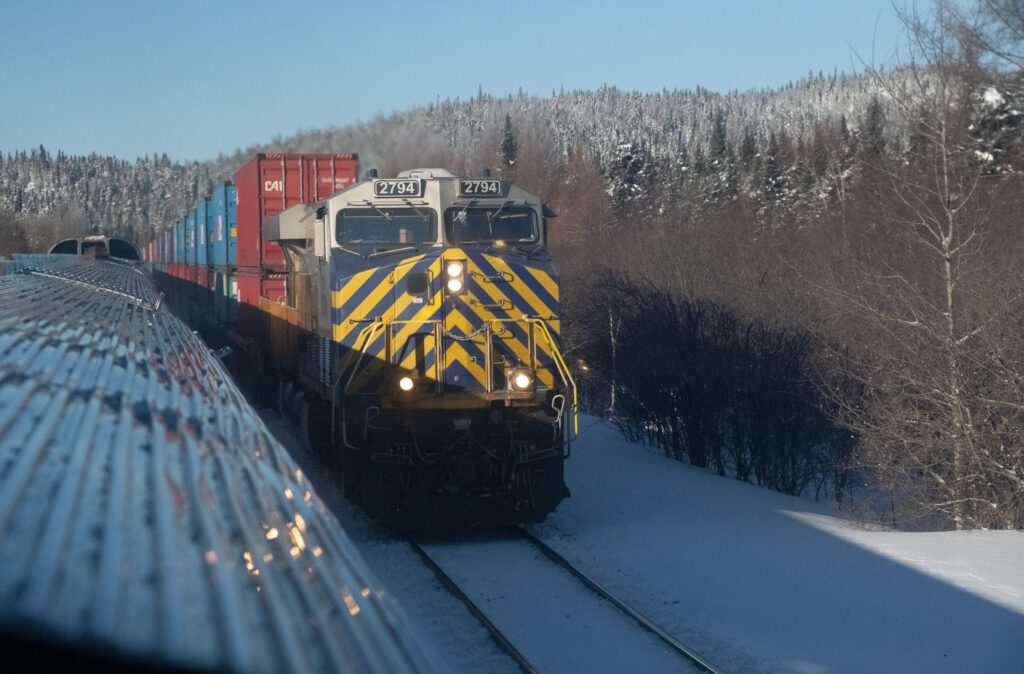
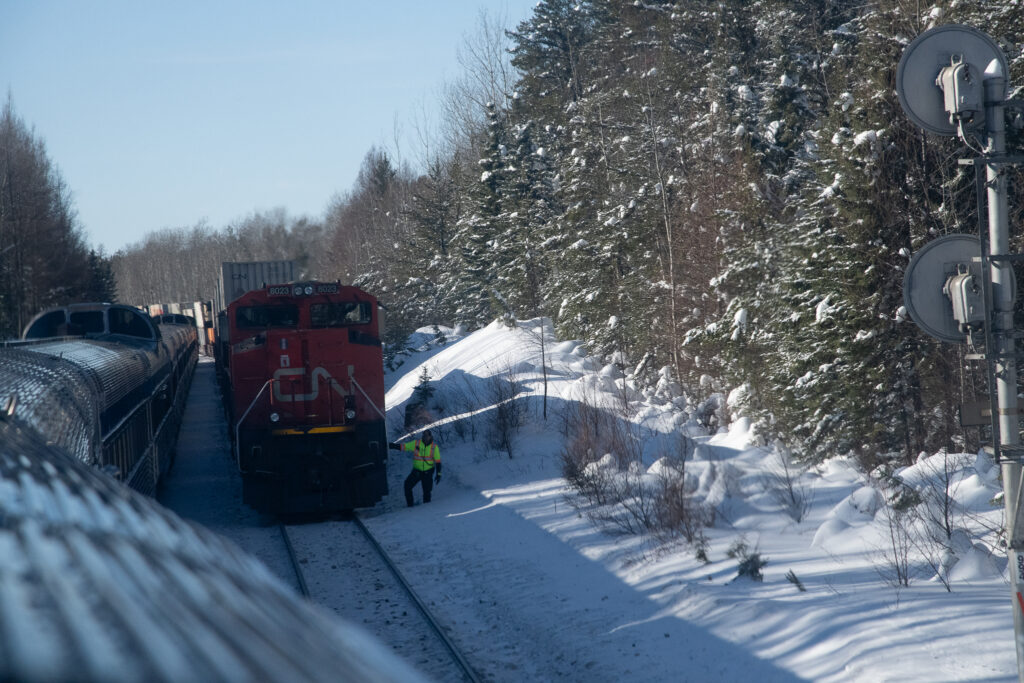
Our touristy 12 car train often took a back seat to the mammoth 100 plus car behemoths that carry the goods of Canada back and forth. It is now common for mainline trains to stretch to 120+ cars, often measuring 1 to 1¼ miles long (some potash trains can sometimes reach up to 170 cars!) We were often getting shunted off to side tracks, that held us until these freight trains passed, as they had priority.
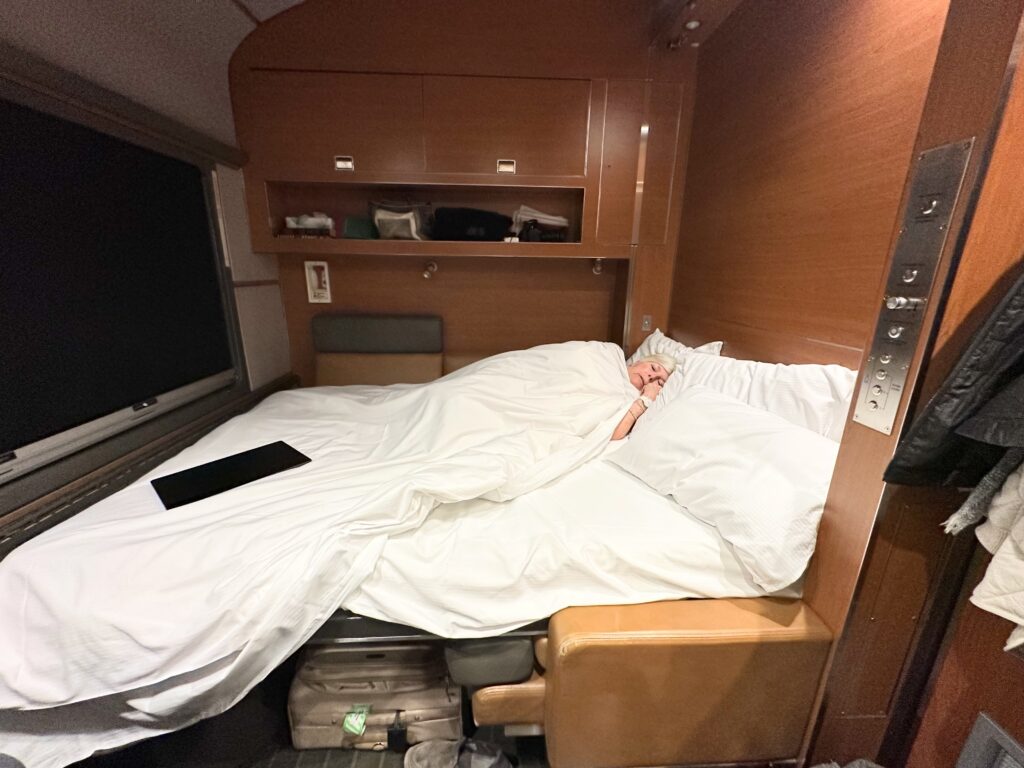
We had reserved quite comfortable accommodation, called the Prestige Sleeper cabin. (It is 50% larger than their cabin for two in Sleeper Plus class.) It featured an extra-large window and its own private washroom with shower. A modular leather L‐shaped couch transformed at night into a Murphy bed for two facing the window. There were eight of them on the train. It was a good decision.
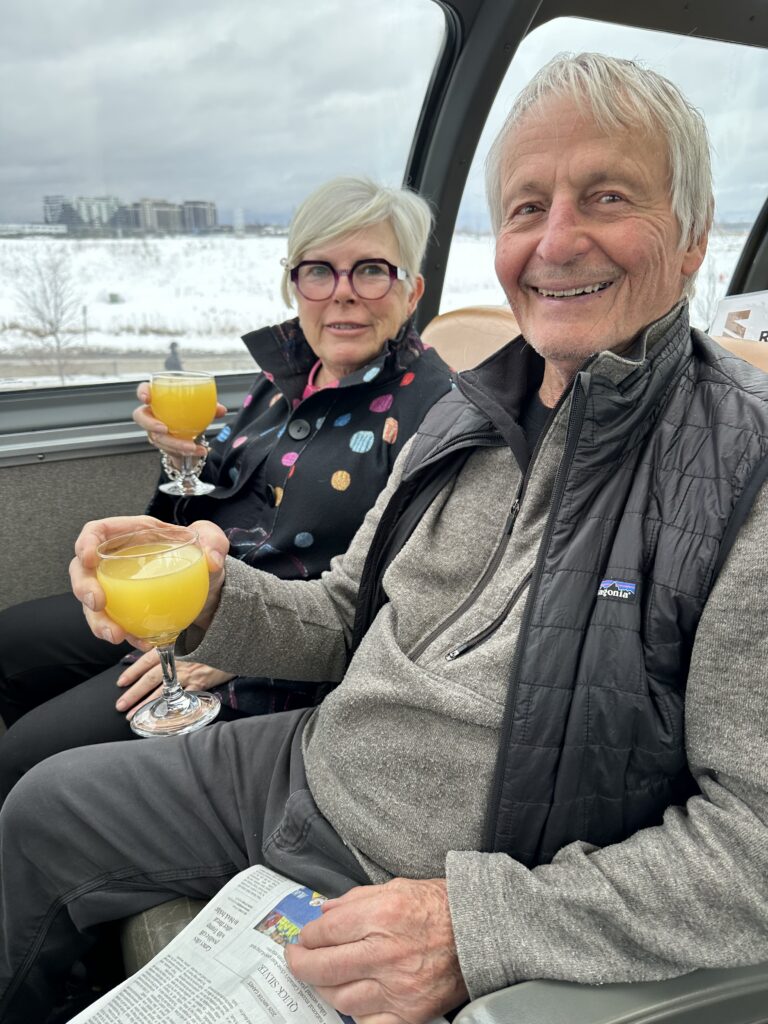
There was reserved seating in the Park car (at the very end of the train, exclusive to Prestige class) and the dining car, as well as the Skyline car (which features a glass-domed upper level and a bar/cafe/snack bar underneath. We soon discovered we were the only suite in the bar car, and we didn’t waste that!
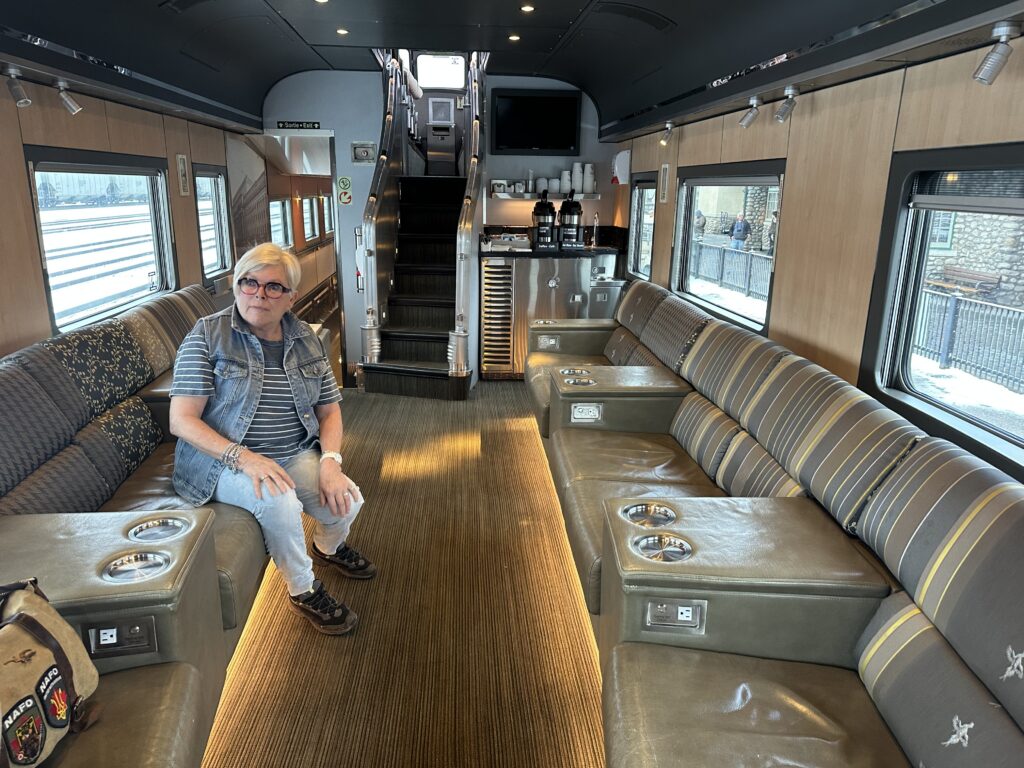
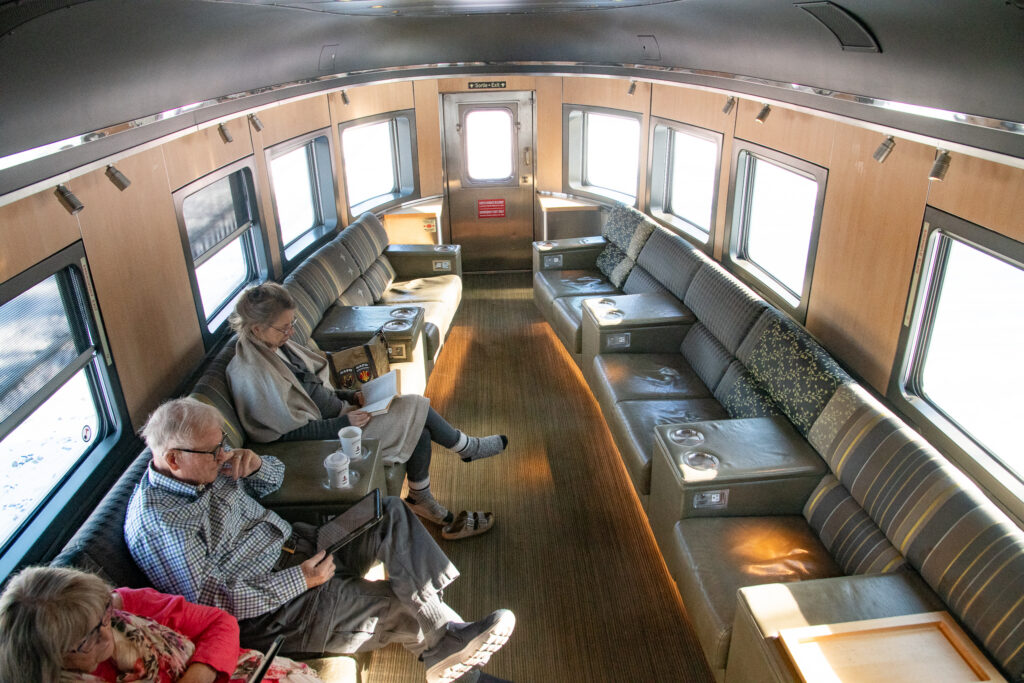
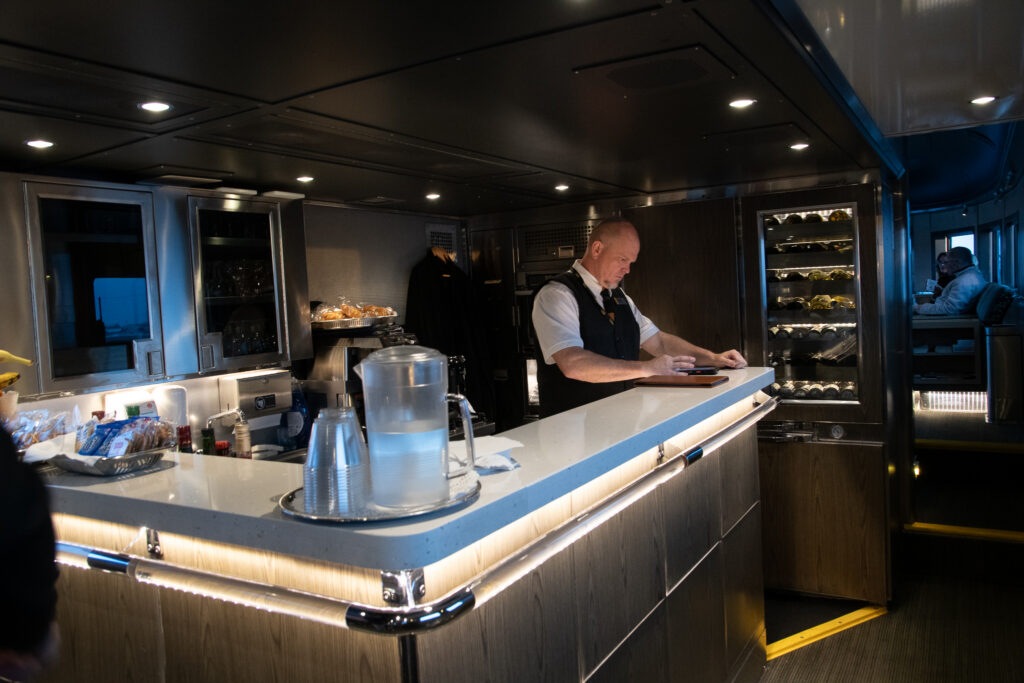
The bar service was unlimited (the steward made good daiquiris). The only complaint: the wine selection was parsimonious. I understand a Canadian focus, but there is now a wide range to choose from across Canada, and they didn’t do that.
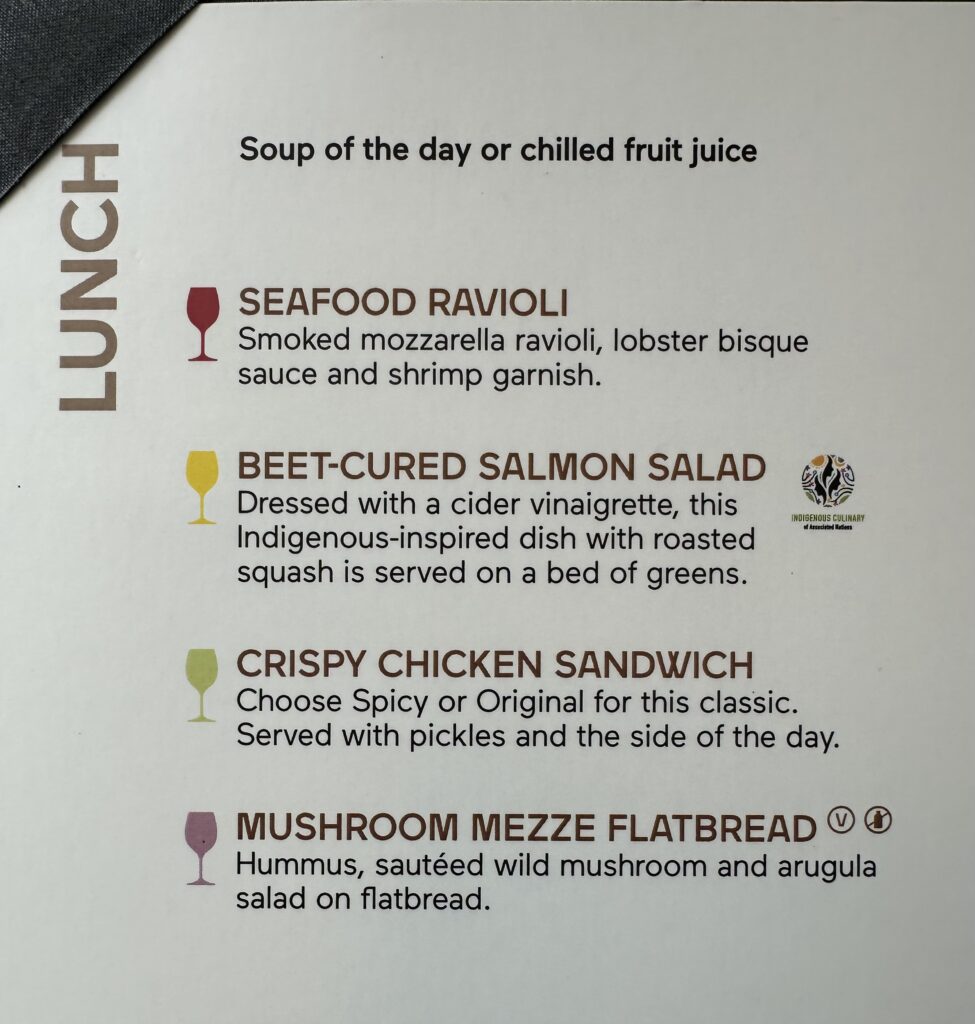
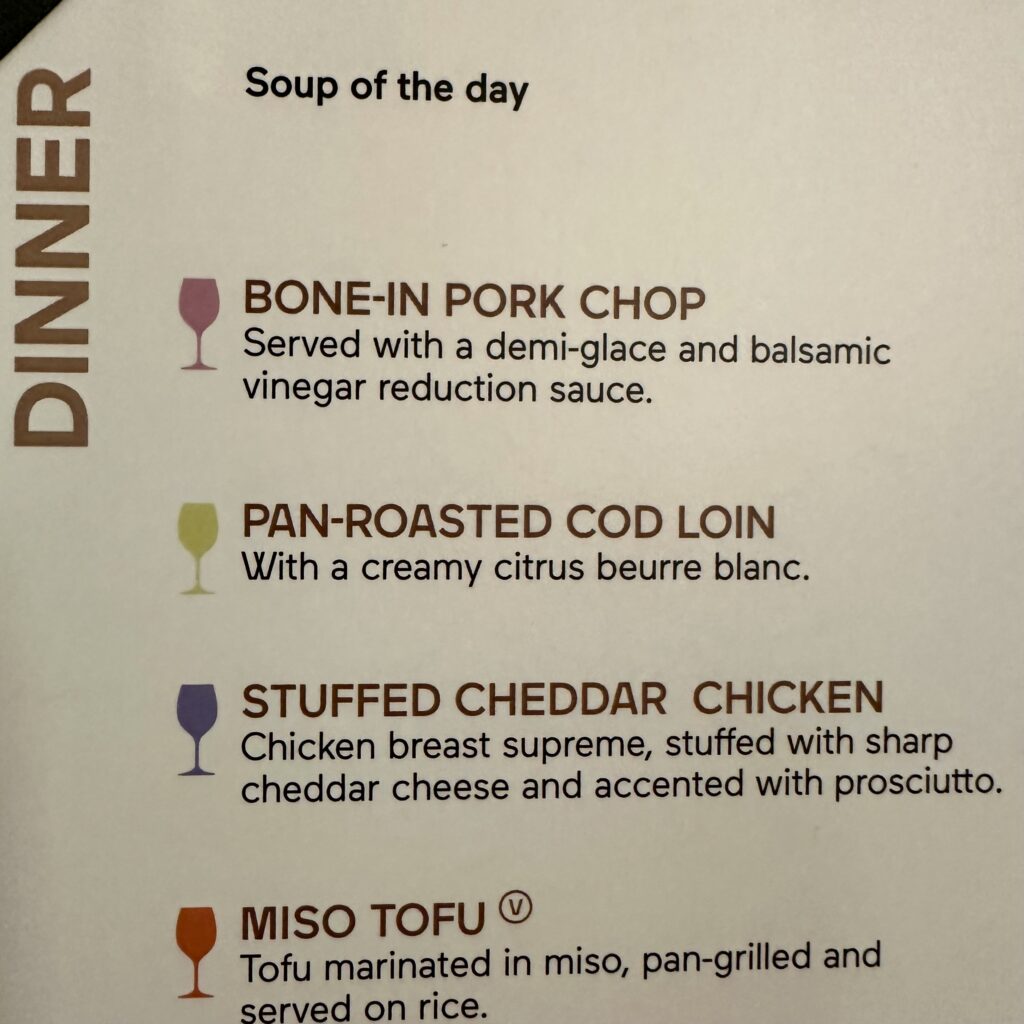
The meals were gourmet: imaginative and nicely presented, and certainly sufficient. I loved the breakfast options and often had a special omelette.
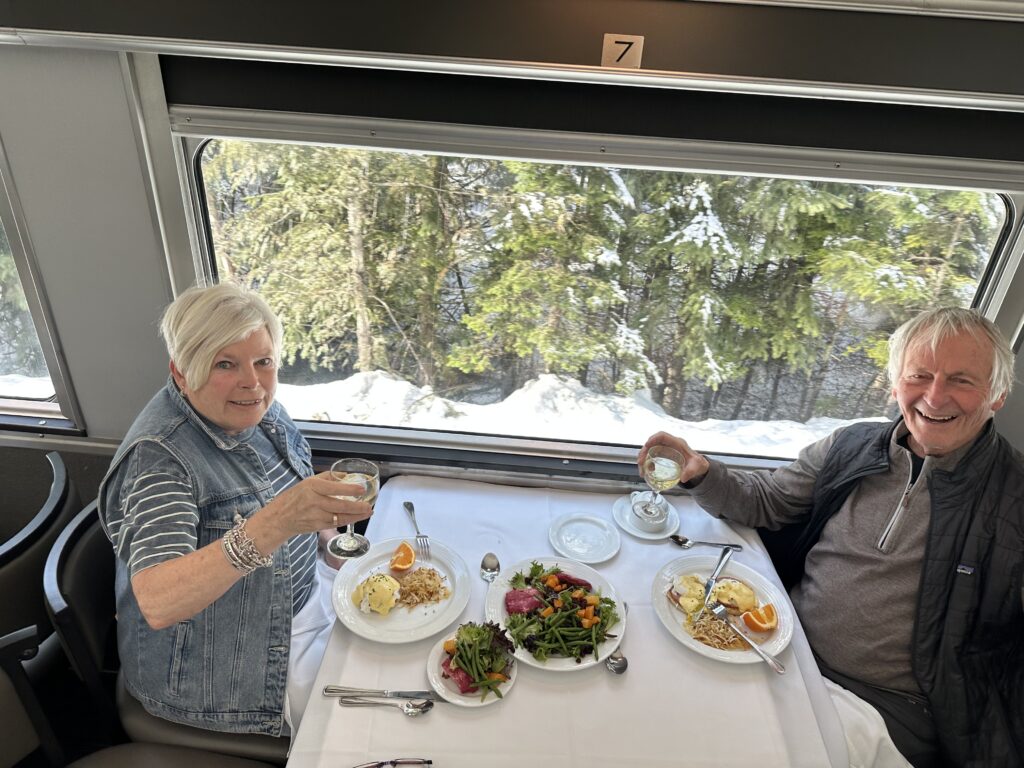
A variety of choices were available. Here are examples:
We enjoyed the little gems that were served to us every afternoon up in the dome car or in our room, such as a delightful charcuterie board the first day.
We both slept well, partly because of the rhythm of the train.
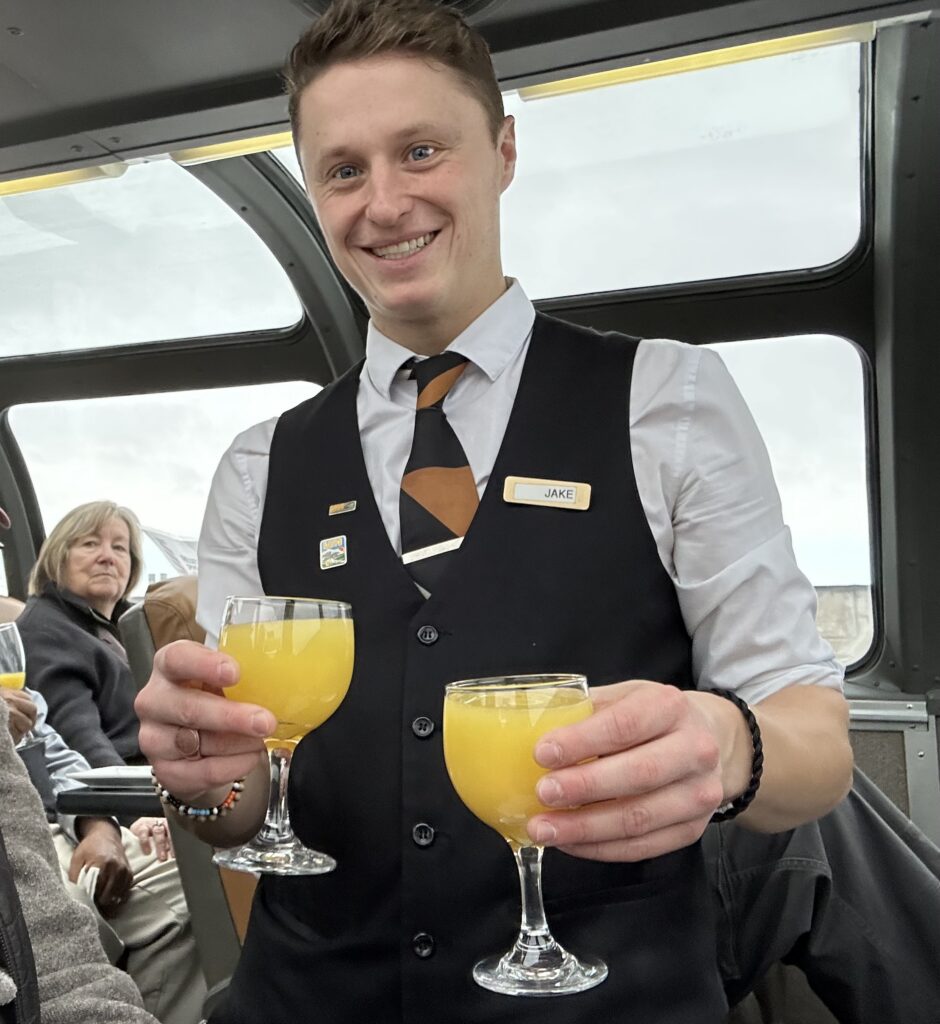
The staff were particularly good. Sincere, helpful, with natural and ready smiles. They were well trained, but it was more than that. I sensed they enjoyed what they were doing and this rubbed off.
A people story
Trains provide people stories. One example will do from all of the interesting people we met. On the first evening, I had a long conversation with a very senior train engineer (he had 46 years of service), who was off-duty “deadheading” back to Armstrong. I took the opportunity to ask him train questions, and he answered them all. I learned all sorts of interesting and arcane bits, i.e. did you know that the long trains often use “distributed power” (remote locomotives in the middle or rear) to navigate the terrain of the Rocky Mountains? Apparently the sheer weight of very long trains creates incredible stress.
The train track is now one long seamless and continuous one, welded together; there are no breaks or “joints” in it, which have caused serious problems in the past. All locomotives are diesel-electric. They use a diesel engine to drive a generator, which produces electricity to power electric traction motors that turn the wheels. While they run on diesel fuel, their traction system is electric. I have more; he loved to talk.
The Journey: Ontario
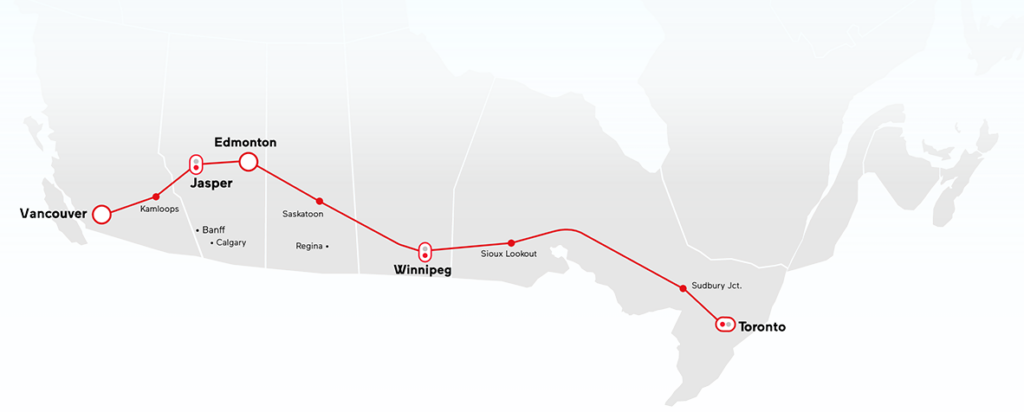
The following map presents the obvious: Ontario is huge.
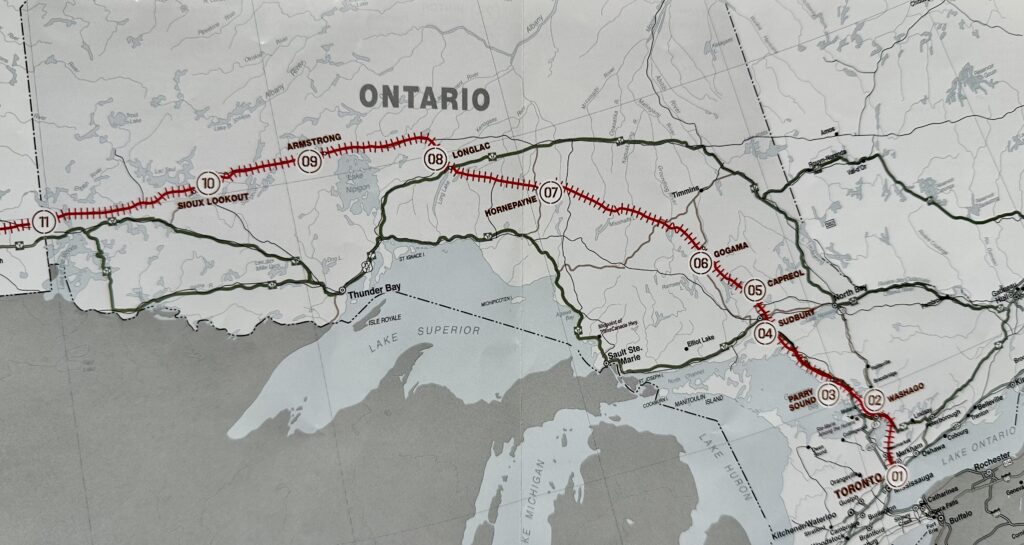
We were reminded that forests cover two-thirds of the province and water covers one-sixth (there are 250,000 lakes and many rivers and streams). Nearly one-fifth of the world’s fresh water can be found in Ontario, perhaps unsurprising given that four of the five Great Lakes serve as the province’s borders (Superior, Huron, Erie, and Ontario.)
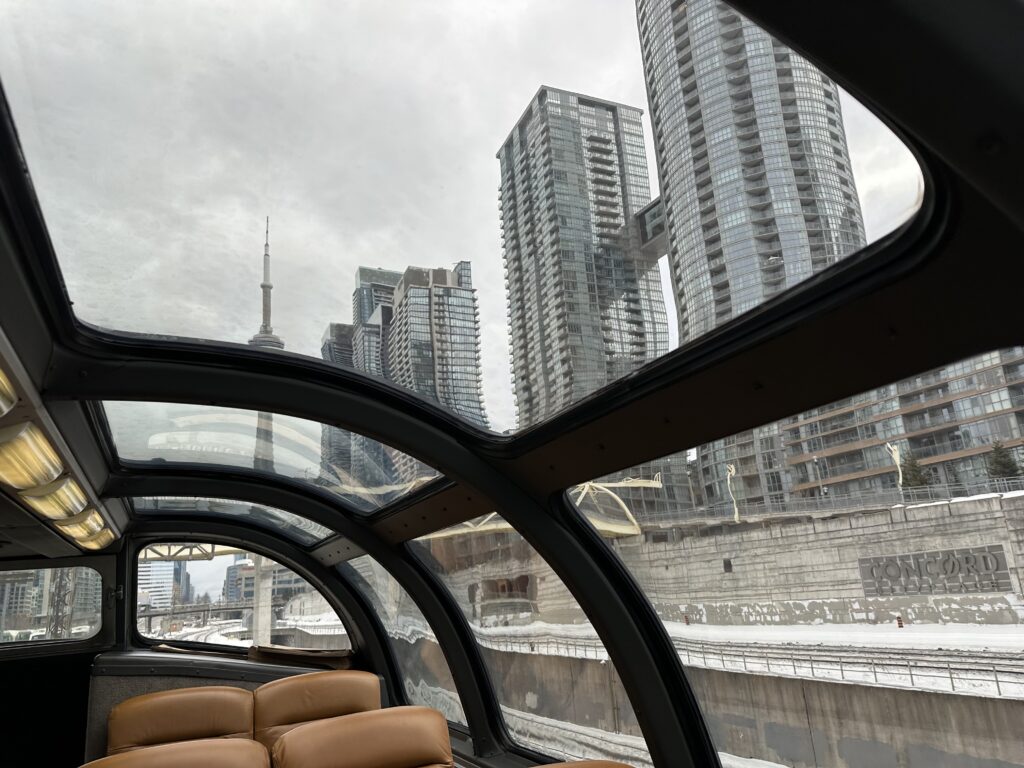
As we slowly crawled out of the “place for meetings” (“Toronto” is the Huron word for this), we left behind the huge office towers dominating the skyline. It took quite a while before the buildings thinned out into countryside.
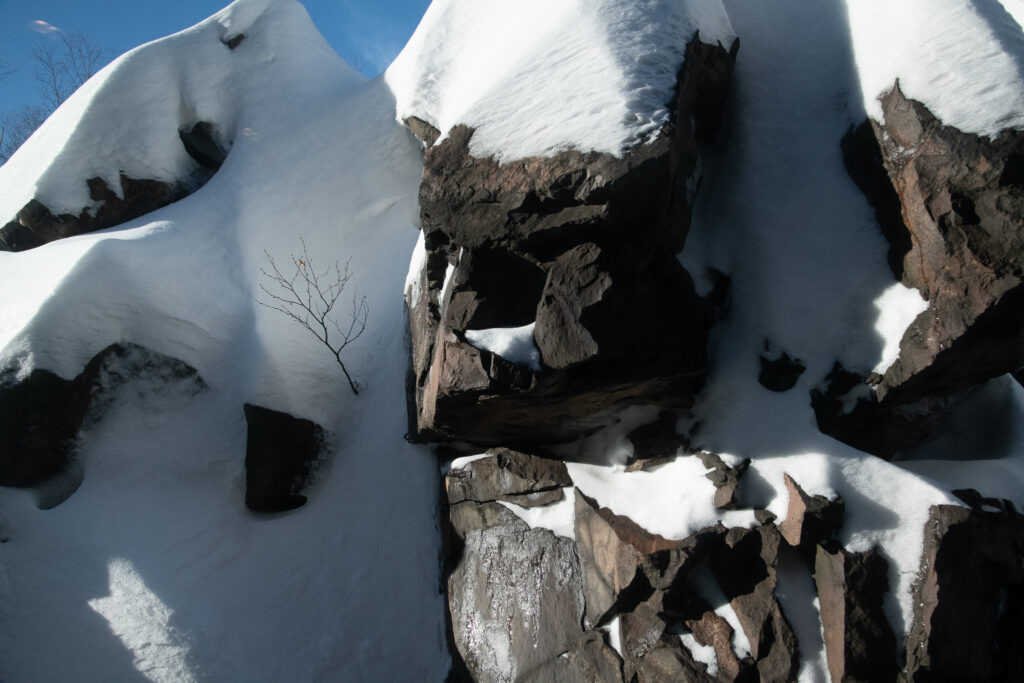
The town of Washago signalled the Muskokas at the head of Lake Couchiching, and on to Parry Sound. This marks the eastern edge of the rugged Canadian Shield, that region of billion-year-old exposed bedrock that covers half of Canada, between the Great Lakes and Hudson Bay.
Through Sudbury, Capreol, Hornpayne (where we commenced Day 2 of our journey) and Longlac, we passed over the top of Lake Huron and then Lake Superior (note the train doesn’t track down through Sault Ste. Marie or Thunder Bay). Many of these towns played an important role as part of the historic canoe routes for fur traders. (This fed my interest in all things canoeing and the early exploration and opening up of Canada.)
We passed through a combination of rugged exposed Canadian Shield rock, and muskeg. These are isolated communities, often started as railway towns but now the major industry is likely wood. Pulp and plywood mills border the tracks.
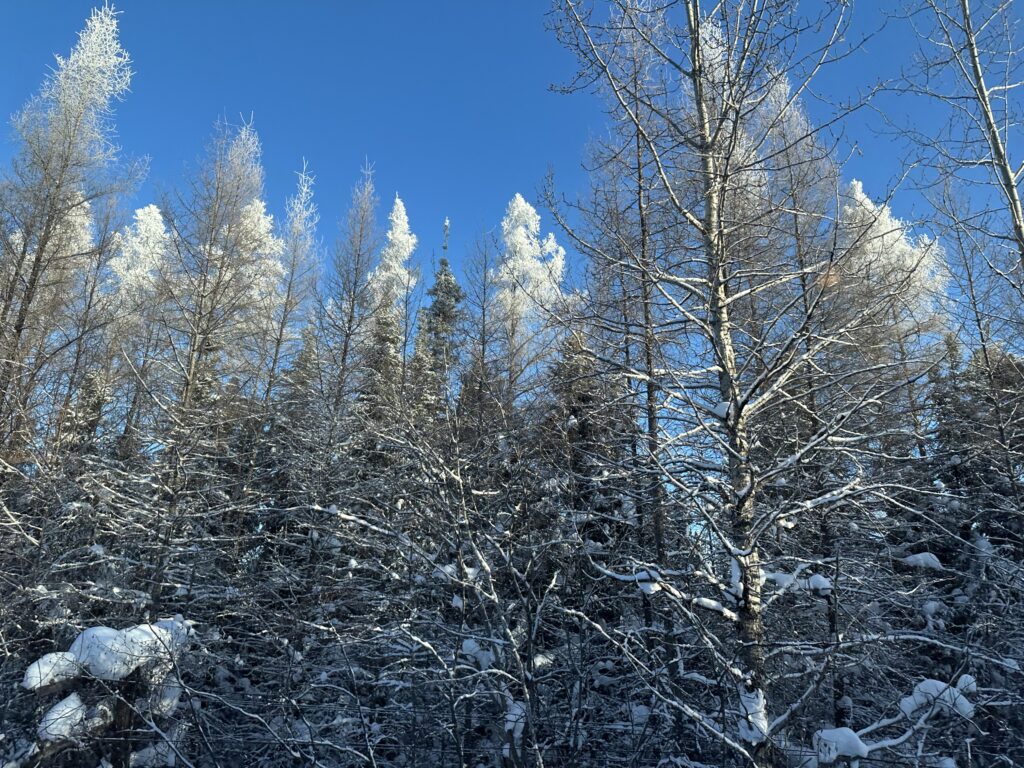
Around noon the first day they had already served margaritas, for goodness sake, while we were in the dome car, after which they briefly stopped at Sioux Lookout. We’d come over 1600 kms.
This is Canada at its rawest: sky, trees, frozen lakes and snow. Mostly monochromatic as it’s winter. But there is texture, depending upon the light. And we’ve got the prairies and mountains to come!

The Journey: the Prairies
The train first transverses the Pre-Cambrian Shield’s forests and lakes before reaching the rolling prairies of the western lowlands. The landscape is blanketed by coniferous trees like black spruce, tamarack, balsam fir, and jack pine, along with deciduous species such as paper birch and aspen.
At around 7 pm we crossed the border into Manitoba. About two hours later we made a 45 minute stop in Winnipeg. For some patrons, it was their destination, as not all were on the four day trip.
Here is the route we followed across Manitoba and Saskatchewan.
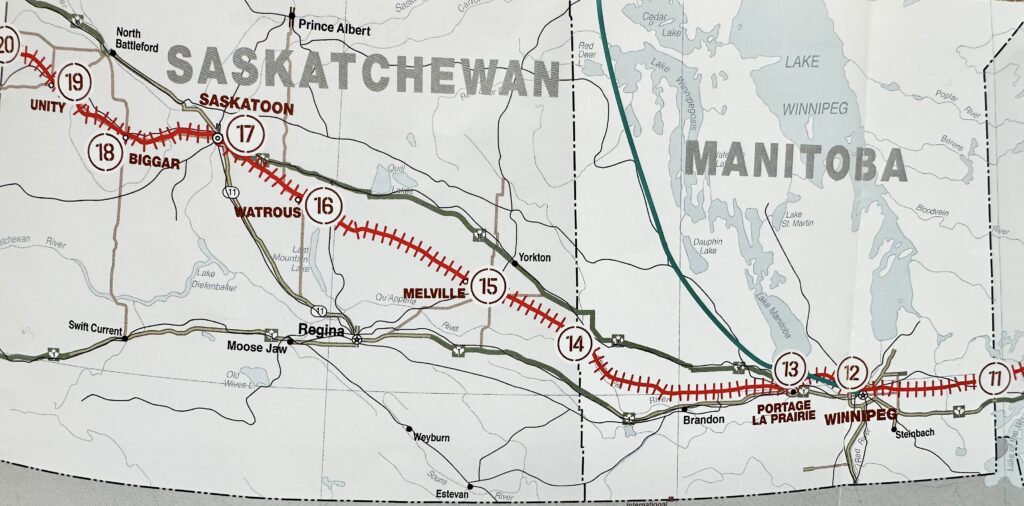
Winnipeg is at the juncture of three rivers (the Red, Assiniboine and Seine). Manitoba is known as the land of 100,000 lakes.
We often forget how wonderful the prairies can be. Past Winnipeg, subtle colours started to appear. The prairie grasslands are a wilderness of a sort.
In the 1800s, newcomers to the land, the European settlers, earned their property deeds by clearing the grasslands for cropland, plowing under the sagebrush, the purple prairie clover and the western wheatgrass that had always been there.
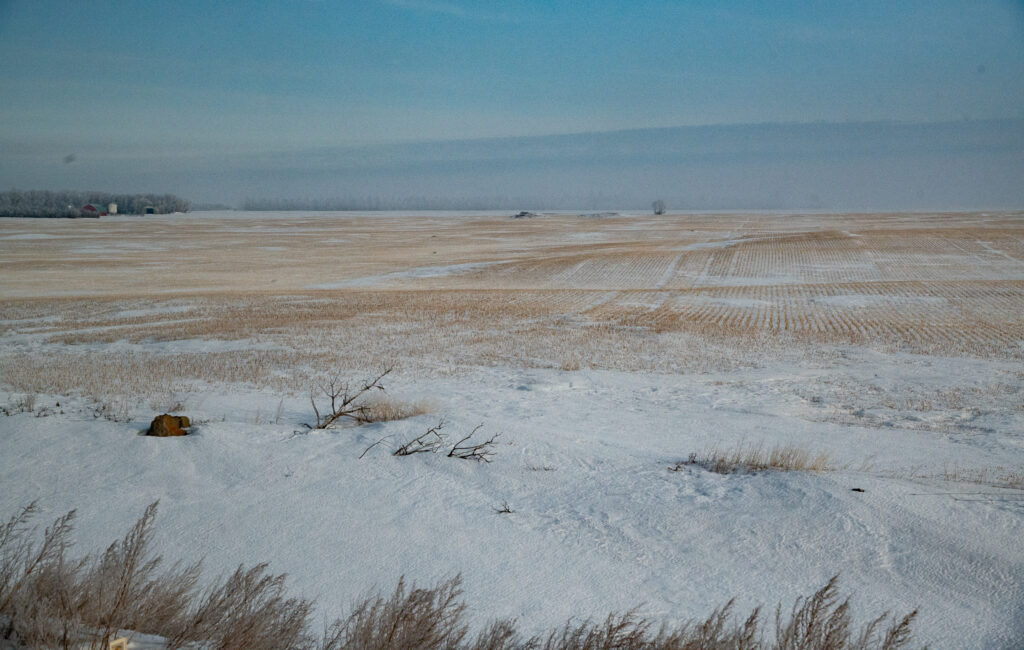
In its flatness, the enormous scope of the land became truly apparent. As one scans the horizon, extremely distant view points emerge. The vista is almost featureless, until you look carefully, and the occasional farm or grain elevator appears. As the old joke goes, you can watch your dog run away for three days.
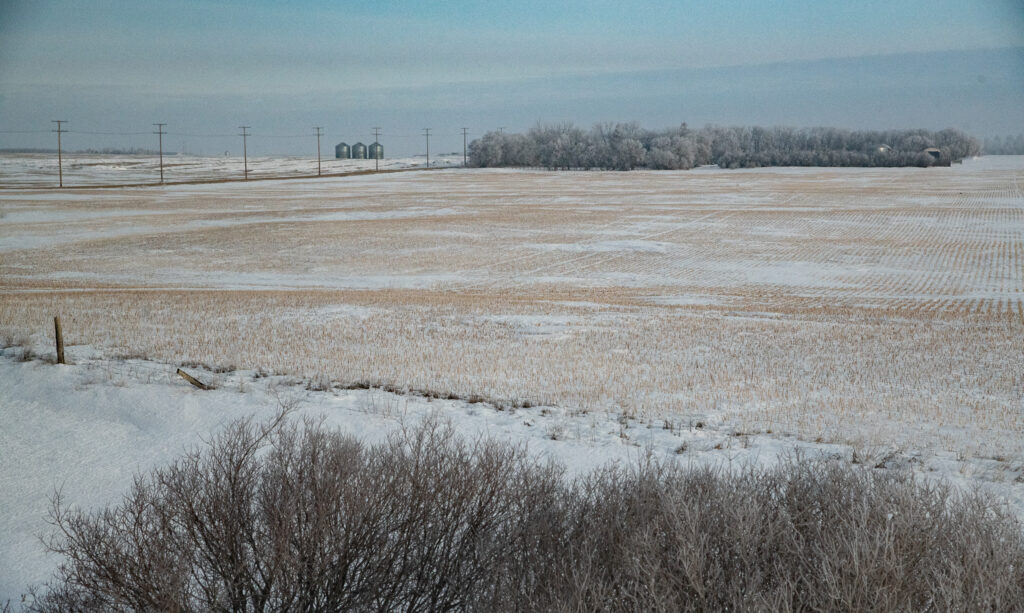
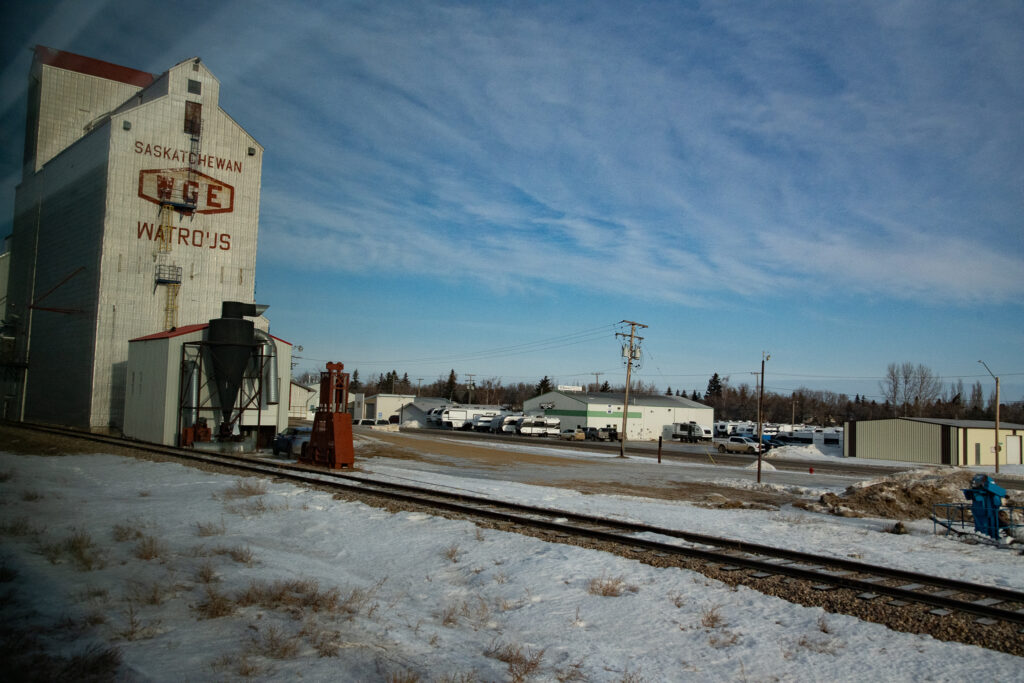
The grain elevators were mostly built on the south side of the track to prevent prevailing winds from igniting the town if the fire-prone elevators went up in flames. Most of the train stations were built on the north side to protect the platform from north winds and make it easy to clear the snow.
At the Manitoba-Saskatchewan border the Canadian reached the midpoint in our transcontinental journey. We had started Day 3 just after Portage La Prairie, where during the fur trade era, voyageurs rested as they carried canoes between the Assiniboine River and Lake Manitoba.
Now, there were few trees, true since the last ice age, 8 to 11,000 years ago. This is because of climate (too dry and frequent droughts that trees cannot survive); fire (frequent natural or human-set); and soil and competition (deep-rooted prairie grasses thrive, creating a dense root system that outcompete tree seedlings).
Trees did grow along riverbanks and in wet depressions. Some now exist in “shelterbelts” that were planted by settlers following the Dust Bowl in the ’30’s.
The towns went by: Melville, Watrous and Saskatoon, where I once briefly lived while running a subsidiary company for Imperial Oil back in the 1970s. (The company expanded to cover the four western provinces, as which point I moved to Edmonton for three years.)
After Bigger and Unity we crossed the border into Alberta, where we anticipated the mountains rising up in the western part of the province.
The Journey: Alberta, BC and the mountains
The train was late into Edmonton and arrived around midnight. It stayed for a few hours, but we hit the sack. This map shows the Alberta, then BC route.
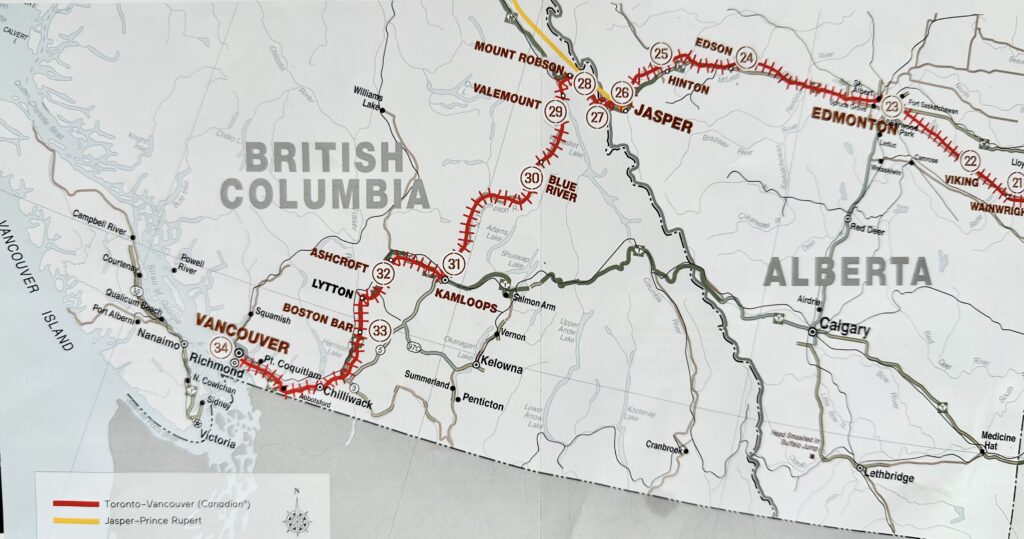
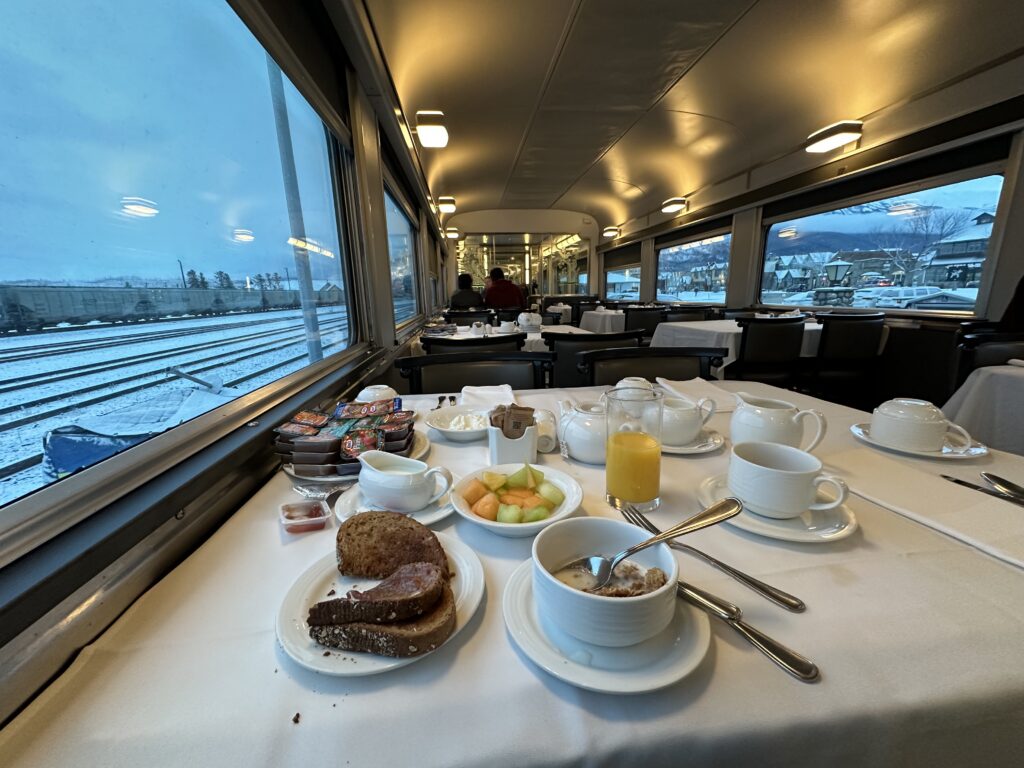
Starting Day 4 of our journey, we arrived in Jasper around 8 in the morning and stayed for an hour and a half. Consequences of the terrible fire in 2024 were mostly on the town edge. They are madly rebuilding as over 350 structures were destroyed. The downtown buildings were constructed with stone, so most of them survived.
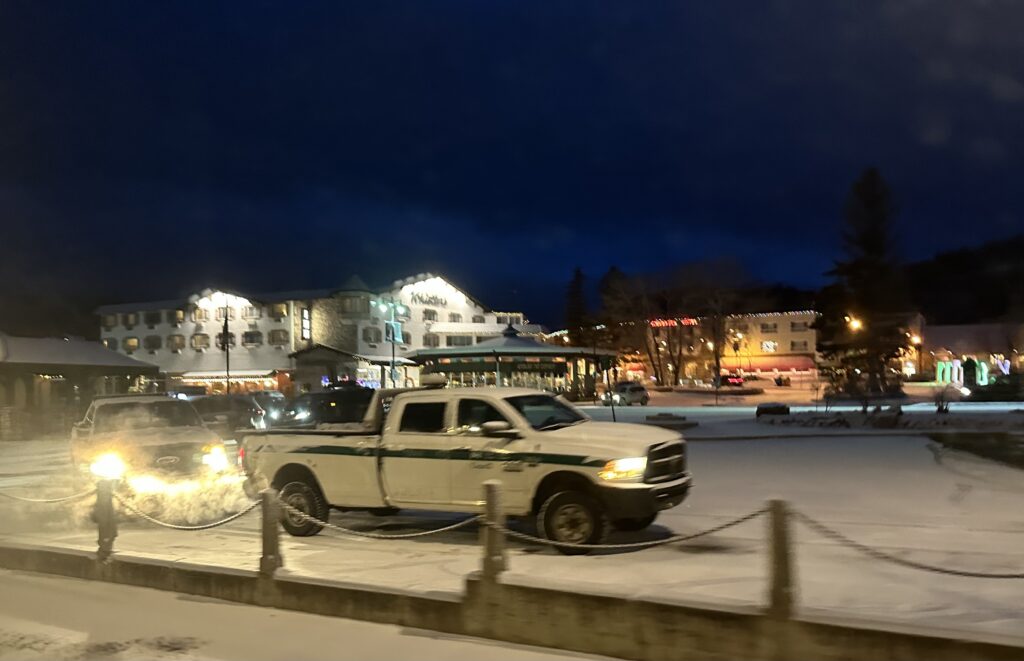
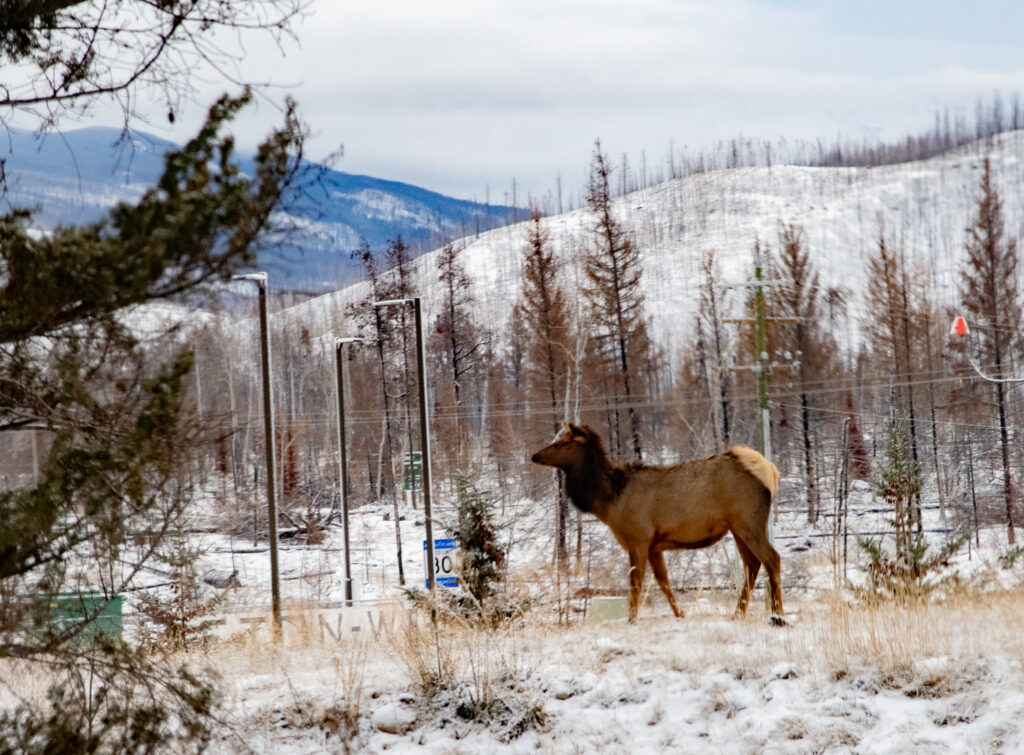
I shot this candid picture of an elk as we exited the town.
The crest of the Yellowhead Pass is at the Albert/BC border. The Pass is one of the lowest points in the entire North American Continental Divide (or Great Divide), from which all water systems flow either east of west. Unlike the CP main line more rugged and higher Kicking Horse Pass to the south (it goes through Lake Louise and uses the infamous Spiral Tunnels), this CN crucial, low-elevation Yellowhead crossing has historically served as a key route for Indigenous people, fur traders, highways and of course, railways.
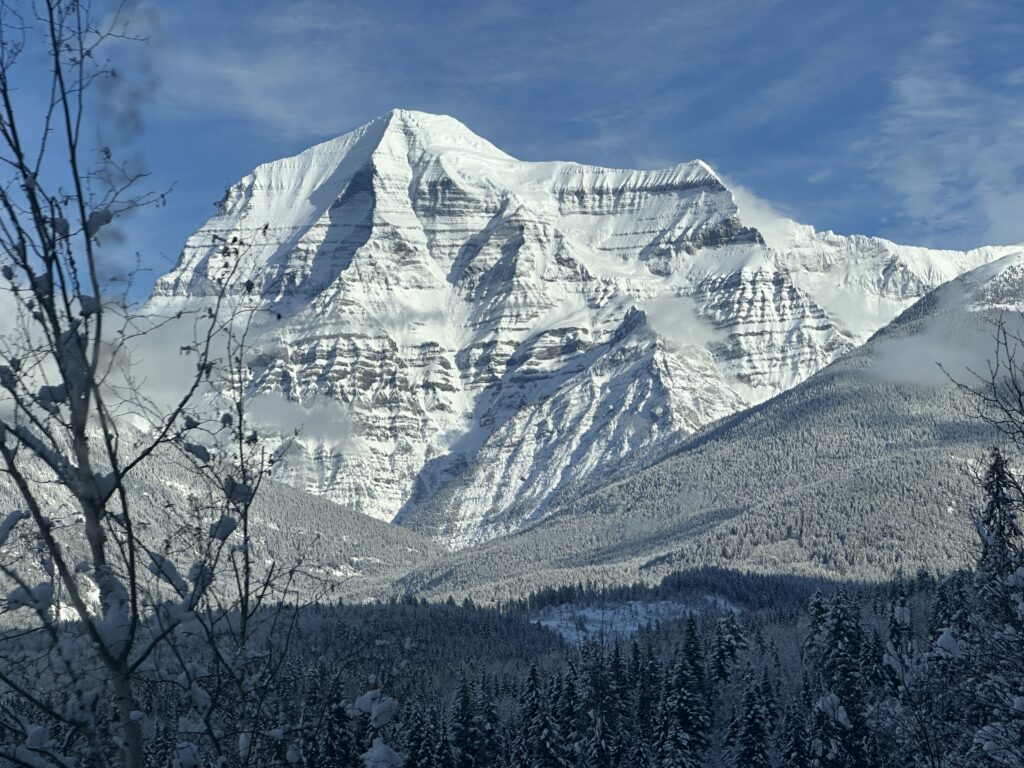
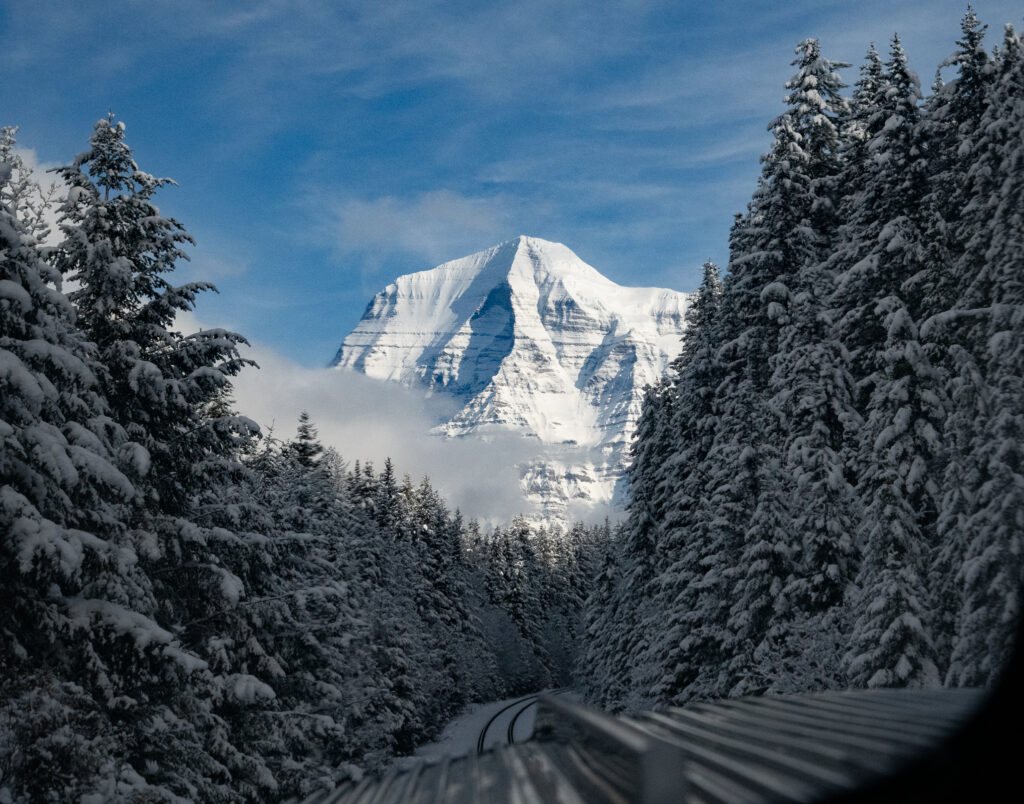
Kevin, our concierge, warned us that he rarely sees Mount Robson, the highest peak in the Rockies (at 3,954 metres), as it’s usually covered in clouds. Well to his surprise, and our delight, the day was perfect, as you can see from this photograph taken around noon on our last day! It is referred to as “The Monarch of the Canadian Rockies”.
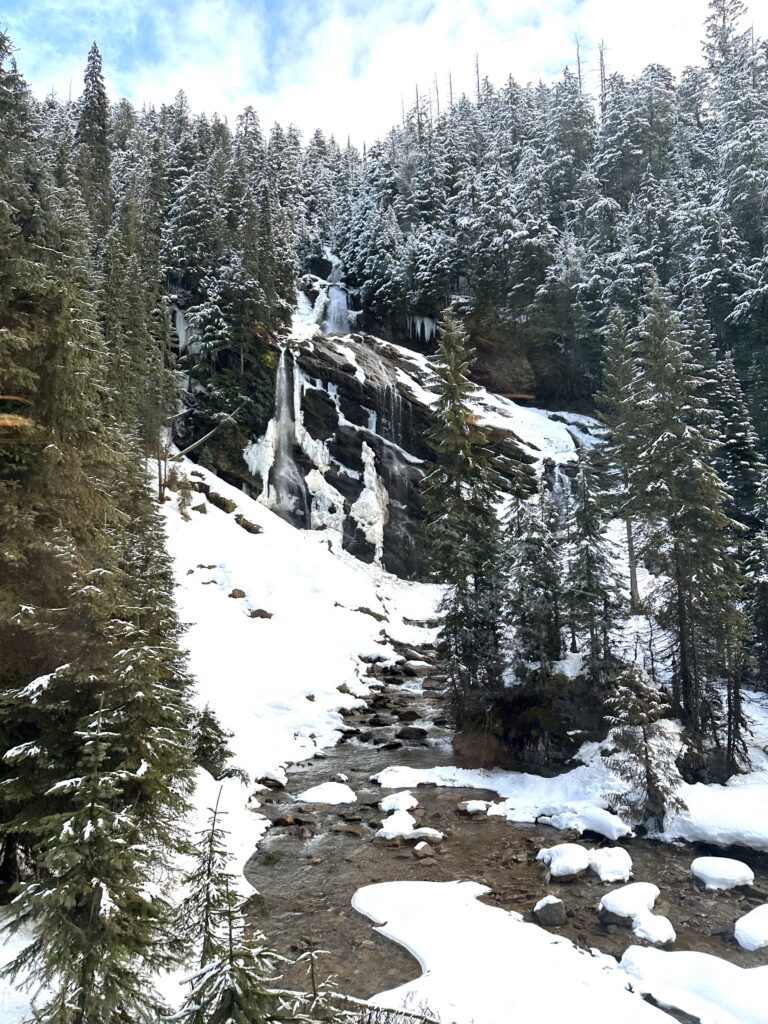
I was warned to be ready if I wanted a photo of a delightful little water fall that comes and goes very quickly. I did and here it is, Pyramid Creek Falls.
The mountains began to retreat as we passed through Valemount, located at the junction of the Rockies and the Caribou, Monashee and Selkirk mountain ranges. It’s a small lumber town of a 1000 people situated on a long stretch of water created by the huge Mica Dam almost 100 kilometres to the south.
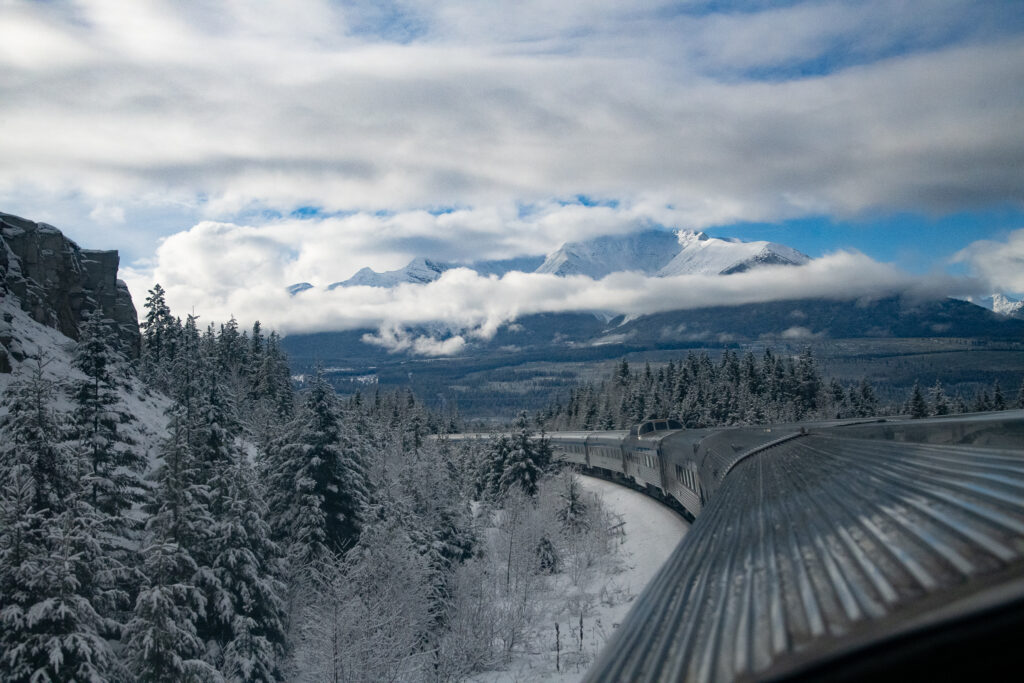
The train made two major direction changes as it came south out of Valemount to Kamloops , and then again on down into Vancouver.
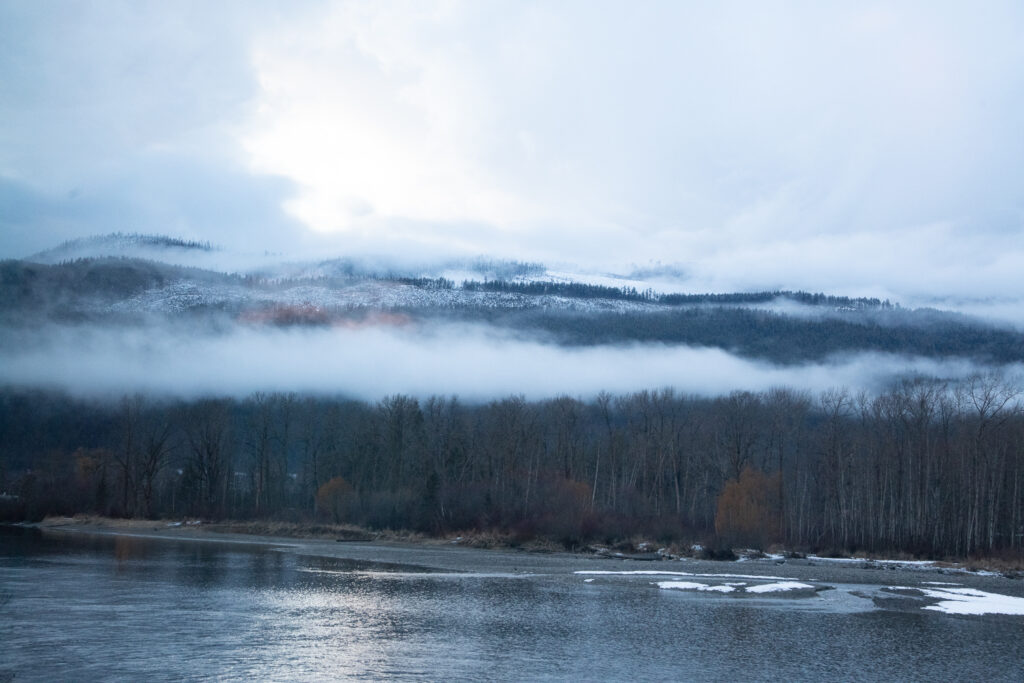
We chugged along at night arriving there quite early in the morning.
Getting philosophical a bit:
Penny and I both concluded that this wasn’t about touring cities; we felt that this train trip was about just being “on the tracks”. It was a leisurely journey; we didn’t want to wind ourselves up touring every town along the way. It was about slowing down the pace rather than rushing along.
Besides, after my recent high paced visit to India, I was looking to slow down. By the time I arrived in Vancouver, I had been through 13 1/2 time zones, since leaving Delhi, India and Dubai twelve days before!
Wrap-up
We looked at each other as we exited the train in Vancouver, and agreed we had a good time.
Attachment #1: A Bit of Train History
From 1881 to 1885 the CP completed Canada’s first railway through the Canadian Shield north of the Great Lakes plus through the mountain passes of the Rockies. The building of a national railway was an active attempt at state-making, as well as an aggressive capitalist venture. Moreover, after the American Civil War, land-hungry settlers rapidly pushed the American frontier westward, exacerbating talk of annexation.
Sentiments of Manifest Destiny were abuzz at the time: in 1867, the year of Canada’s Confederation, US Secretary of State William H. Seward surmised that the whole North American continent “shall be, sooner or later, within the magic circle of the American Union.” Consequently, preventing American investment in the project was considered to be in Canada’s national interest.
Thus the federal government favoured an “all Canadian route” through the rugged Canadian Shield of northern Ontario and refused to consider a less-costly route passing south through Wisconsin and Minnesota. And it only took three and a half years – to make a National Dream. That’s an enormous project, and Canada did it.
Historian Harold Innis maintains that ‘the difficult and expensive construction project was sustained by fears of American annexation of the Canadian West…The history of the Canadian Pacific Railroad is primarily the history of the spread of Western civilization over the northern half of the North American continent.”
The last CPR spike was driven on November 7, 1885 at Craigellachie in the Eagle Pass near modern day Revelstoke. Canada’s population was only 4.5 million in 1885, so the railway was a crazy idea. But that hammering in of the Last Spike is regarded as one of Canada’s most symbolic events.
Both CP and CN carried freight as well as passengers. In 1977, all passenger networks were unified under a new crown corporation known as Via Rail Canada Inc.
Attachment #2: Post train trip visit in Victoria.
From Vancouver we took the ferry over to Victoria for a couple of weeks. We stayed in an excellent hotel, the Hotel Grand Pacific, with a room looking out over the Victoria harbour.
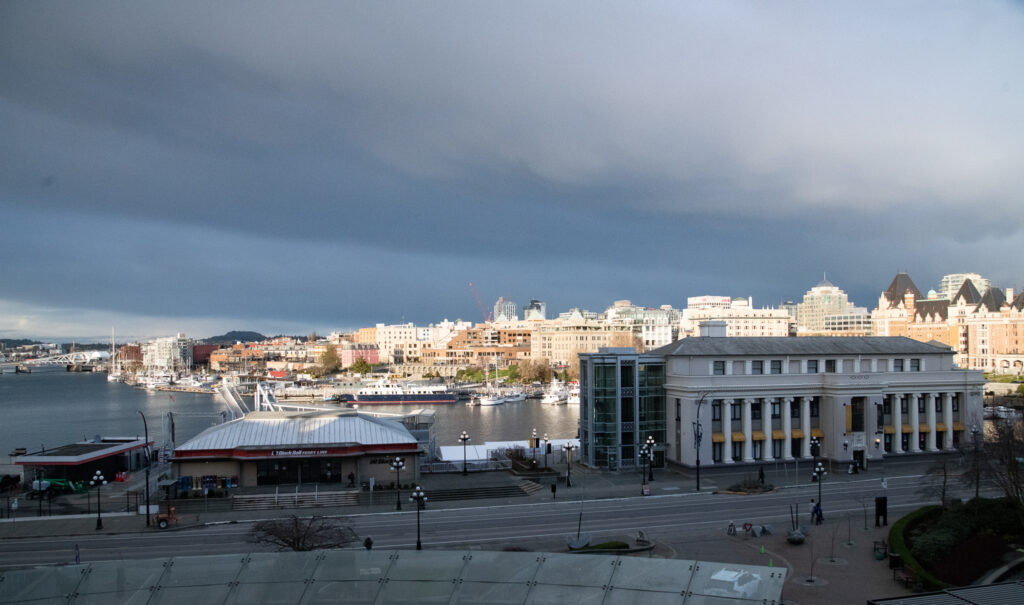
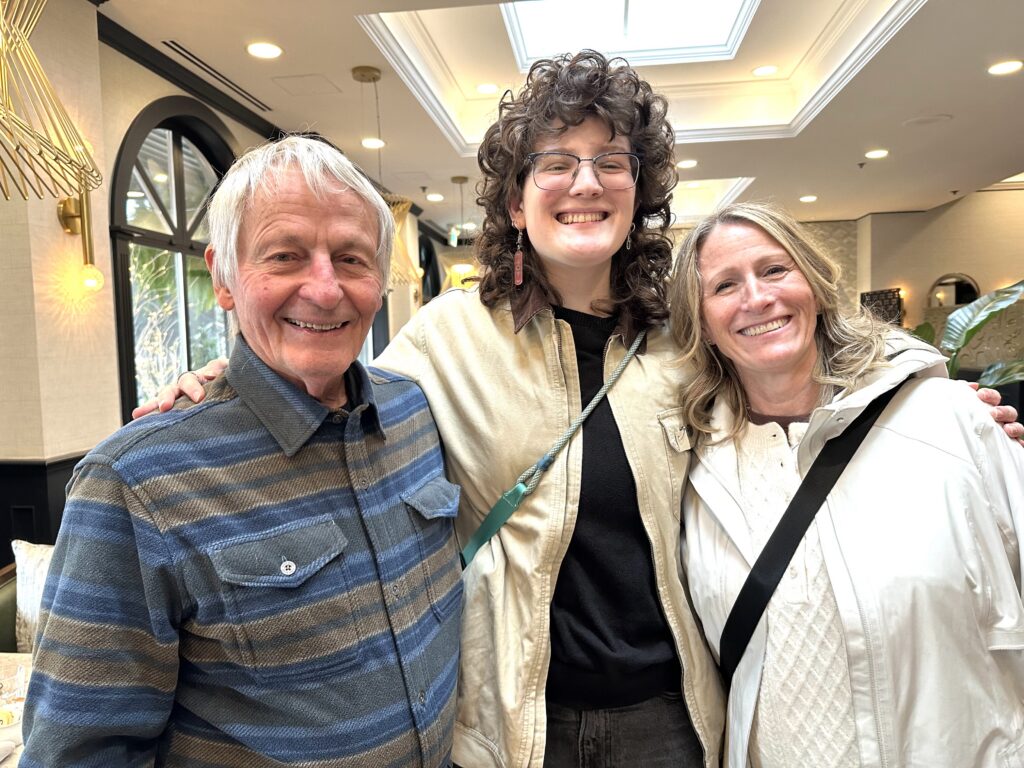
Linking up with family and friends who lived out there, we had a catch-up lunch with my niece Jackie Anderson and her daughter, Megan.
We had another catch-up lunch in Chinatown at Don Mee Seafood with Ann Perodeau, the widow of Graham Foss, a very old friend.
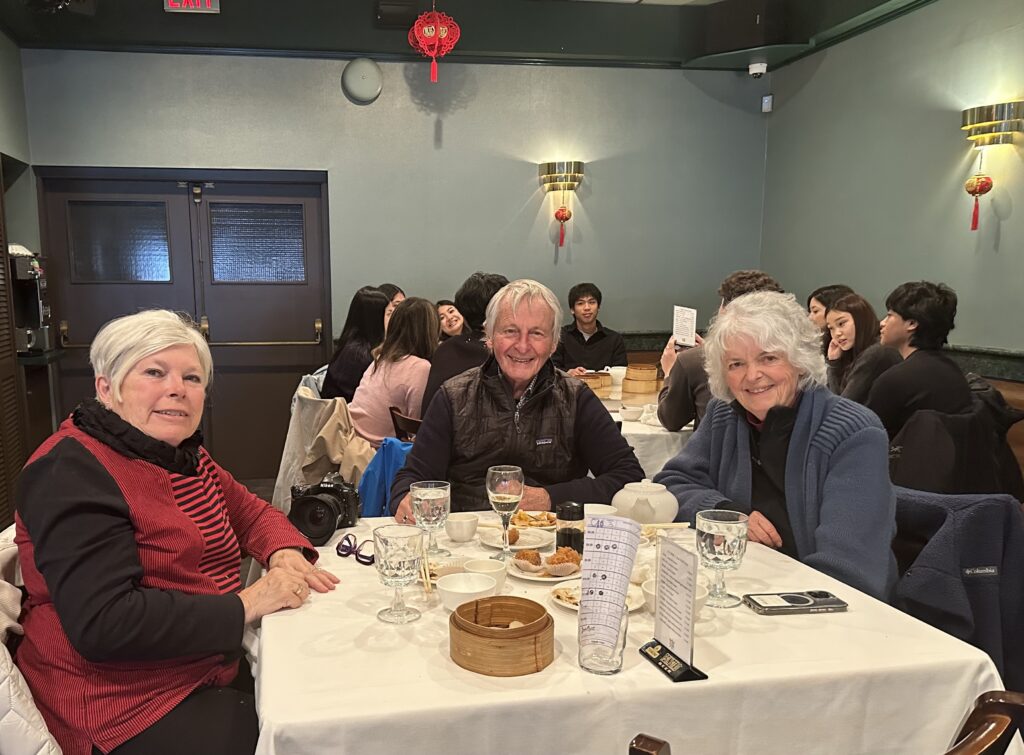
We luckily bumped into Paul Hough, a canoe trip companion and his wife Nancy.
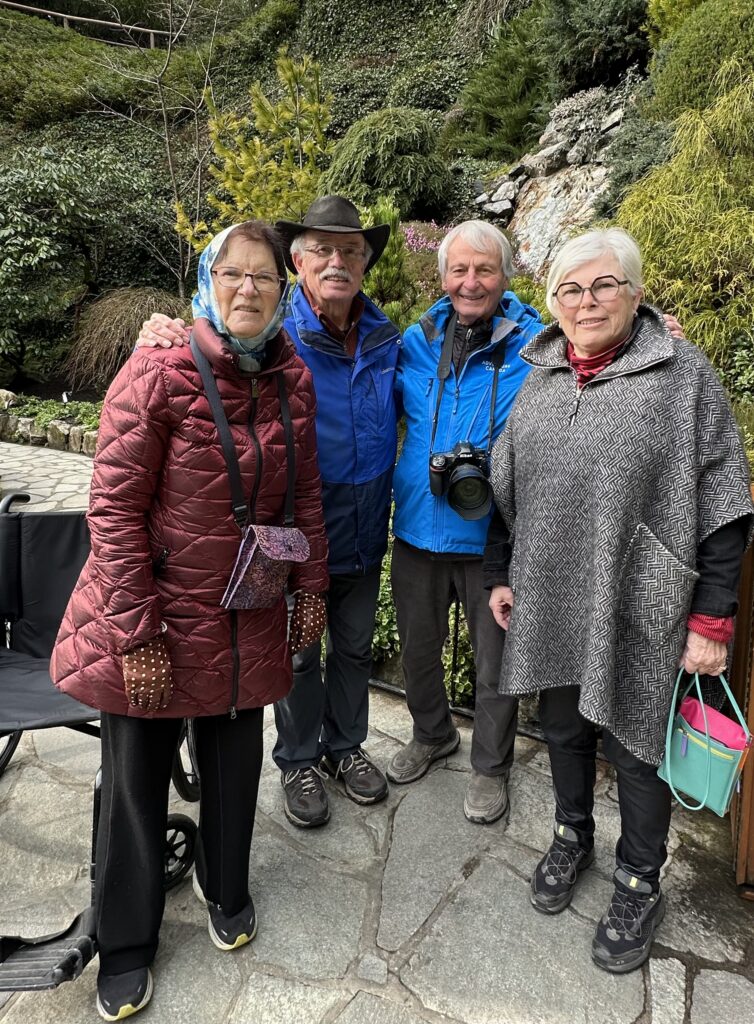
As well we hung out with Peterborough friends who spent part of the winter there – Don and Gwen Harterre, Terry and Pam Boucher, and Ann Wipper and Cal Langman.
We busied ourselves with trips to the wonderful-at-any-time-of-year Butchart Gardens (where all of us, and only us, climbed on the merry-go-round).
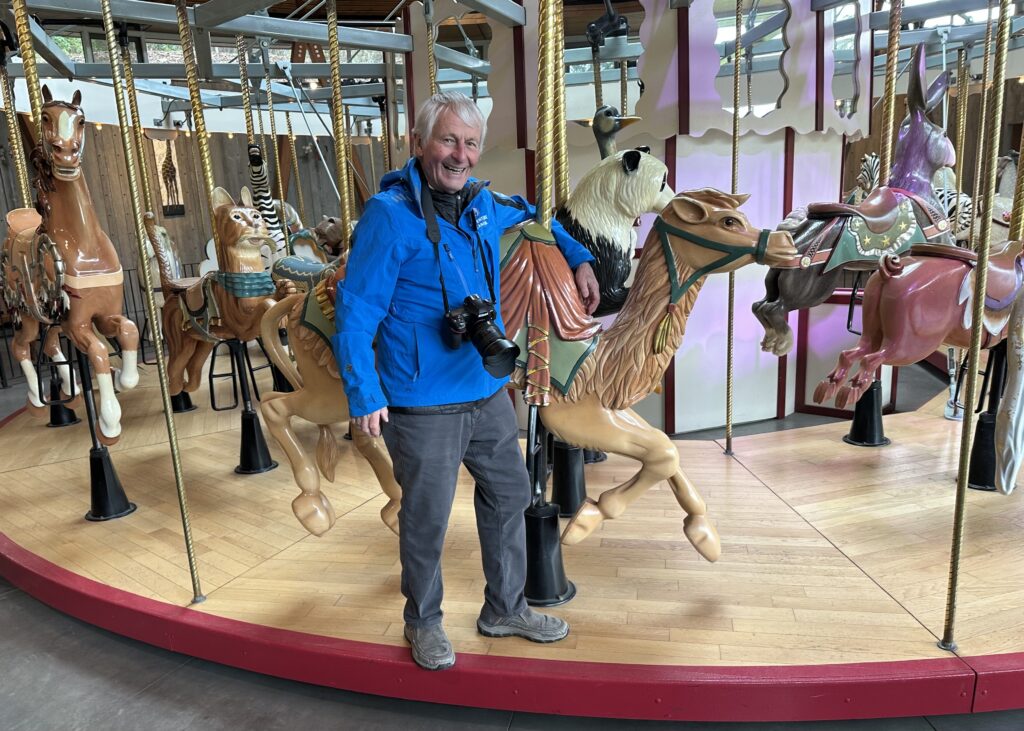
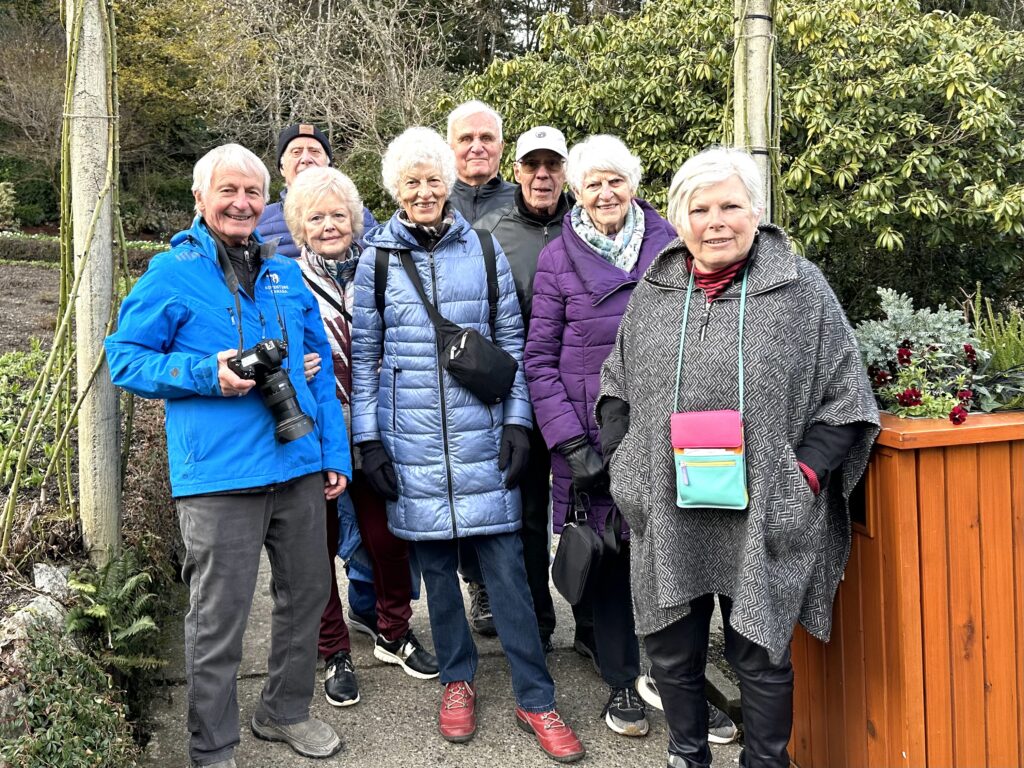
We took the ferry over to Salt Spring Island and Don drove us around it, stopping for a nice lunch.
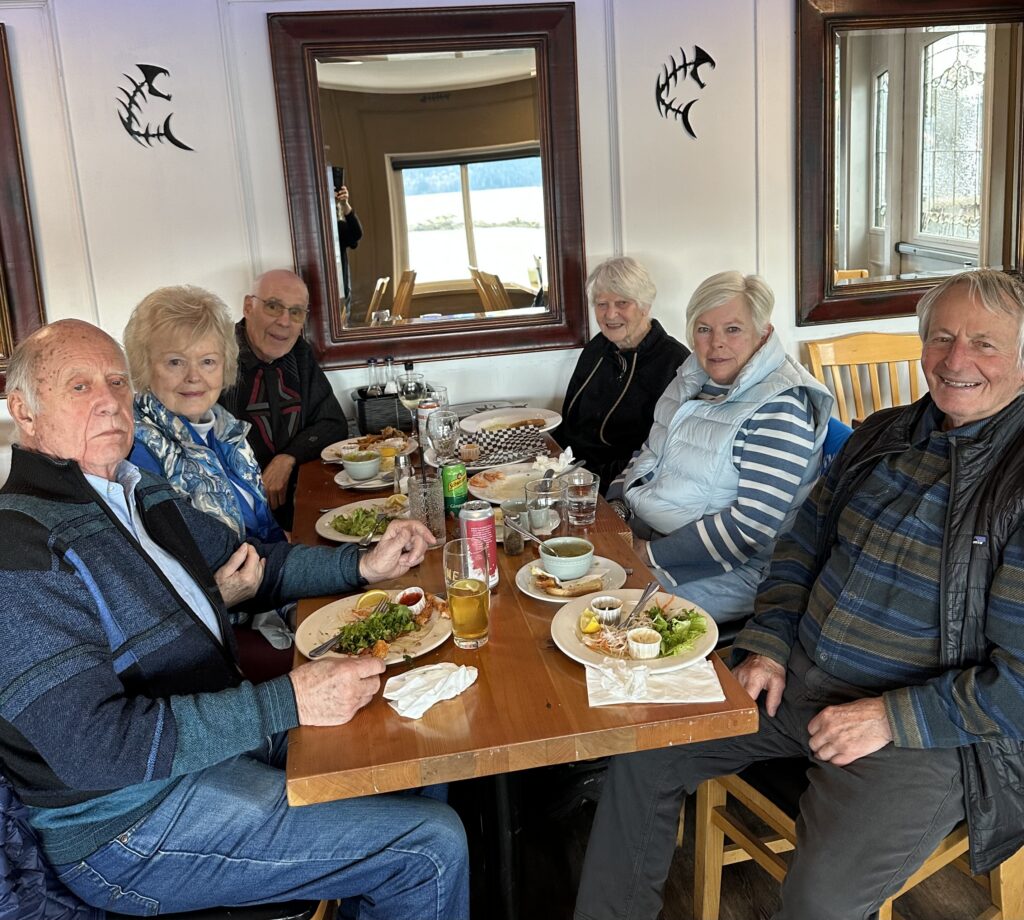
We visited with Cal and Ann and had dinner after in the town of Sidney; paid a visit with friend Cyndy Bell in hospital (who sadly passed away a month later); had a delicious chowder with Pam and Terry and then walked along the inner harbour including the floating houses at Fisherman’s Wharf.
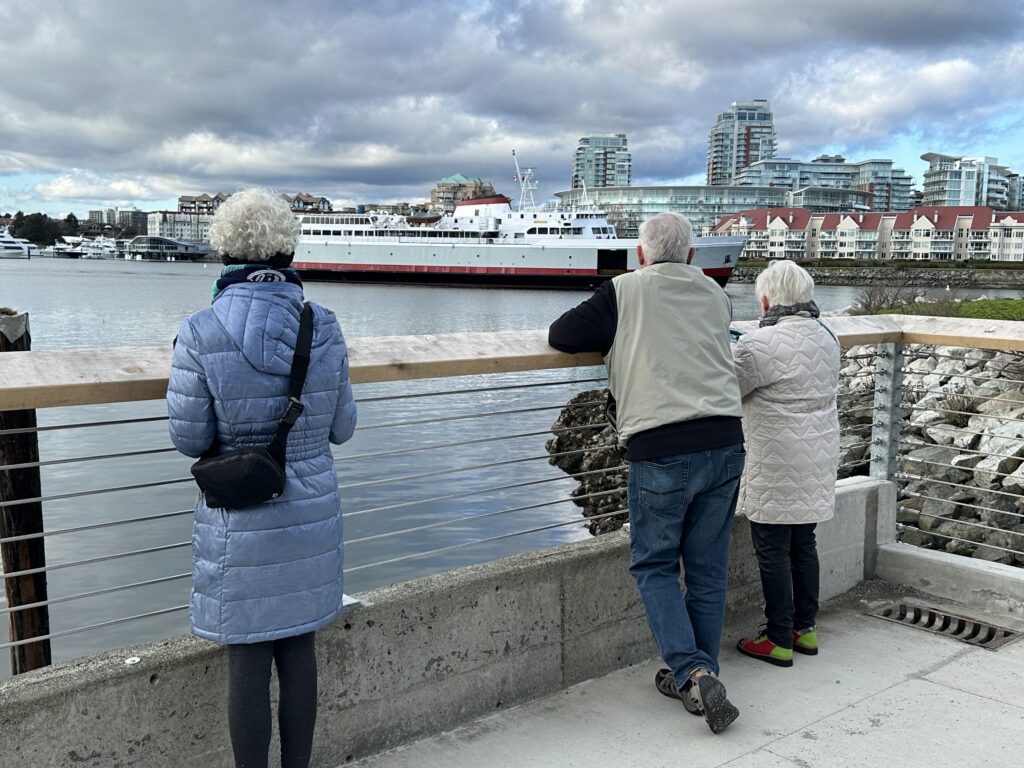
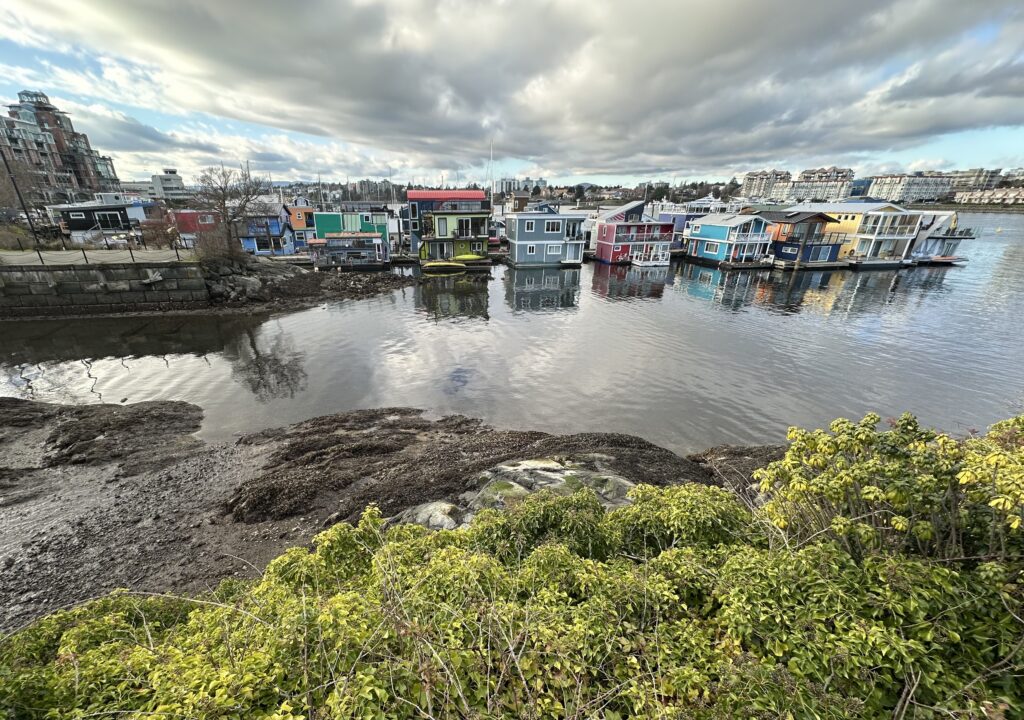
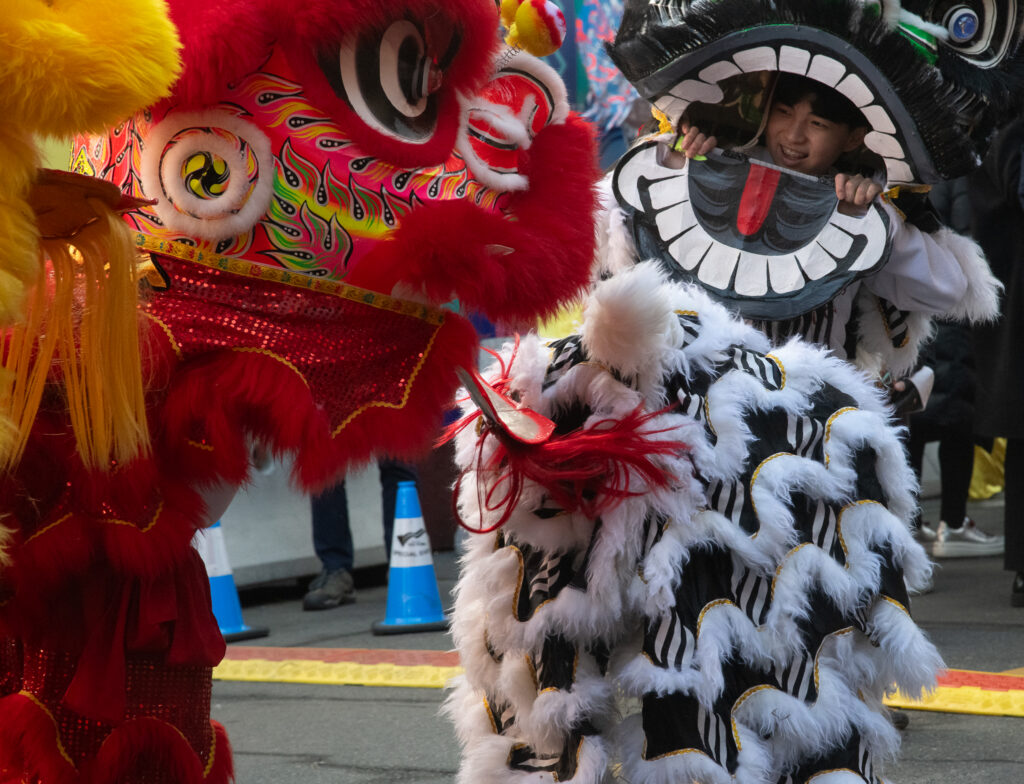
We explored the city and cruised along the down town streets including Fan Tan Ally (the narrowest street in Canada), along with the Chinese New Year parade on Fisgard Street.
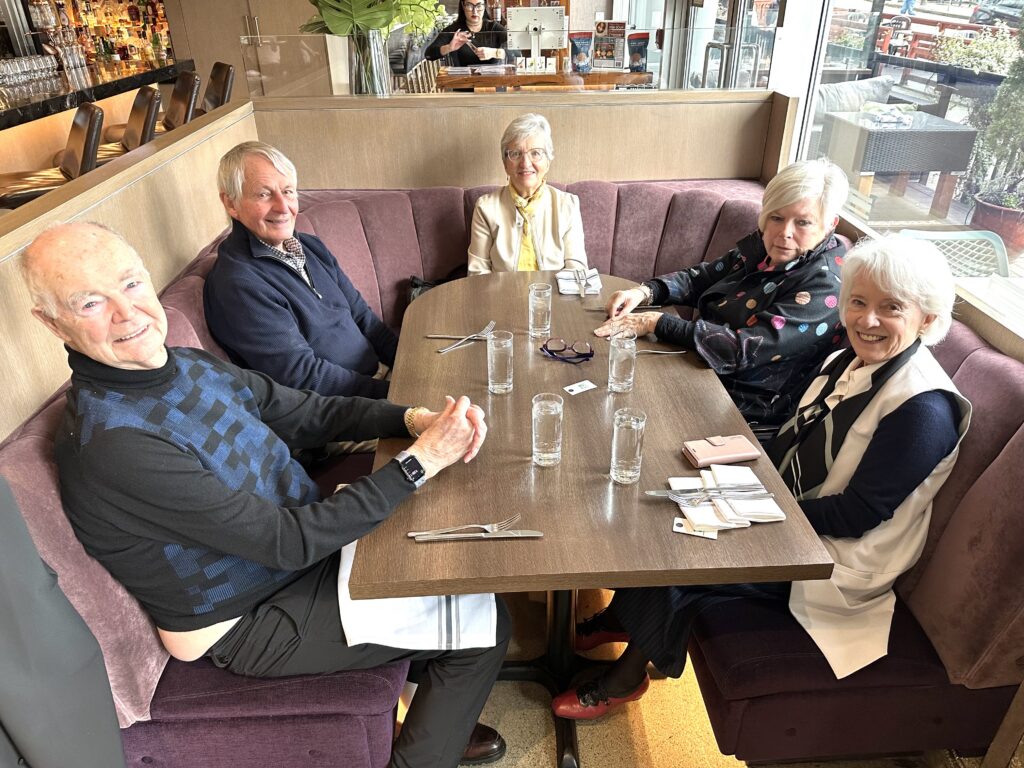
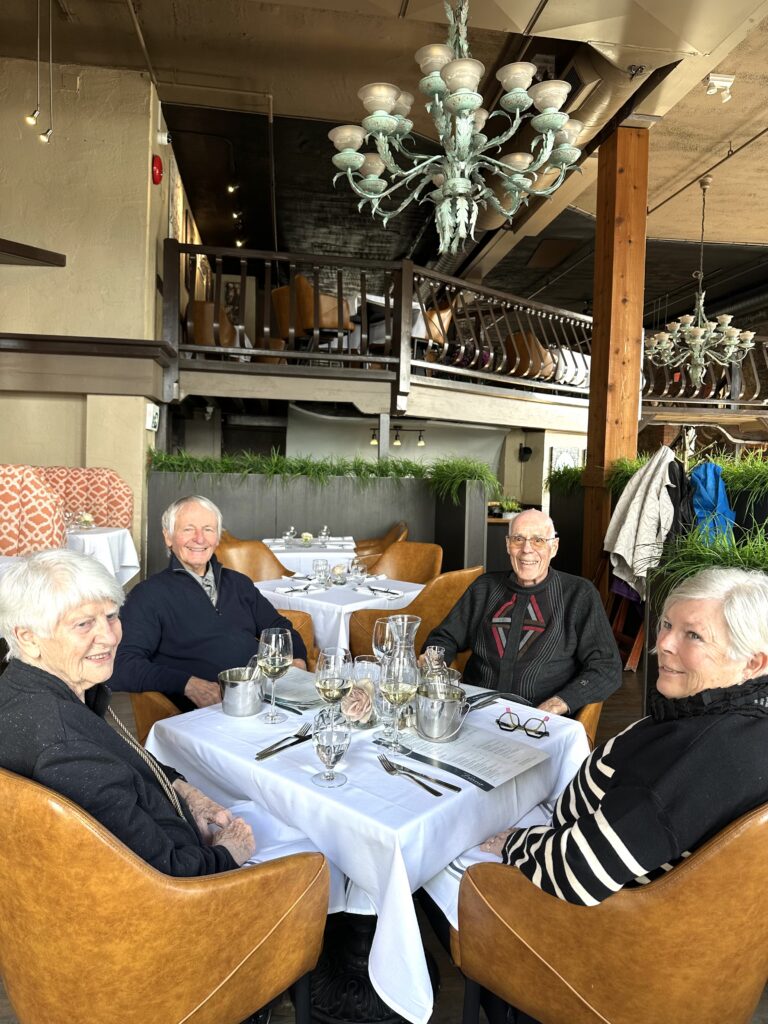
A few visits to the Royal BC Museum plus their IMAX offerings were terrific. And all the while we frequented a number of excellent restaurants. (Here we are with Don and Gwen Harterre.)
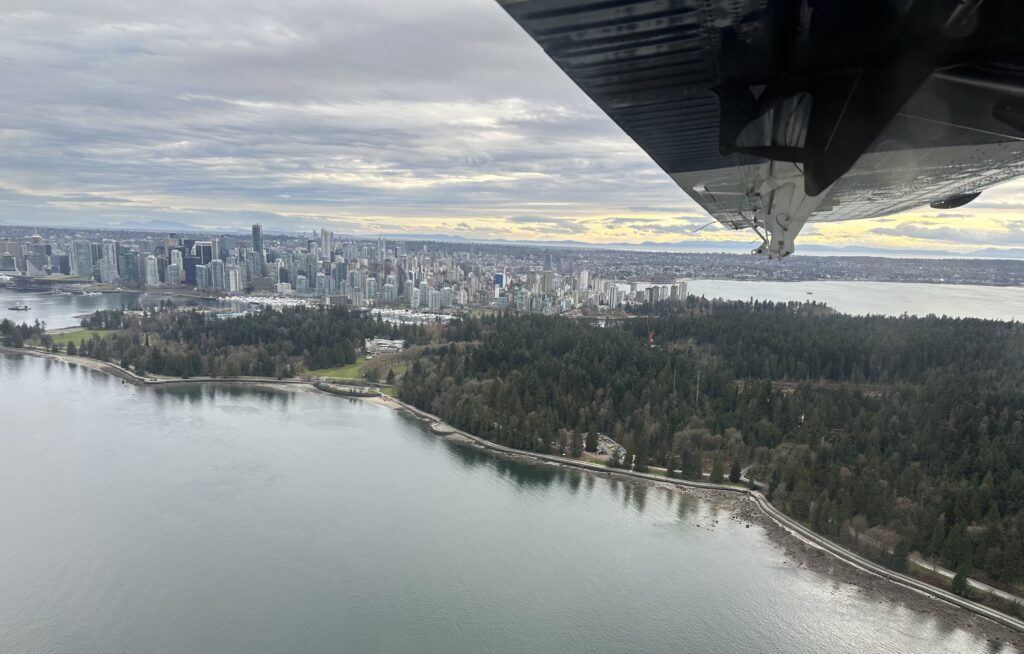
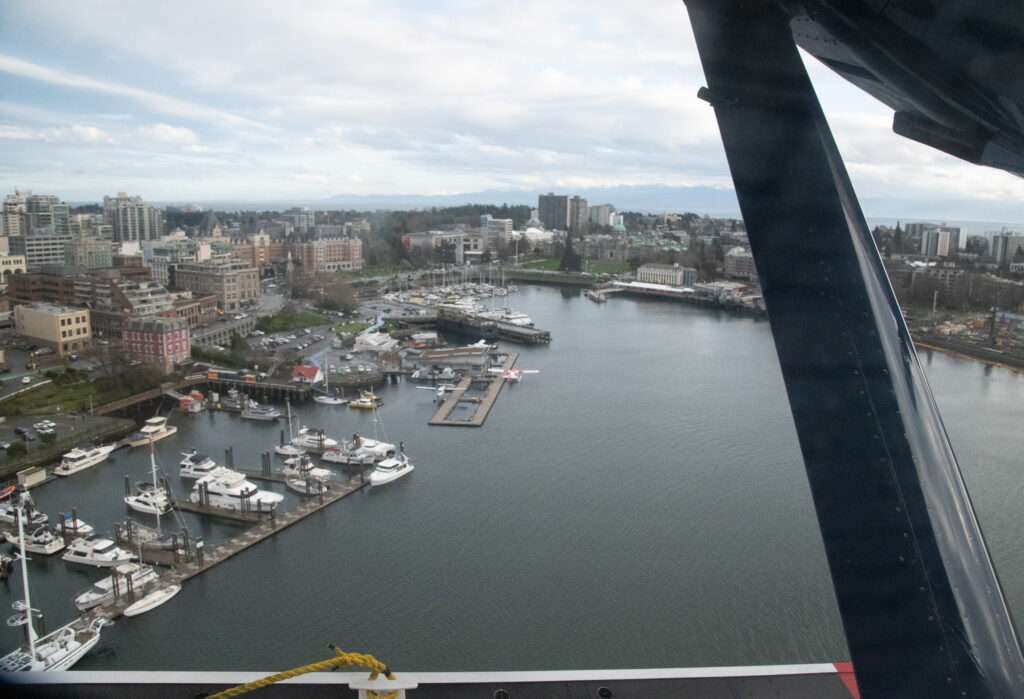
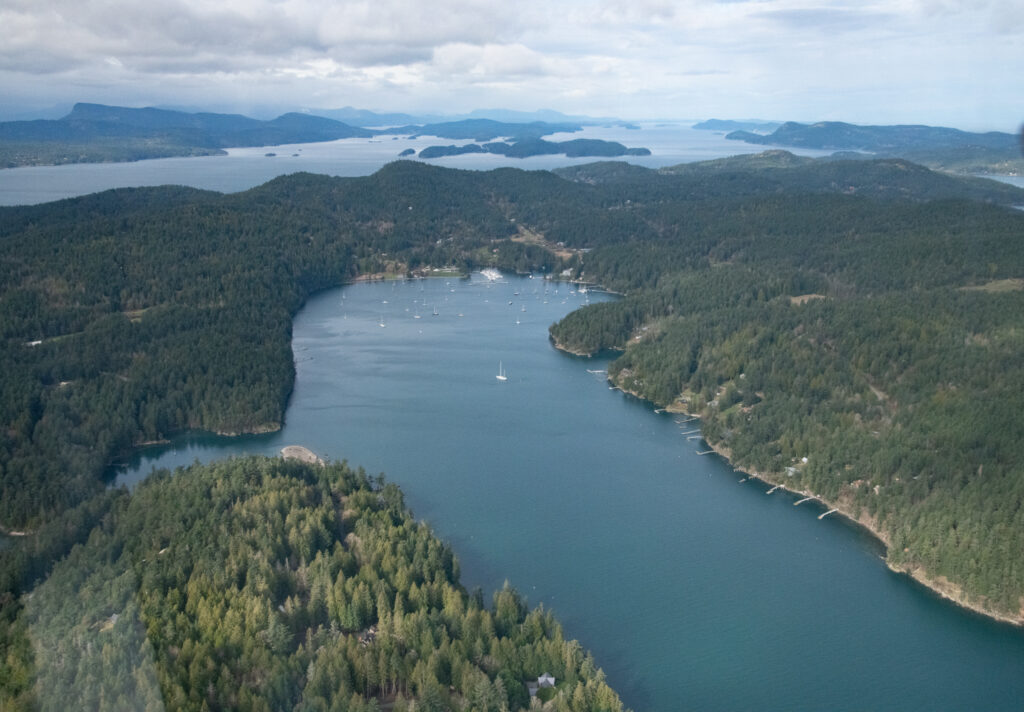
One day we took a float plane over to Vancouver and lunched with close friends Bill and Sharon Grenier (plus Sharon’s sister, Darlene), and then flew back. It was a lovely day and our plane cruised just over top of the surrounding islands. Coming into both the Vancouver and Victoria harbours in a small plane was spectacular.