January 15-17, 2026
The first part of my trip to India was a stopover in Dubai, the largest city in the United Arab Emirates (UAE), also known simply as the Emirates. I was accompanied by my oldest son, Brendan. My youngest son, Dylan, was travelling separately and left a few days later, as we had coordinated this trip with a business trip he was making to India in his role as VP for Mary Brown International. More on that later when I write a blog on our subsequent journey to India.
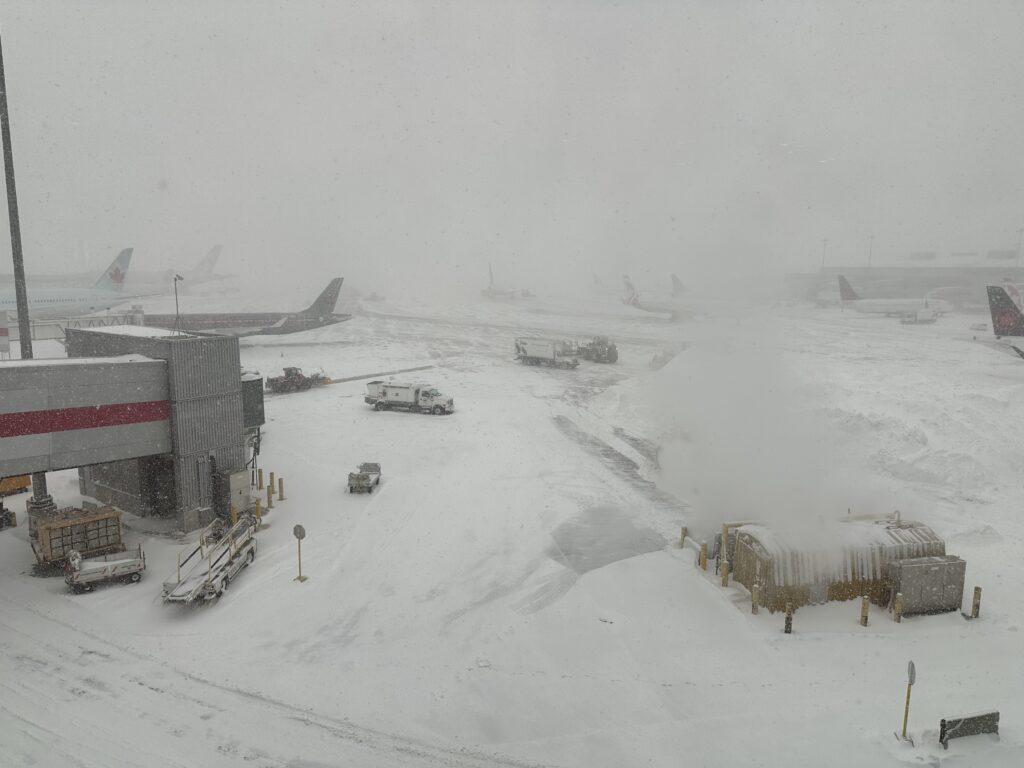
We nearly didn’t take off, as southern Ontario was blasted by low temperatures and heavy snow, as this picture from the Emirates lounge at Toronto International suggests.
The flight:
We were flying Emirate Airlines Business Class, on their huge double decker Airbus A380-800. We took off at 4 on Thursday, January 15, about two hours late. Very comfortable: the seats recline to form a fully flat bed and are equipped with personal toilet kits from Bulgari, nice PJ’s and slippers.
A quite delightful on-board bar was at the rear of the aircraft, where a few hours into the flight I sauntered, ordered a Negroni, and chatted with the other patrons, ignoring the reality that the flight would last nearly 13 hours and that Dubai was nine hours ahead in time.
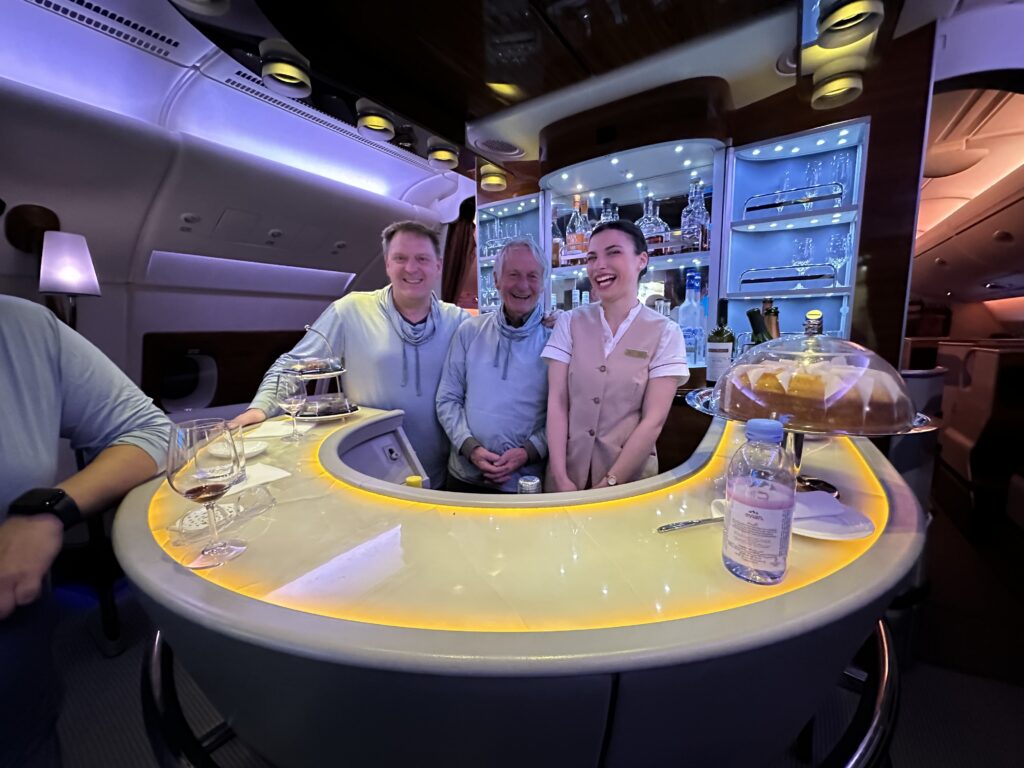
The A380-800 is the world’s largest double-deck aircraft and the largest passenger plane ever built (nearly 73m long, with a 80m wingspan) and capacity for over 500 passengers. Everything about the trip was excellent, from service to the food, to the comfort of the seating and the other facilities.
To start my dining, I chose their muhammara, which is a collection of finger foods, or mezze, as they call it in Dubai. “Mezza” translates as “taste” or “snack” and is an essential part of Mediterranean and Middle Eastern cuisine. It has peppers blended with walnuts, pomegranate, molasses and olive oil resulting in a piquant and earthy flavour. A good start to nearly three weeks of quite imaginative and delightful Indian cuisine.
First a little history and geography about the UAE:
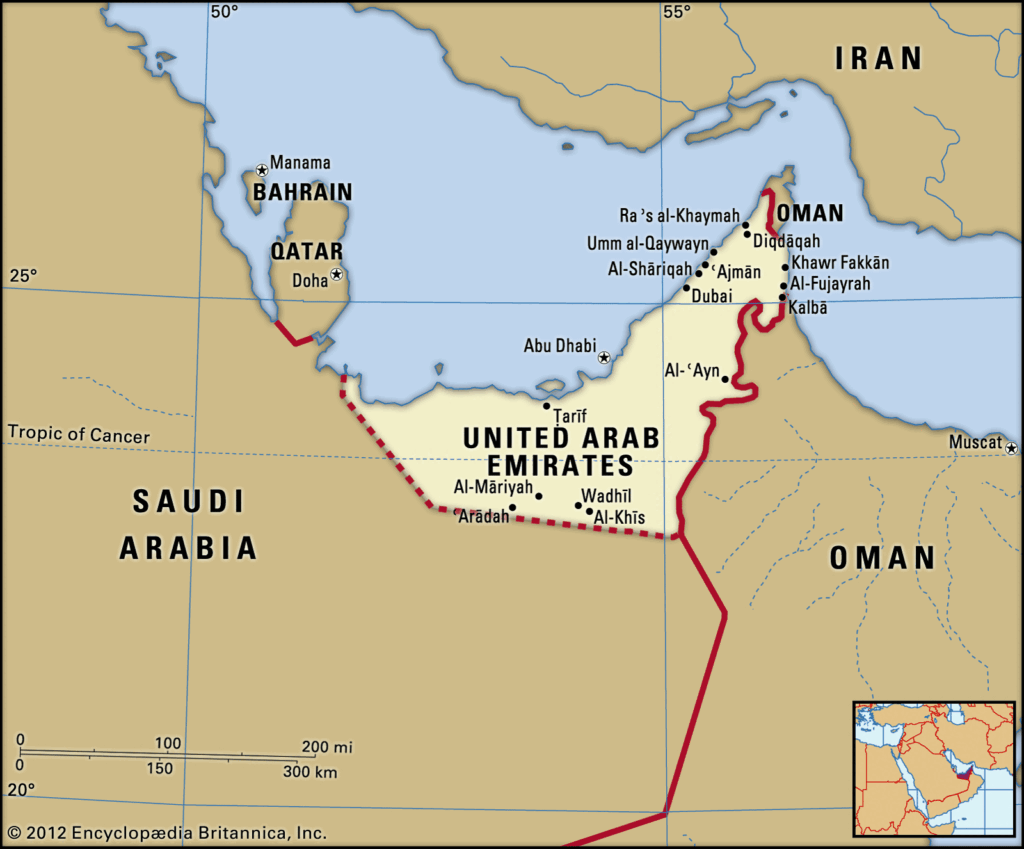
UAE is a country situated at the eastern end of the Arabian Peninsula. It is a federal semi-constitutional monarchy made up of seven emirates, with Abu Dhabi serving as its national capital.
The UAE borders Oman to the east, and Saudi Arabia to the southwest; it shares maritime borders with Qatar and Iran in the Persian Gulf, and with Oman in the Gulf of Oman. As of 2024, the UAE has an estimated population of over 11 million. Islam is the state religion and Arabic is the official language while English remains the most spoken language and the language of business.
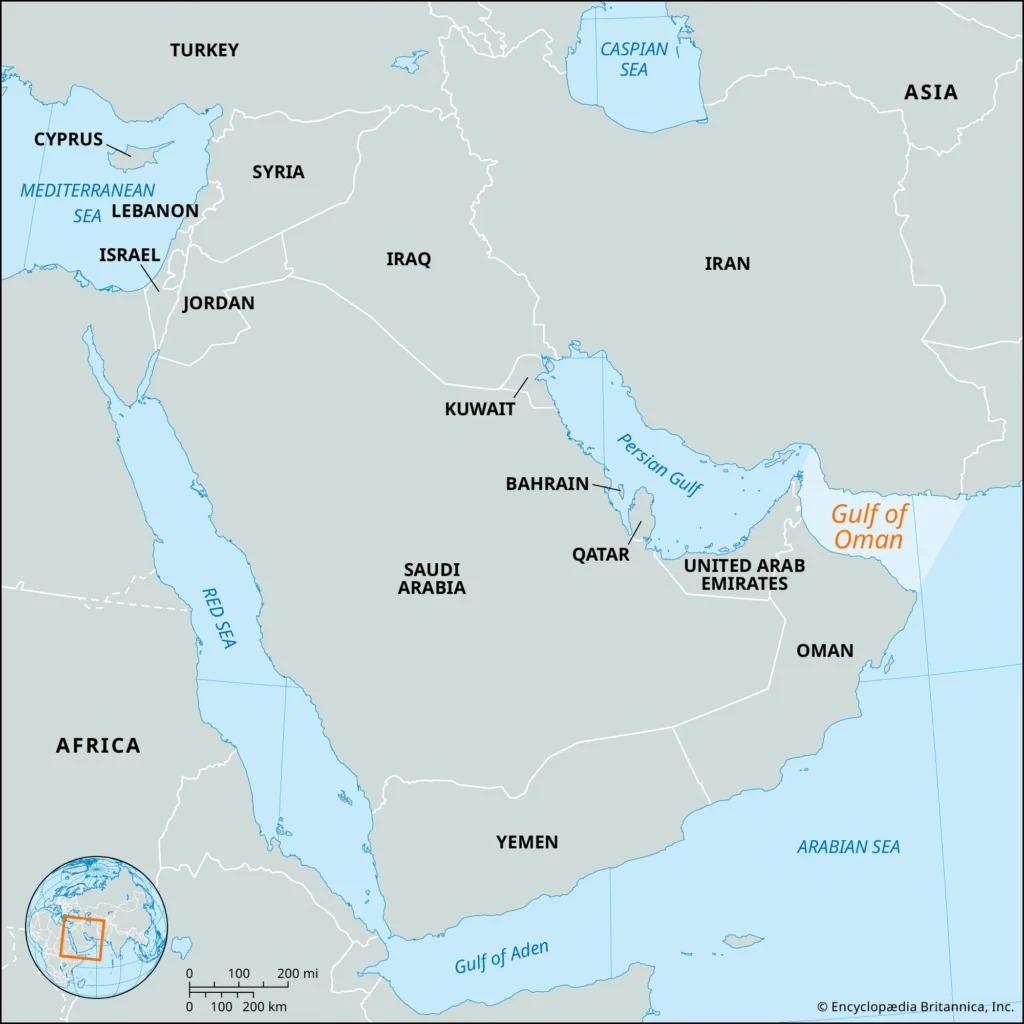
Its history includes Portuguese, Dutch and then British control. Between 1820 and 1892 a group of tribal confederations (known as the Trucial States, or the Trucial Sheikhdoms) in southeastern Arabia south of the Persian Gulf signed protective treaties with the British.
In 1971, the treaties were revoked. Six of the sheikhdoms – Dubai, Abu Dhabi, Sharjah, Ajman, Umm Al Quwain and Fujairah – then formed the United Arab Emirates; the seventh, Ras Al Khaimah, joined in 1972.
The Persian Gulf (sometimes called the Arabian Gulf) is an extension of the Arabian Sea and the larger Indian Ocean located between the Arabian Peninsula and Iran (Persia). It is connected to the Gulf of Oman in the east by the Strait of Hormuz.
While the discovery of oil in 1966 by Conoco was a massive turning point, Dubai’s leaders, specifically Sheikh Rashid bin Saeed Al Maktoum, quickly focused on using oil revenues to diversify the economy into trade, tourism, and finance. Contrary to popular belief, Dubai does not have an oil-based economy. The little oil wealth it did enjoy between the 1960s and the 1990s was used to enhance other sectors of its economy by building physical infrastructure. Trade remains at the core of Dubai’s economy, with the city operating two of the world’s largest ports. Today, oil contributes less than 5% of Dubai’s GDP.
The Sheikh was important to Dubai. He was the Ruler of Dubai from 1958 to 1990 and is widely revered as the “Father of Modern Dubai”. He negotiated the union of the emirates in 1971. Recognizing that oil was a finite resource, he famously stated, “My grandfather rode a camel… my grandson will ride a Land Rover, but his son will ride a camel,” emphasizing the need for diversification into trade and tourism.)
So back to my journey:
After landing at around 2 pm on the Friday, we were picked up by “57 Heritage Safari”, the company with whom we had booked an overnight safari. We exited Dubai, now a city of 2 million (over half the total population of the emirate), and were taken out to the Al Marmoom Desert Conservation Reserve. This is a nature conservation reserve located in the desert about an hour out of the city. It comprises some 10% of the total land area of the emirate.
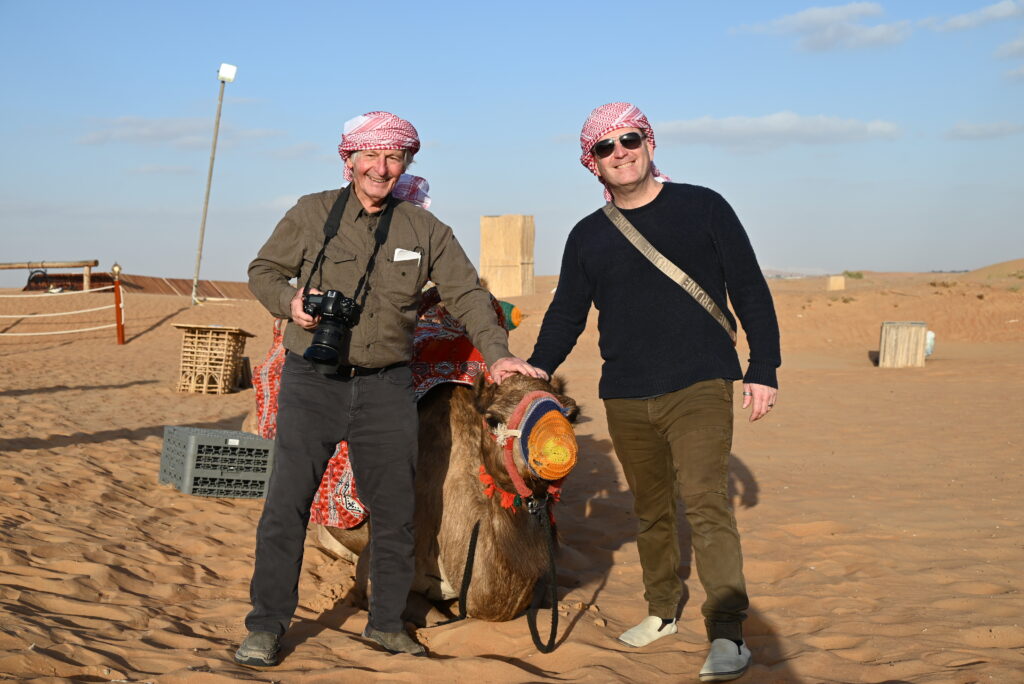
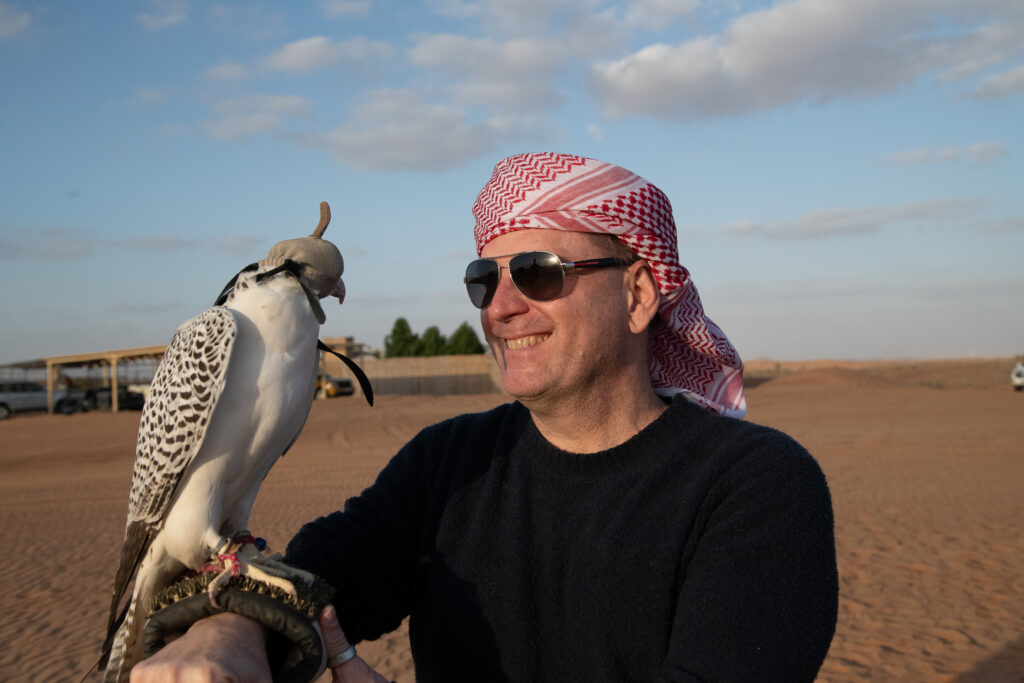
We immediately were outfitted with a keffiyeh, the traditional headdress worn by men in the Middle East. It is fashioned from a square scarf, and is usually made of cotton. It is commonly found in arid regions, as it protects from sunburn, dust, and sand.
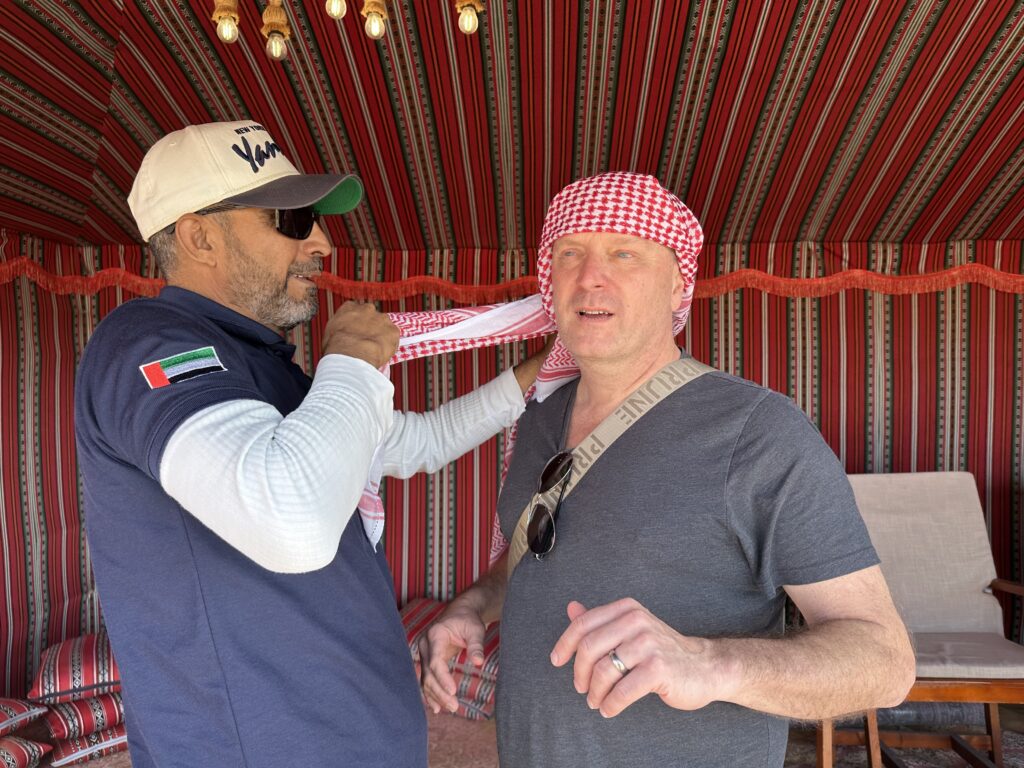
You will see this wanna-be Lawrence of Arabia appear some more.
We headed off in a very old 1951 Land Rover…
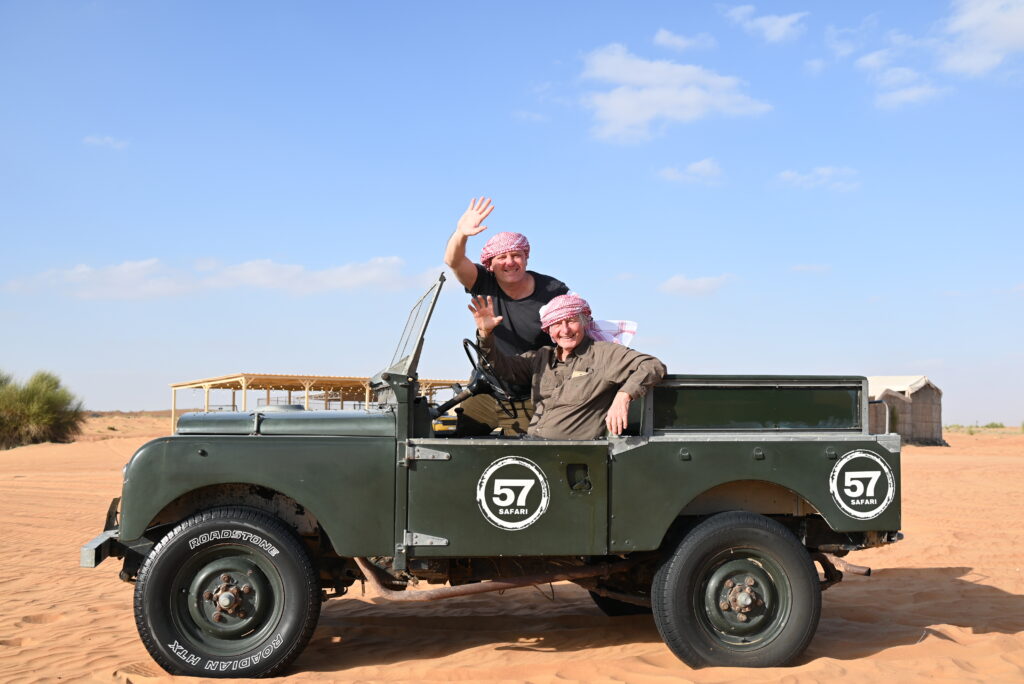
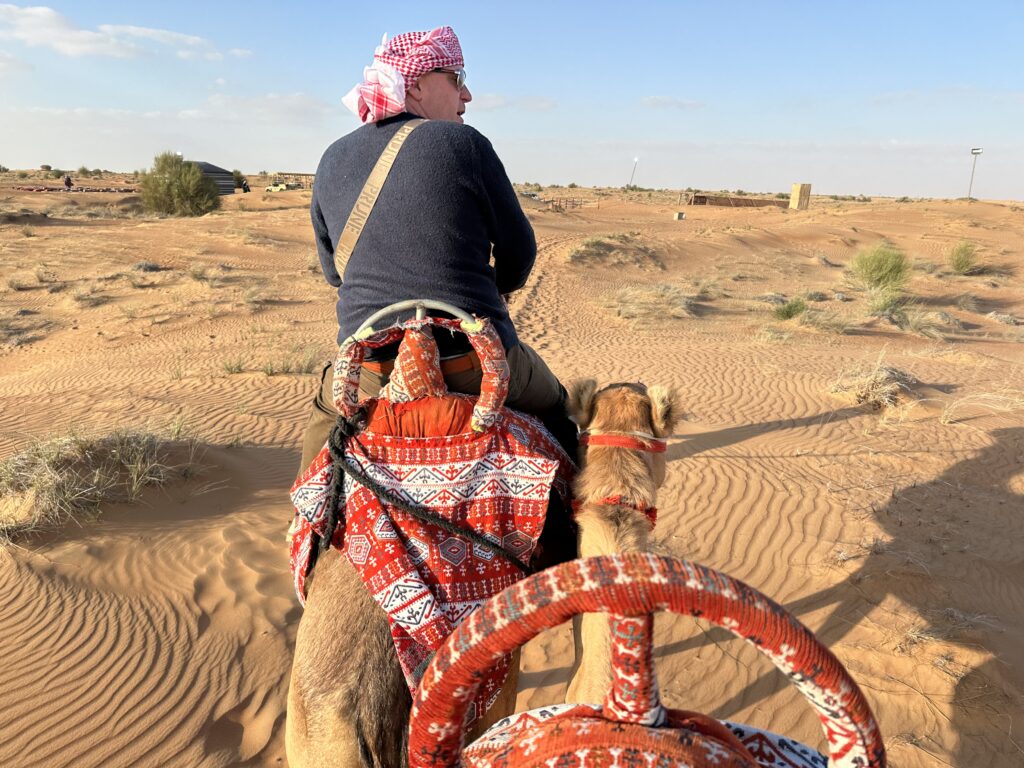
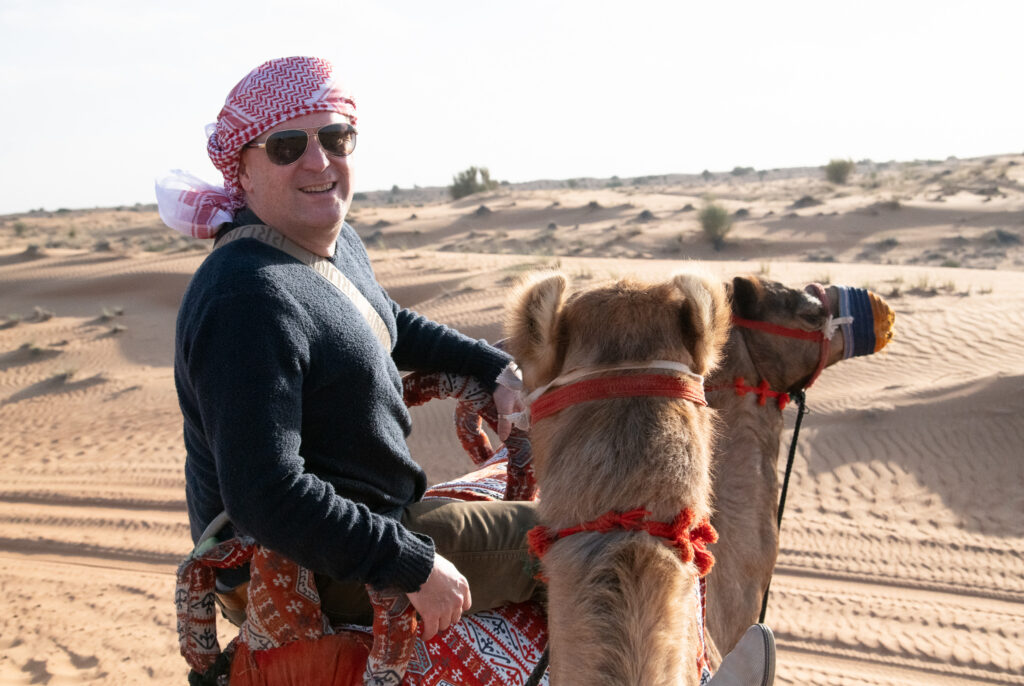
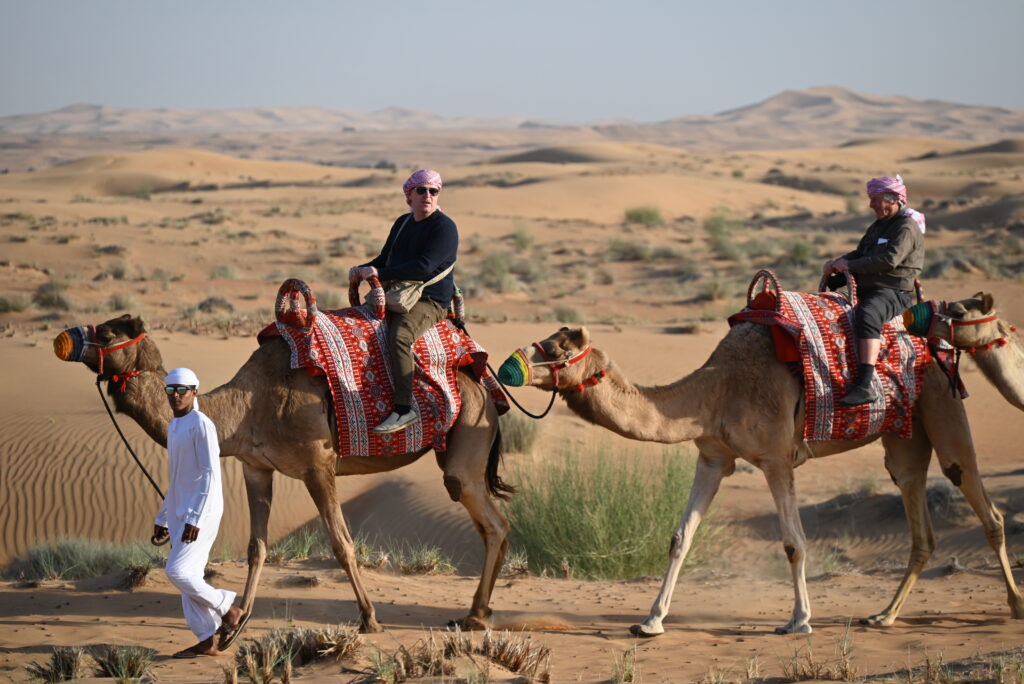
and promptly found ourselves on the back of a camel. OK, that’s fine when it is seated on the ground, but they have to get up, and they do this in two quite jerky and distinct movements. First the hind legs go up lurching one forward; then the front legs straighten, thus aggressively pitching the rider back. I was not graceful in either mode. They’re not called ‘ships of the desert’ for nothing: an adult camel can survive for 10 days without water. I was looking for something stronger upon dismount.
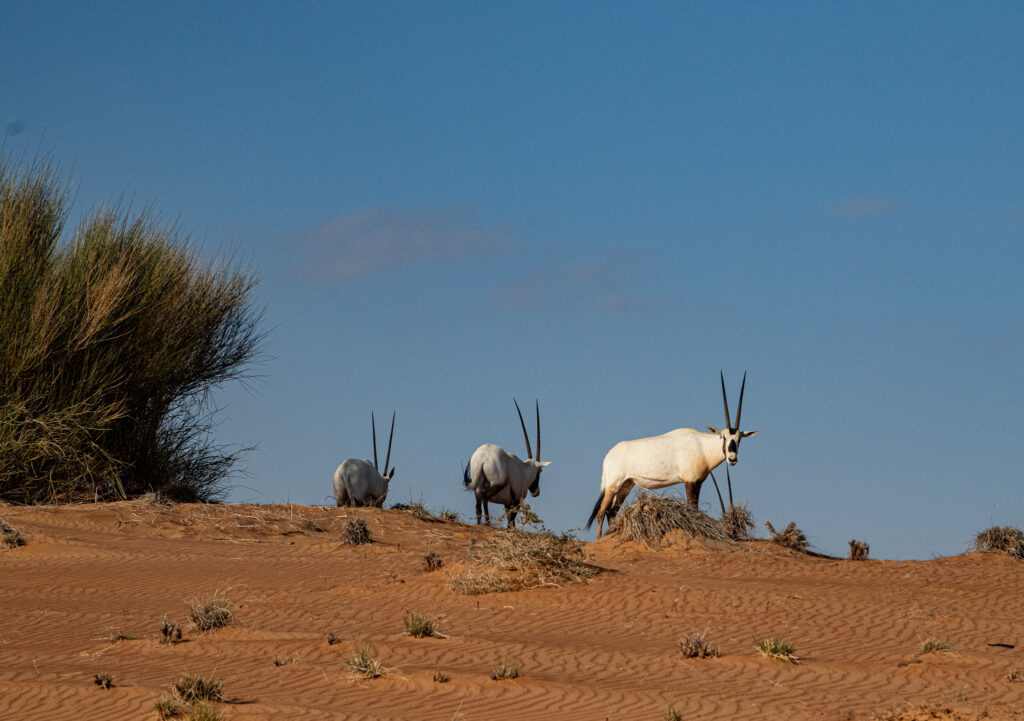
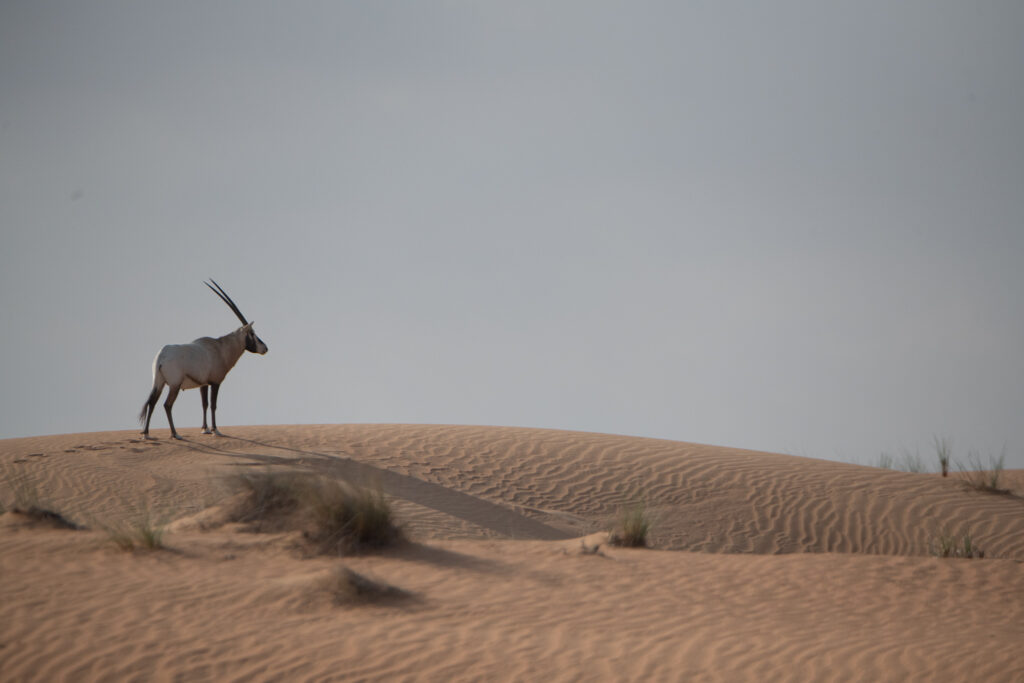
As we drove around we spotted a few white deer-like animals called Arabian oryx (it’s actually a type of antelope that survives in the desert). Inhabiting the desert also are six kinds of snake and a reptile called the sandfish skink, that burrows in the sand.
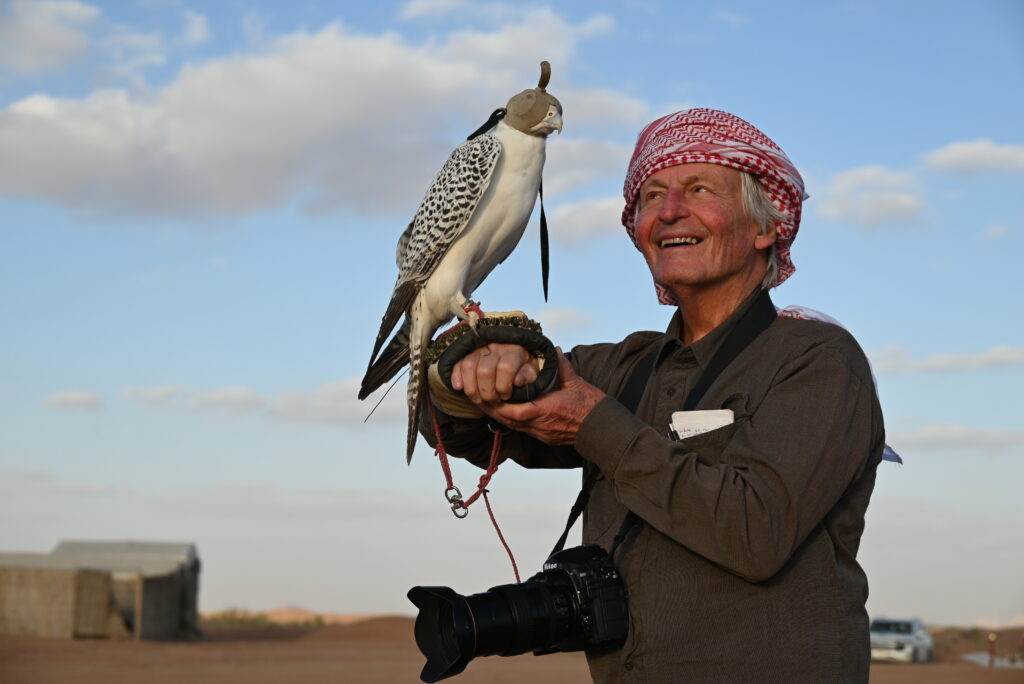
We were quite entranced with a man putting his falcon through its paces. A few of us got to have it land on our arm. We learned that it’s the only kind of hunting where man uses a wild animal to hunt another wild animal.
Evening in the desert:
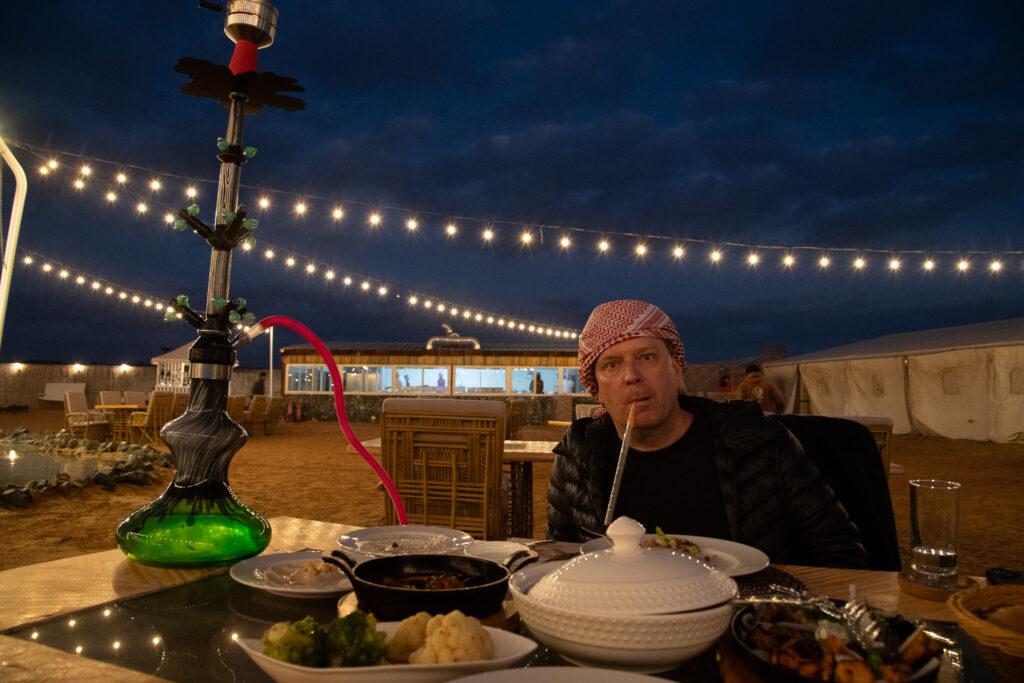
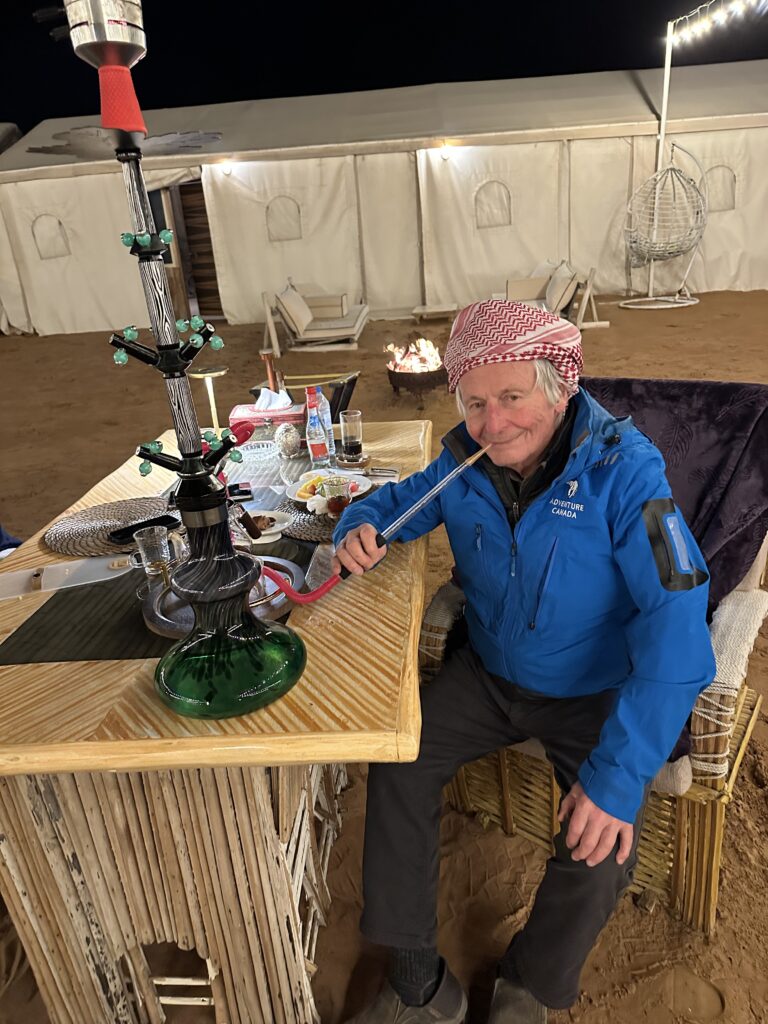
That night during dinner Brendan ordered up a shisha, i.e. a hookah or waterpipe. The smoke passes through a water bowl and hose, producing a sweet-smelling, inhalable vapour. I inhaled some of it for a while; it was quite flavourful, but not my thing.
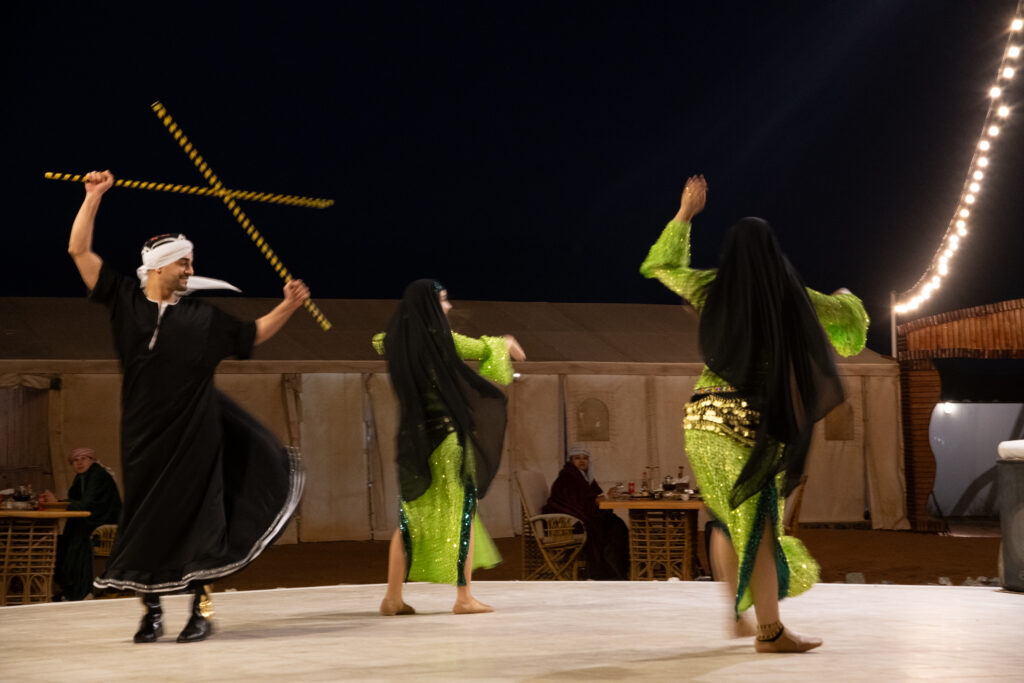
Then a stage show of dancers and a man cleverly juggling various objects – burning batons, etc.
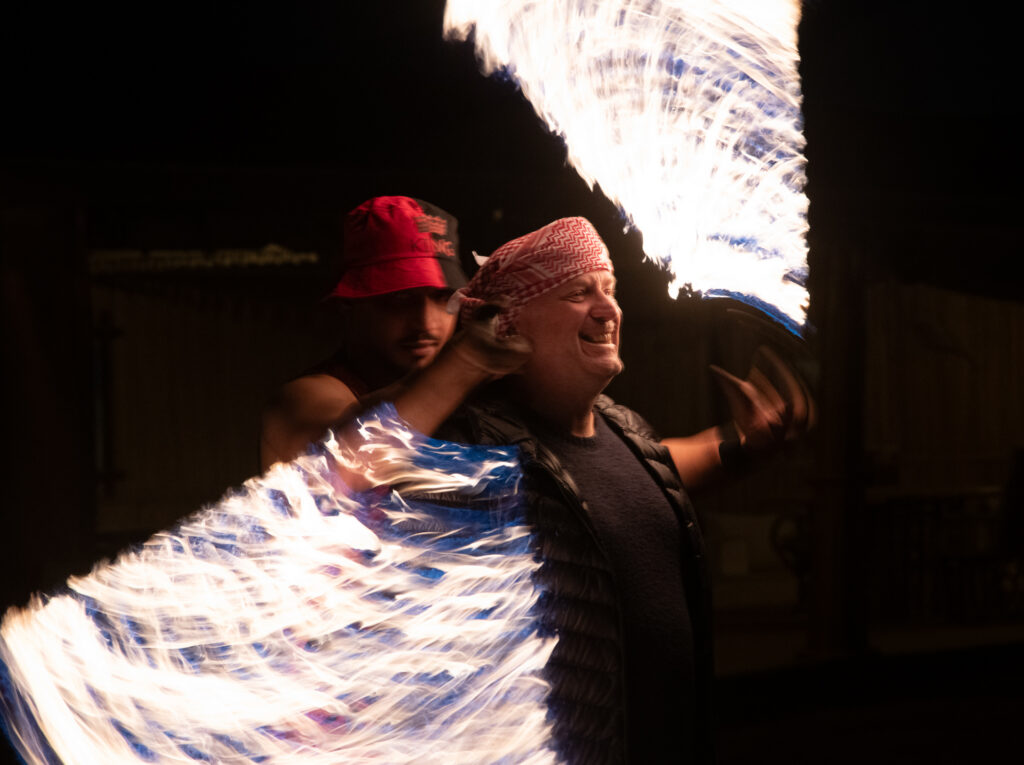
They got Brendan up and into the show!
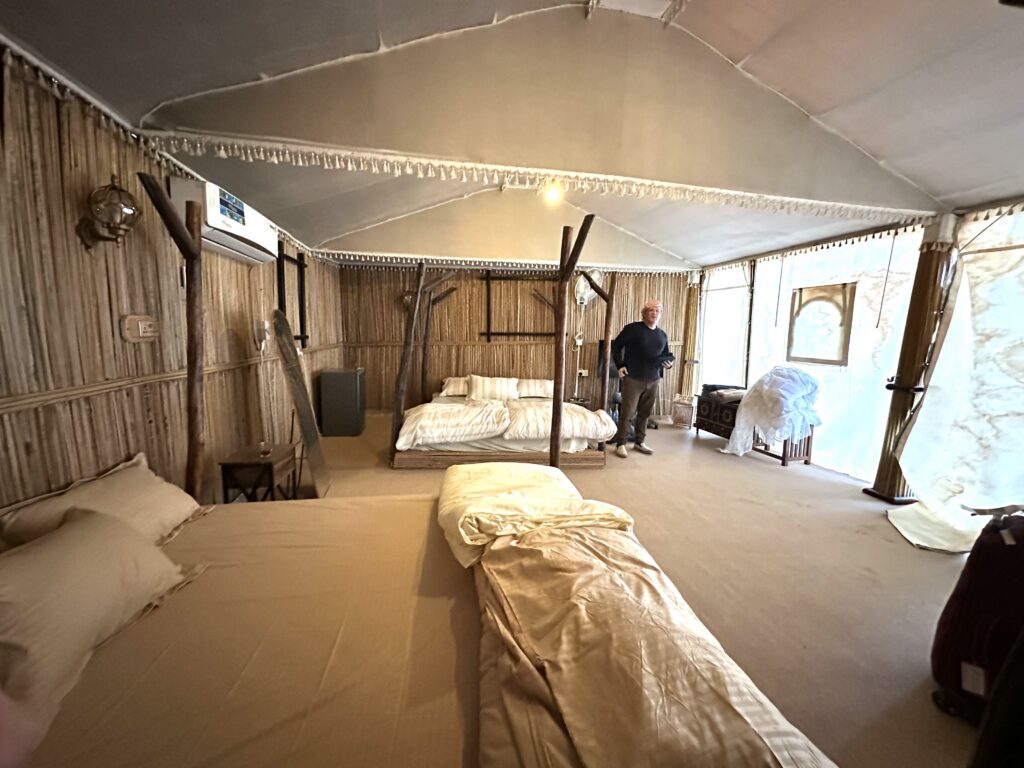
We slept in a large tent, and needed the blankets they supplied as the desert gets cool.
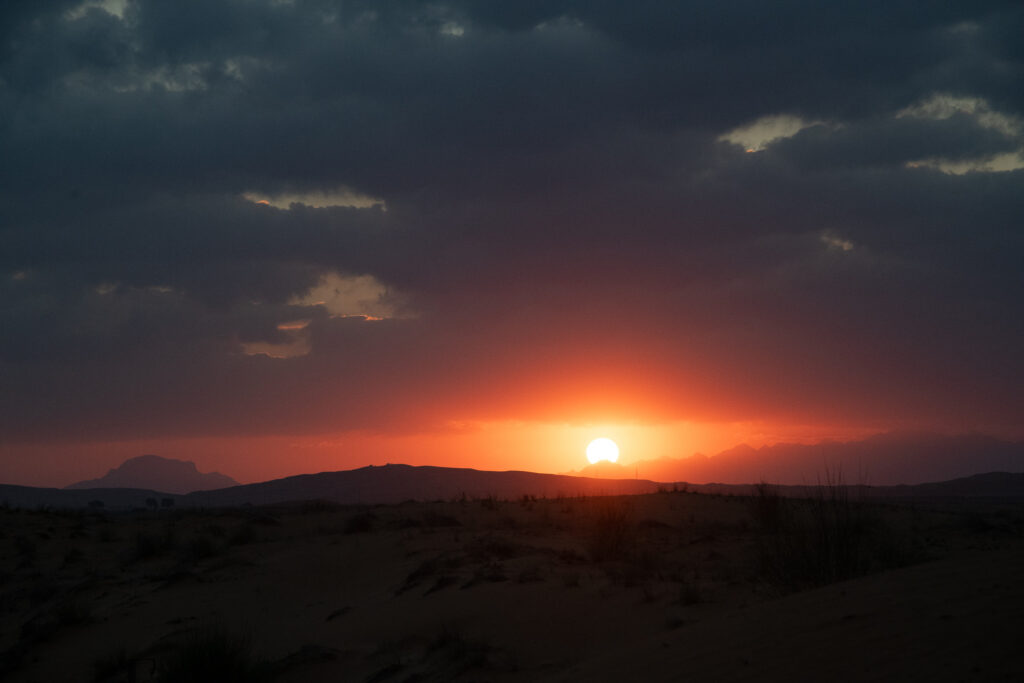
A nice sunrise appeared over the tent area.
A whirlwind tour of the city:
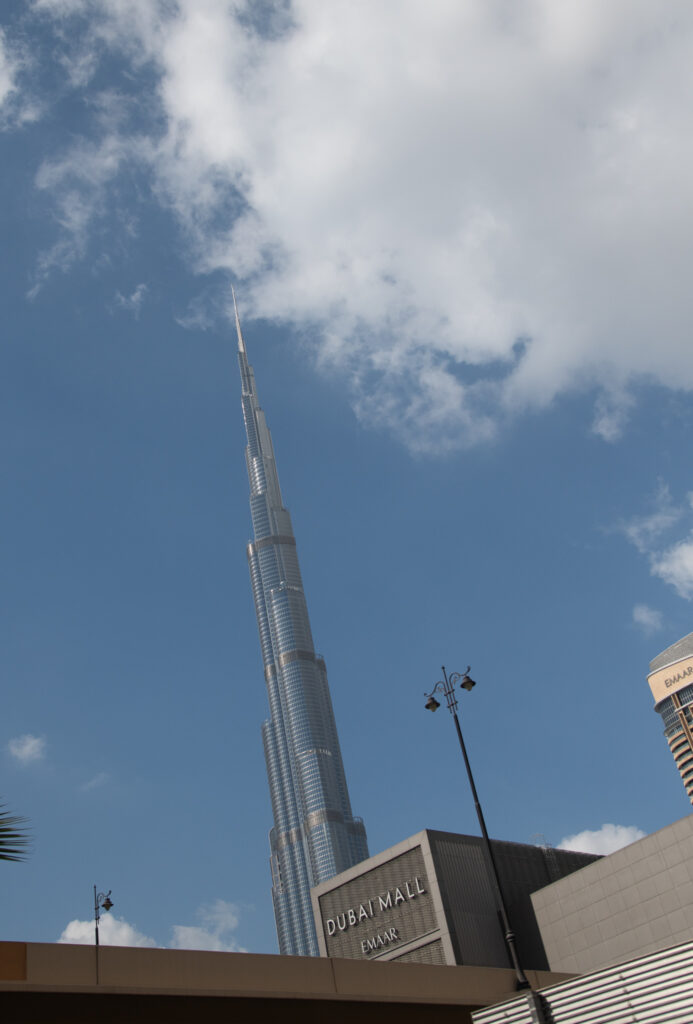
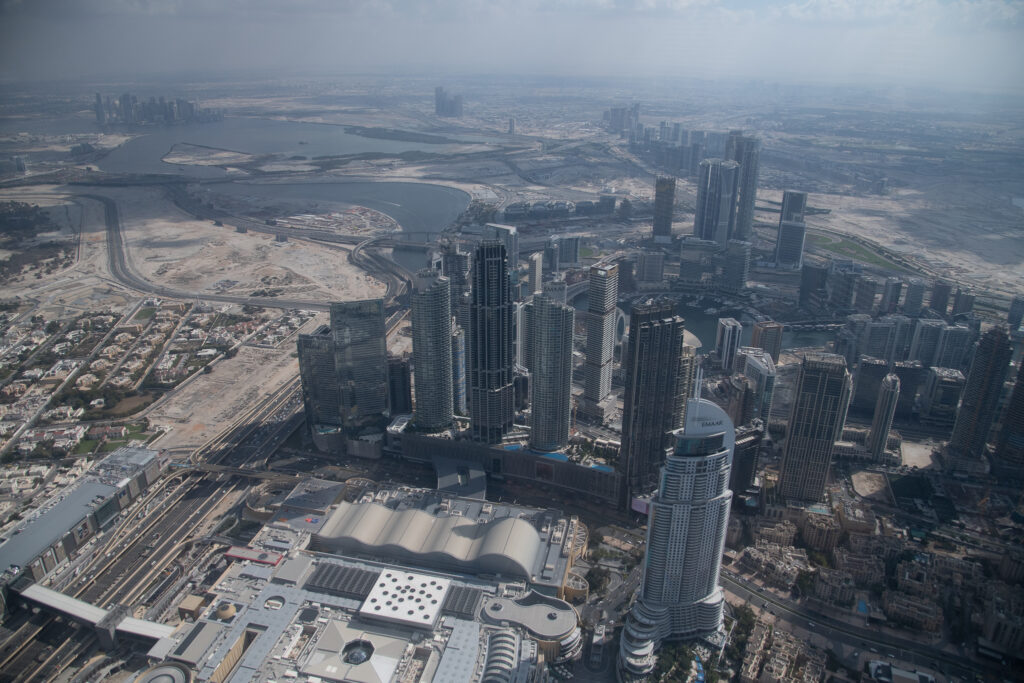
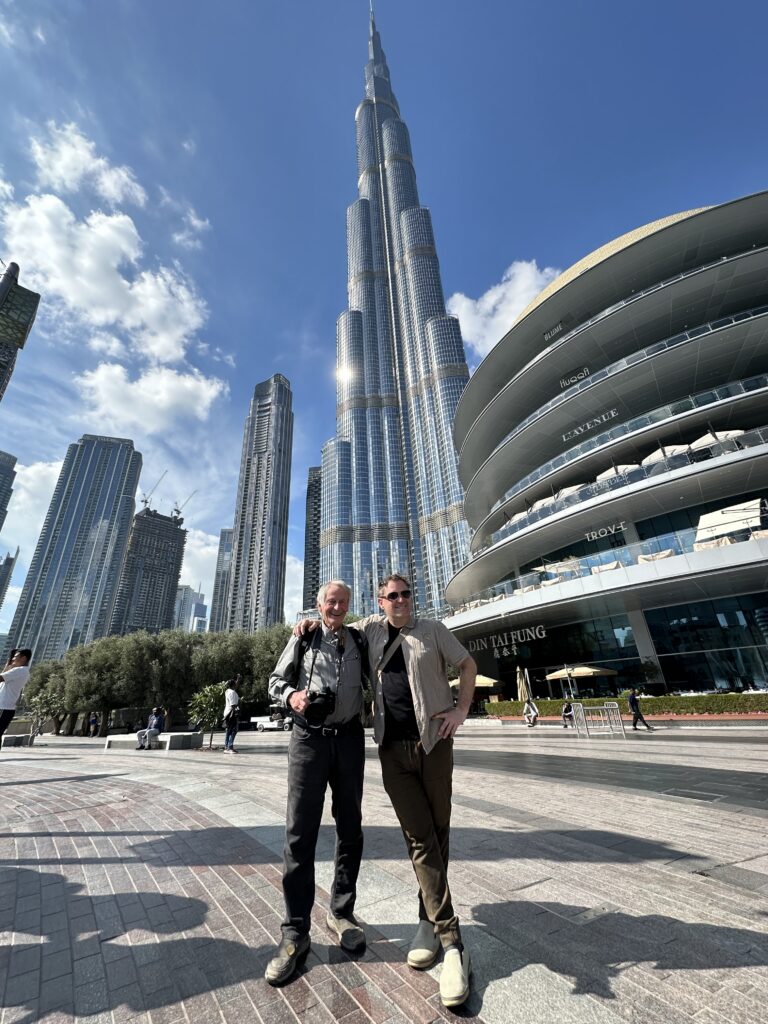
After a desert breakfast we headed back to the city to tour the world’s tallest building – the iconic Burj Khalifa. It was opened in 2010. The tower reached completion at 163 floors and a height of 2,717 feet (828 meters). The mixed-use tower features the Armani Hotel, luxury apartments, and corporate suites.
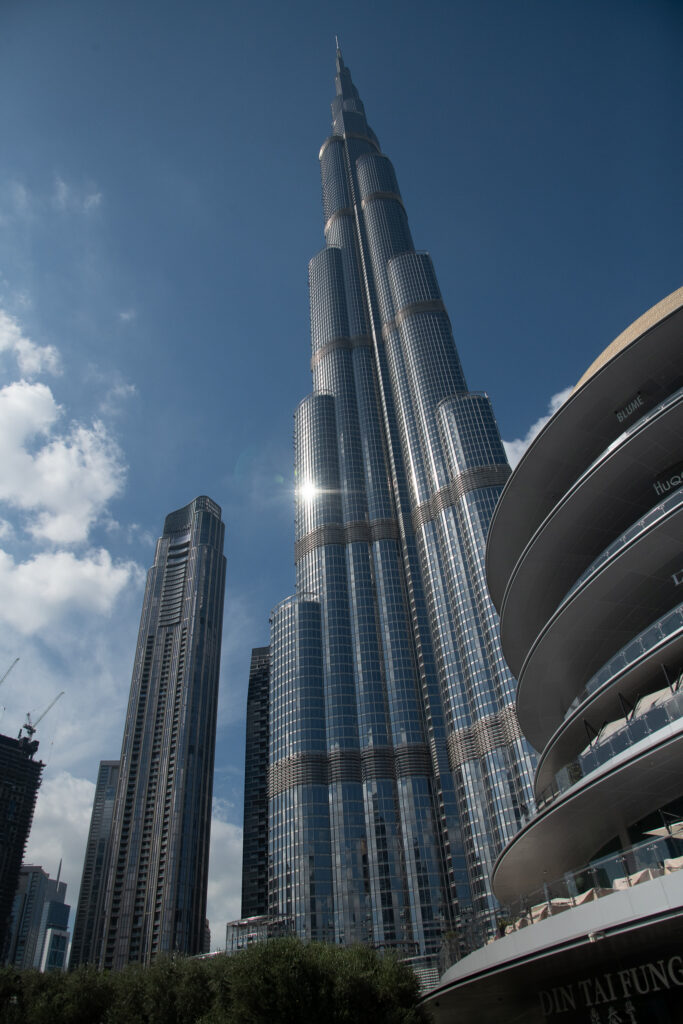
It is laid out on a three-lobed footprint. The Y-shaped plan plays a central role in the reduction of wind forces on the tower. The central core emerges at the tower’s top and is finished with a spire, which reaches more than 700 feet (200 meters).
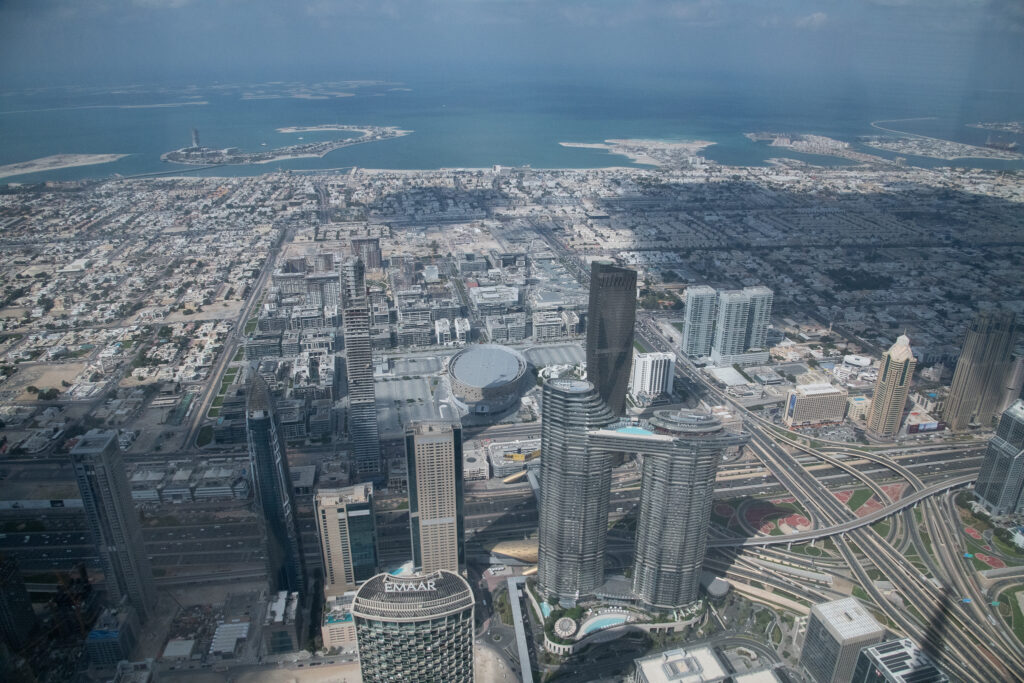
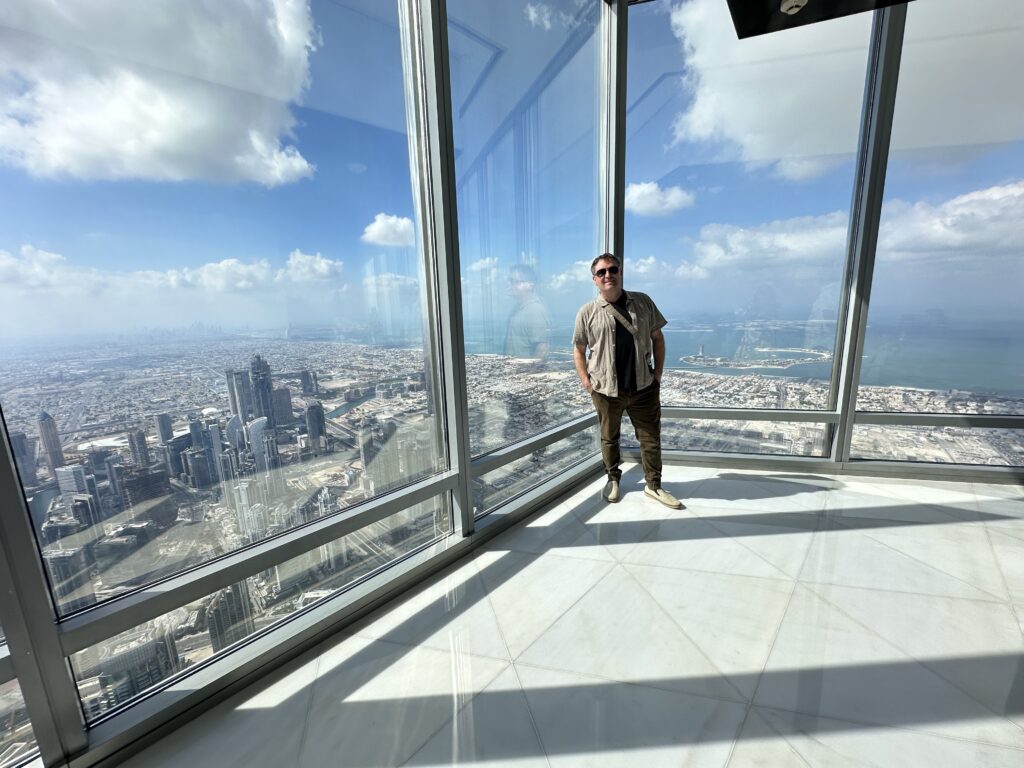
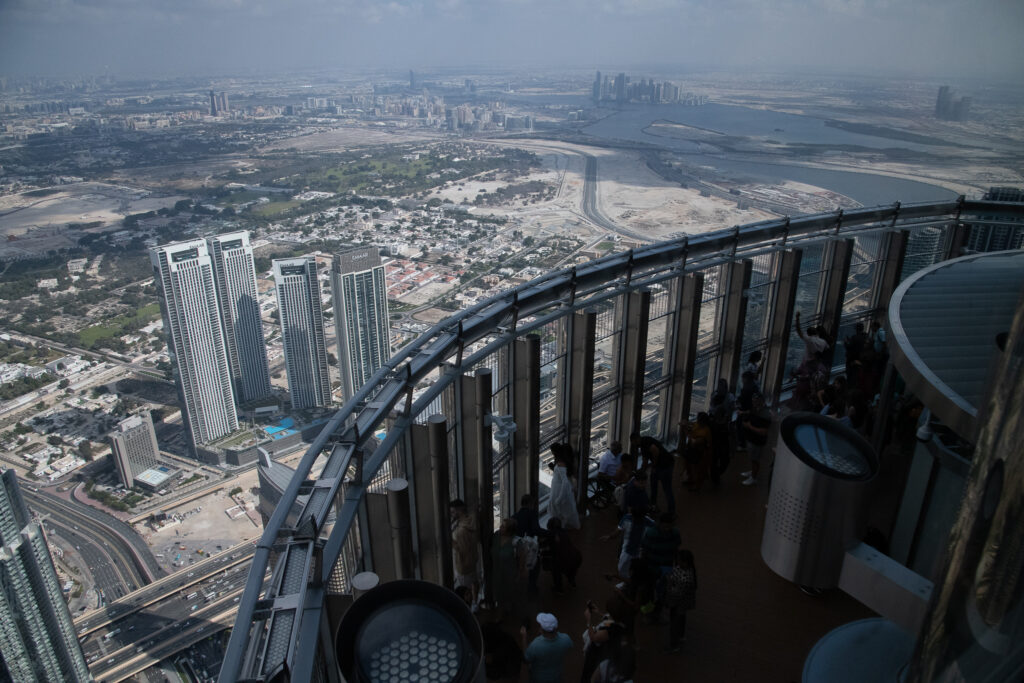
We got a special “At the Top” access to the observation deck on level 152, which has the title of the highest observation deck in the world. A glass of Prosecco was served plus canapés. Paying extra was essential (and part of the culture); in this case it meant dodging the immense line-ups to the high speed elevators.
The view was breath taking, like being in a plane coming in for an extended landing.
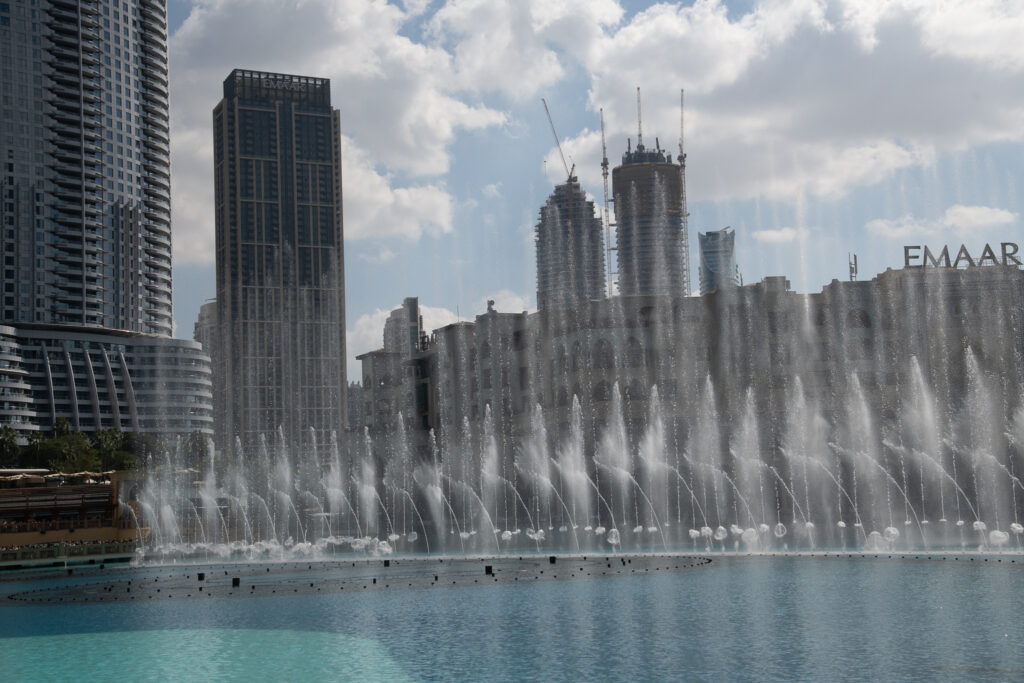
The immense Dubai Fountain, a choreographed fountain system on Burj Lake, sprang into life just as we exited the Burj.
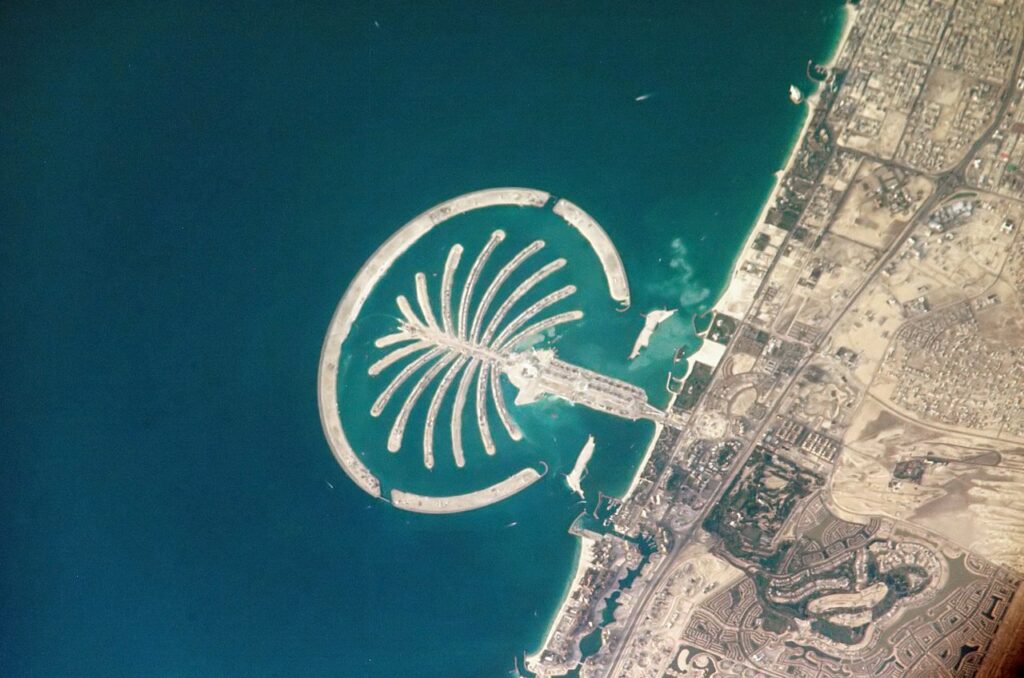
In the late afternoon we were driven around to explore the Palm Islands. In the absence of natural offshore islands, developers were encouraged to construct three giant man-made islands off the coast of the city. The most famous of these being the Palm Jumeirah, featuring luxury resorts like Atlantis and The Palm. The archipelago resembles a stylized palm tree within a circle.
Apparently it has eleven beach areas, with 100 villas on each. Each one of these has its own private beach; and each villa costs $10 million. Other parts of the Palm Islands include the “World Islands”, a cluster of small islands positioned to resemble a world map when viewed from above. We could see all this also from the top of the Burj.
Thankfully we didn’t stop at the world’s largest mall, the Dubai Mall. (Neither of us could think of a reason to enter a place that had 1200 shops.)
We visited Dubai’s past with a visit to the heritage district located on the banks of the Dubai Creek. Fishermen and merchants criss-cross the waters in their traditional dhows.
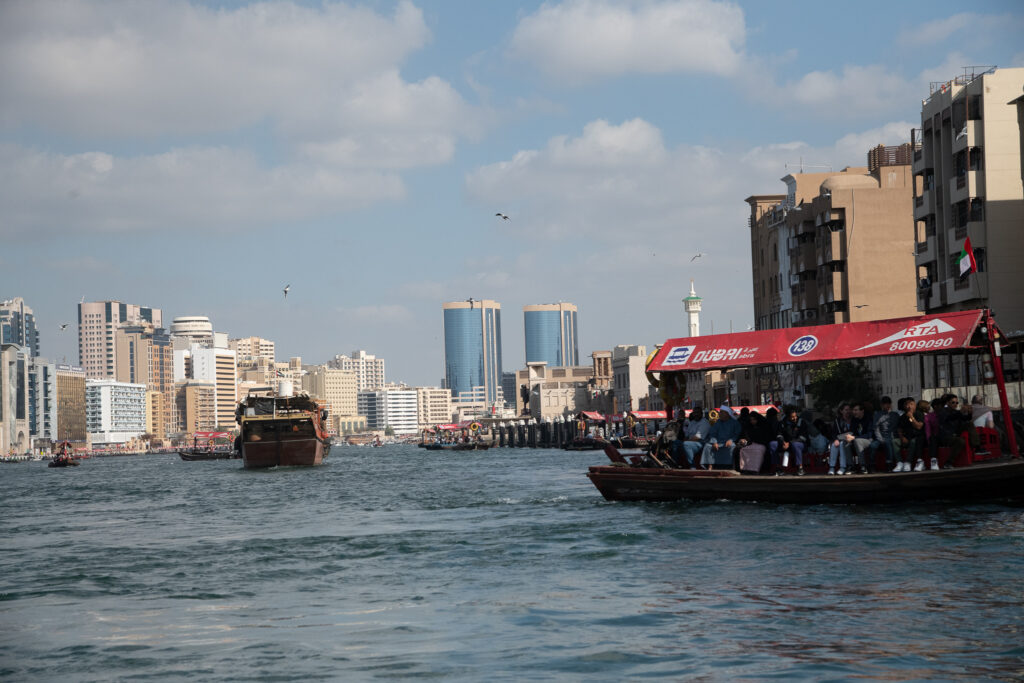
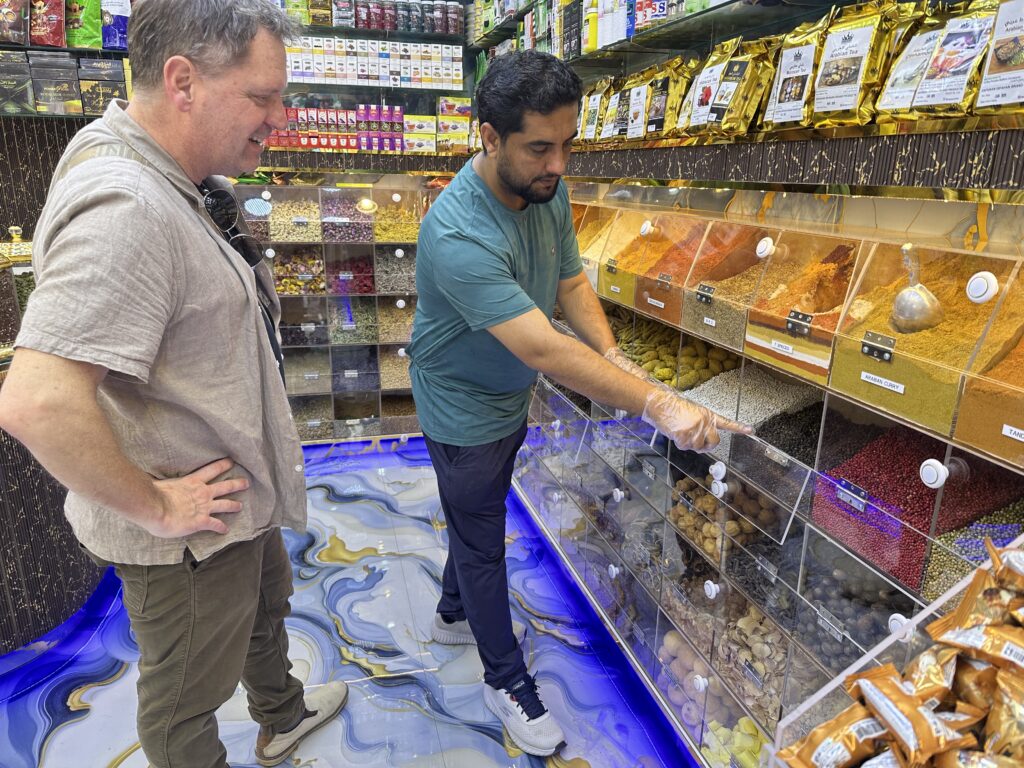
We explored the Old Town, and bought some spices (saffron, for a negotiated but exorbitant price) and Jasmine and Hibiscus tea.
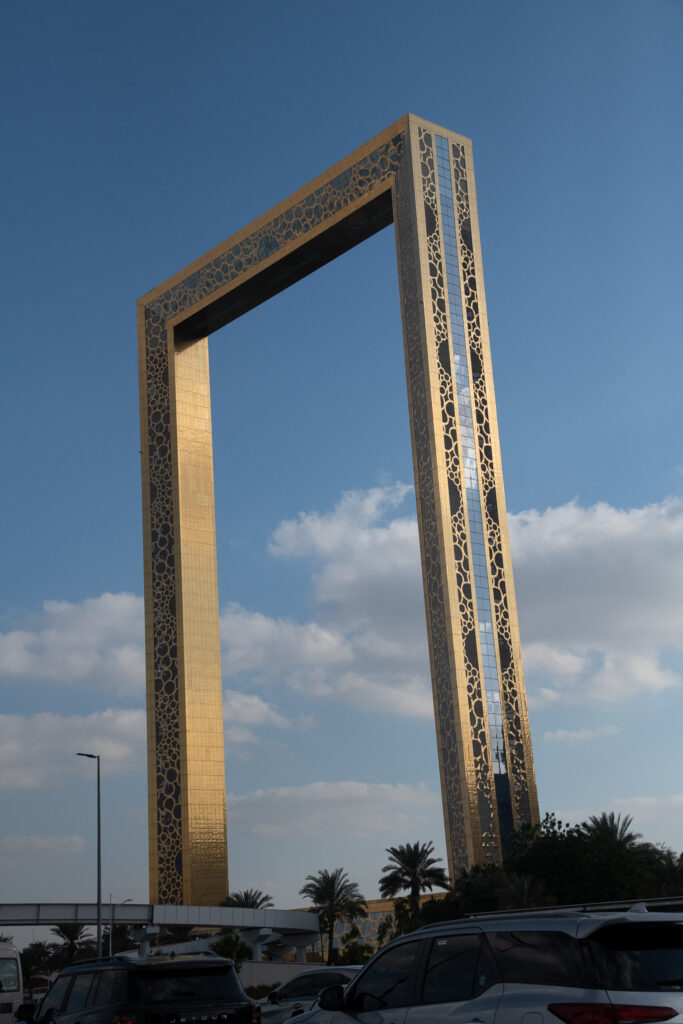
The Dubai Frame stands 150 meters high and spans 95 meters. Over 9,900 cubic meters of reinforced concrete, 2,900 square meters of laminated glass, and 2,000 tons of steel were used to build the largest (and perhaps most useless) picture frame in the world!
As we were taken around the city, our driver, Abul, rattled off all sorts of tidbits: only 20% living here are Arabs; there was zero crime; the rule of law is equal for all; no discussion takes place, or is permitted to take place, regarding religion or politics; education and health care is free for all Emiratis (health insurance is mandated for citizens of other countries); living here was tax free; he gets 1200/month (local currency). He kept saying that “there is 100% freedom”, although I wasn’t able to get him to define what exactly that meant.
One little gem he dropped on us in a way symbolized how much money and its appearance is valued in this almost make-believe world. The smaller the number of your car’s licence plate, the more costly it is. It has become a visual display of one’s wealth.
The licence plate with a four digit number would likely be valued at a minimum of $40,000 Canadian dollars.
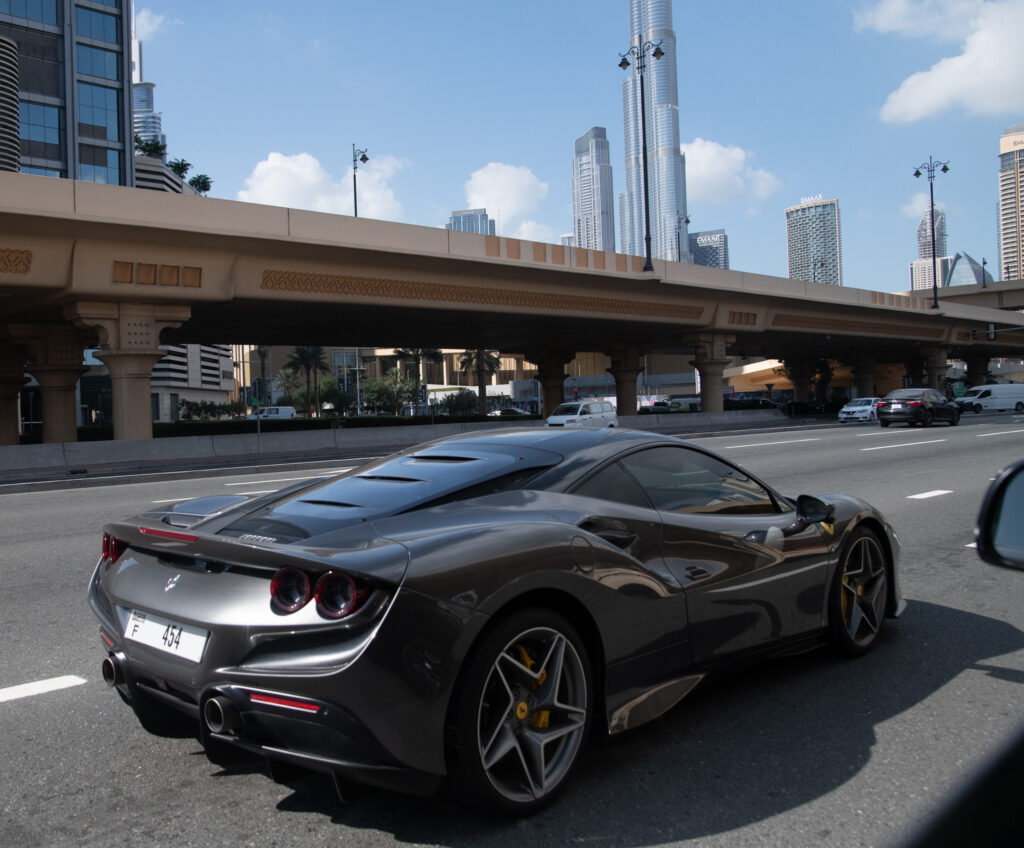
The regular three digit licence in the above photo could cost over $400,000 Canadian. (A three-digit plate “DD5” yielded in a 2025 auction $35 million UAU Dirhams (AED) or $13 million Canadian.) One and two-digit plates are widely viewed as the pinnacle of status. They sell for millions. This is all about prestige and personal branding of ones wealth and status.
To bed early, after a good dinner, as we have to catch a 3 am shuttle to the airport. We have a 3 hour and 20 minute flight to Delhi, India (and a further 1 1/2 hour time change) for the second part of our adventure. This was not a trip for the idle!
Really interesting Ken. My son is involved in banking and setting up offices for National Bank in Dubai.
Great pics and story as always, Ken. Looking forward to the next installment.
You are amazing! How wonderful to be able to do this trip with your sons at this age. David and I were in the UAE years ago we saw about 1/4 of what you guys saw. I am in awe of you. Donna
Good job Ken – always interesting.
Good summary Ken. I look forward to a discussion when I return from Florida, perhaps at Toronto Whiff of Grape.
I didn’t think I needed to read about Dubai or the Emirates, but you have brought both history and your amazing photography to bring it to life.
Great pictures and story. Thanks for sharing them with us.
Thank you Ken for update on the Emirates. We visited friends in Abu Dhabi about 20 years ago. Drove with them about 1 1/2 hours through the desert to Dubai. The Burg had just been built and was temporarily closed because they had found a structural problem.
Both cities and the desert were amazing. It was like being in a wonderland of the future in a way. At that time it seemed quite lovely but there wasn’t freedom. The king was benign and a visionary but members of the large royal family were privileged, and I don’t think others could count on any definite ‘rights’.
In the desert was the one of the most beautiful things I’ve ever seen. Inside and out. A white marble and gold mosque designed by a Canadian woman architect I think. It seems to be floating in the desert.
Greatly enjoyed your descriptive accounts and fine photos Ken between bouts of Olympic snow sports . Thank you. Rosemary
We went to the UAE about 20years ago. It was then end of a trip through the Suez Canal to Jordan and down the Red Sea in a convoy to protect us from pirates. Abu Dabi was the end and as you found, the beginning. Great photos
What a great read – – thank you Ken!
This makes me want to continue travelling even more.
Enjoy your train trip across Canada and your 2 weeks in Victoria.
Best,
Hi Ken, Mary and were there 15 years ago as an invitation to a golf tournament. And again not too long ago when my Nephew was the Canadian Ambassador to UAE. Then to India.
Love your blog Also looking forward to your book HISTORY OF THE WORLD.
Interesting as always Ken. I likely will never make it to the UEA (Costco is my target these days!) so riding on the back of your experiences is delightful! Cheers….
Very interesting & great photos
Very interesting and informative Ken
Felt I was there with you
As always, enjoyed your comments and historical insight. Dubai is an interesting city. Wendy and I had the pleasure of visiting Dubai not too long ago and thoroughly enjoyed it. Have been thinking about renting a condo in the marina district for the month of January in some future year to explore the culture further. Temperatures can get very hot as you approach summer months.
Ken, as usual, your writing skills give one the ability to travel almost vicariously with you both. I’ve had friends that have visited Dubai and were amazed. Thank you for the great photos to help share your trip. I have a feeling India may be very different on many levels. Maggie
Never a dull moment in your busy life. Wonderful pictures